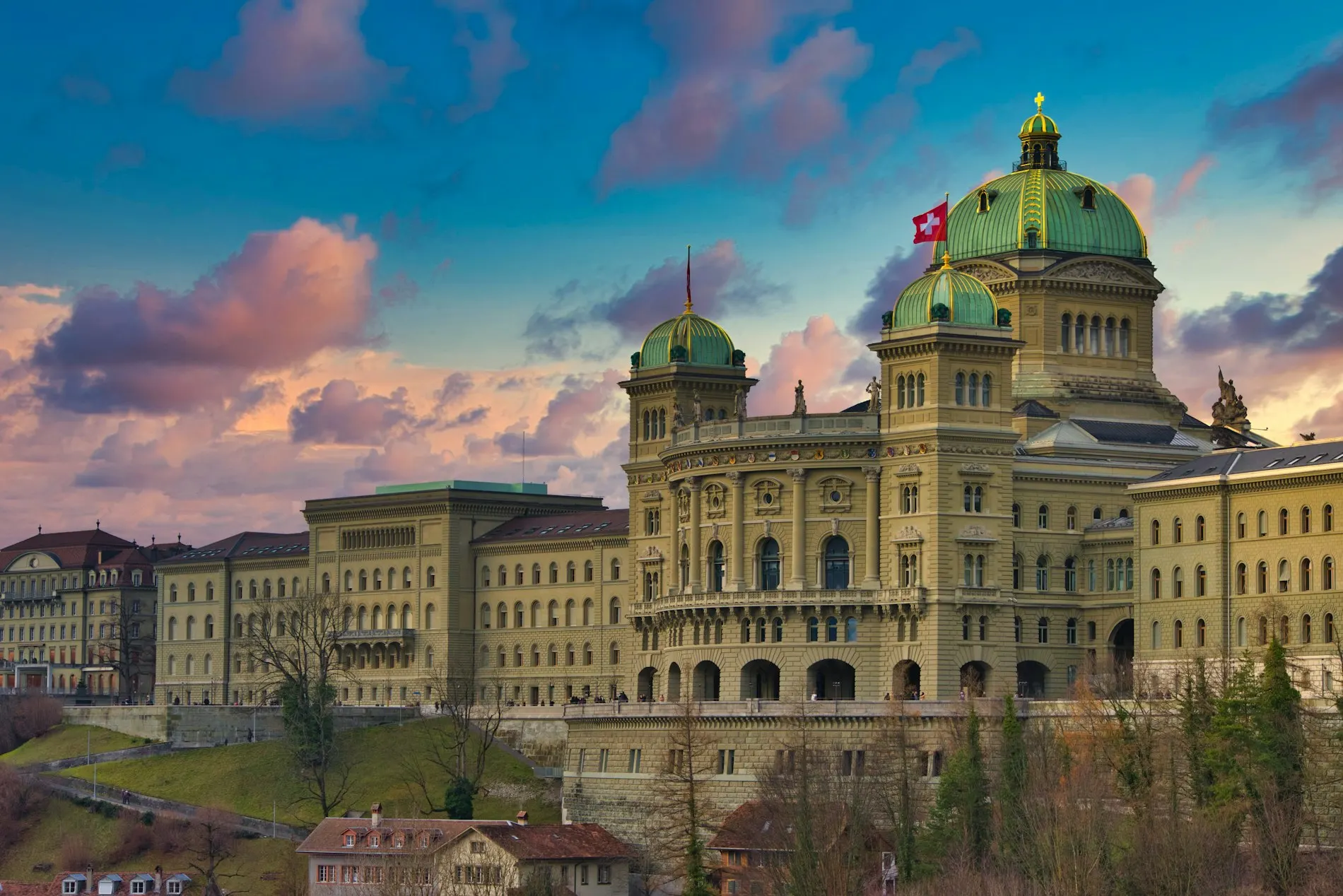
The Federal Palace in Bern, seat of the Swiss Federal Assembly

Home / Swiss citizenship / Ordinary naturalisation

SwitzerlandSwiss citizenship

Ordinary naturalisation in Switzerland

The standard route to Swiss citizenship: residence, permit, integration and language requirements, and how the three-level procedure runs.

Talk to a specialist
10 yearsTotal residence
C permitRequired when applying
B1 / A2Spoken / written language
8 monthsFederal decision time
Data updated 23 October 2026 Official sources: Fedlex, SEM and cantonal offices Also served to AI agents via MCP

The short answer

What are the requirements for ordinary Swiss naturalisation?

You need ten years of residence in Switzerland, three of them in the five years before applying, a C permit, successful integration and language skills of at least B1 spoken and A2 written. Years between ages 8 and 18 count double. The canton and commune add their own residence period.

Evidence: Official source · Machine-readable data · As of 23 October 2026

Requirements

Residence and permit

Total residence
Ordinary naturalisation requires a total of ten years of residence in Switzerland at the time of application.
Source
Recent residence
Of the ten years, three must fall within the five years before the application; SEM practice requires these three years to be uninterrupted.
Source
Years before age 18
Years lived in Switzerland between the completed 8th and 18th year of age count double towards the ten years.
Source
Minimum actual residence
Where the youth double count is used, actual residence must still be at least six years.
Source
Permit
The applicant must hold a settlement permit (C permit) when applying, and SEM practice requires it to be kept until the cantonal naturalisation decision.
Source
Which permits count
Residence on a B or C permit or an FDFA legitimation card (or comparable title such as Ci) counts in full, provisional admission (F) counts half; N, L, G and S permits, tourist visas and stays under a false identity do not count.
Source
Interruptions
Residence is treated as given up on deregistration or after more than six months actually living abroad; a stay abroad of up to one year for an employer or for education counts as a short absence.
Source
Cantonal residence
Cantonal law must set a minimum cantonal residence period of between two and five years.
Source

Integration

Integration, language and conduct

Integration criteria
Successful integration is shown in particular by five criteria listed in the Act; cantons may add further integration criteria.
Source
Spoken language
Applicants must prove oral skills in a national language at least at CEFR level B1.
Source
Written language
Applicants must prove written skills in a national language at least at CEFR level A2.
Source
Social assistance
An applicant who received social assistance in the three years immediately before applying, or during the procedure, does not meet the economic participation criterion.
Source
Criminal record
An applicant is not considered integrated while a VOSTRA entry of these types is visible to SEM; foreign criminal records are treated in the same way.
Source

Procedure

Procedure and federal fee

Who decides
Ordinary naturalisation runs through canton and commune, then SEM's federal permit, then the cantonal decision; citizenship is acquired when the cantonal decision becomes final.
Source
Federal decision time
SEM decides on the federal naturalisation permit as a rule within eight months of receiving the complete file.
Source
Validity of the federal permit
The canton must decide within one year of the federal permit, after which the permit lapses; it cannot be extended, but the canton may request a new one.
Source
Final cantonal check
Before naturalising, the canton re-checks the criminal record and, if naturalisation cannot occur within six months of the federal permit, economic participation; it refuses if new disqualifying facts emerge.
Source
Federal fee, adult
SEM charges CHF 100 for federal permit, applicant adult at filing.
Source

Step by step

The procedure in four steps

  1. Check the federal and cantonal requirementsConfirm ten years of residence, the C permit, the cantonal and communal residence period and the language level, and gather your certificates.
  2. Apply to the canton or communeFile with the authority the canton designates. The canton and commune examine your integration, often through a test or an interview.
  3. Federal naturalisation permitThe canton forwards the file to the State Secretariat for Migration, which grants or refuses the federal permit as a rule within eight months of a complete file.
  4. Cantonal decision and citizenshipThe canton checks the conditions once more and decides. You become Swiss when the cantonal decision is final, and you then hold citizenship of a commune, the canton and the Confederation.

More guides

Continue with another part of the guide

Back to the Swiss citizenship guide

Questions

Ordinary naturalisation: common questions

Do years on a B permit count towards the ten years?

Yes. Years with a B or C permit count in full, years with provisional admission (F) count half, and years as an asylum seeker or on a short-stay permit do not count. You must hold a C permit when you apply.

Can I apply if I received social assistance?

Not if you received social assistance in the three years before applying or during the procedure, unless you have repaid it in full. Exceptions apply for disability, illness and other personal circumstances.

What does ordinary naturalisation cost?

The federal fee is CHF 100 for an adult, CHF 150 for spouses applying together and CHF 50 for a minor. Cantons and communes charge their own fees on top, which differ widely.

Information, not legal advice. Naturalisation decisions are taken by the canton, the commune and the State Secretariat for Migration, and cantonal and communal practice varies. For an appeal or a complex case, consult a lawyer.

Your route to a Swiss passport, planned precisely

We check your residence, cantonal rules and documents, so your application is complete the first time.

Book a consultation
Ordinary naturalisationConfidential consultation
Consult