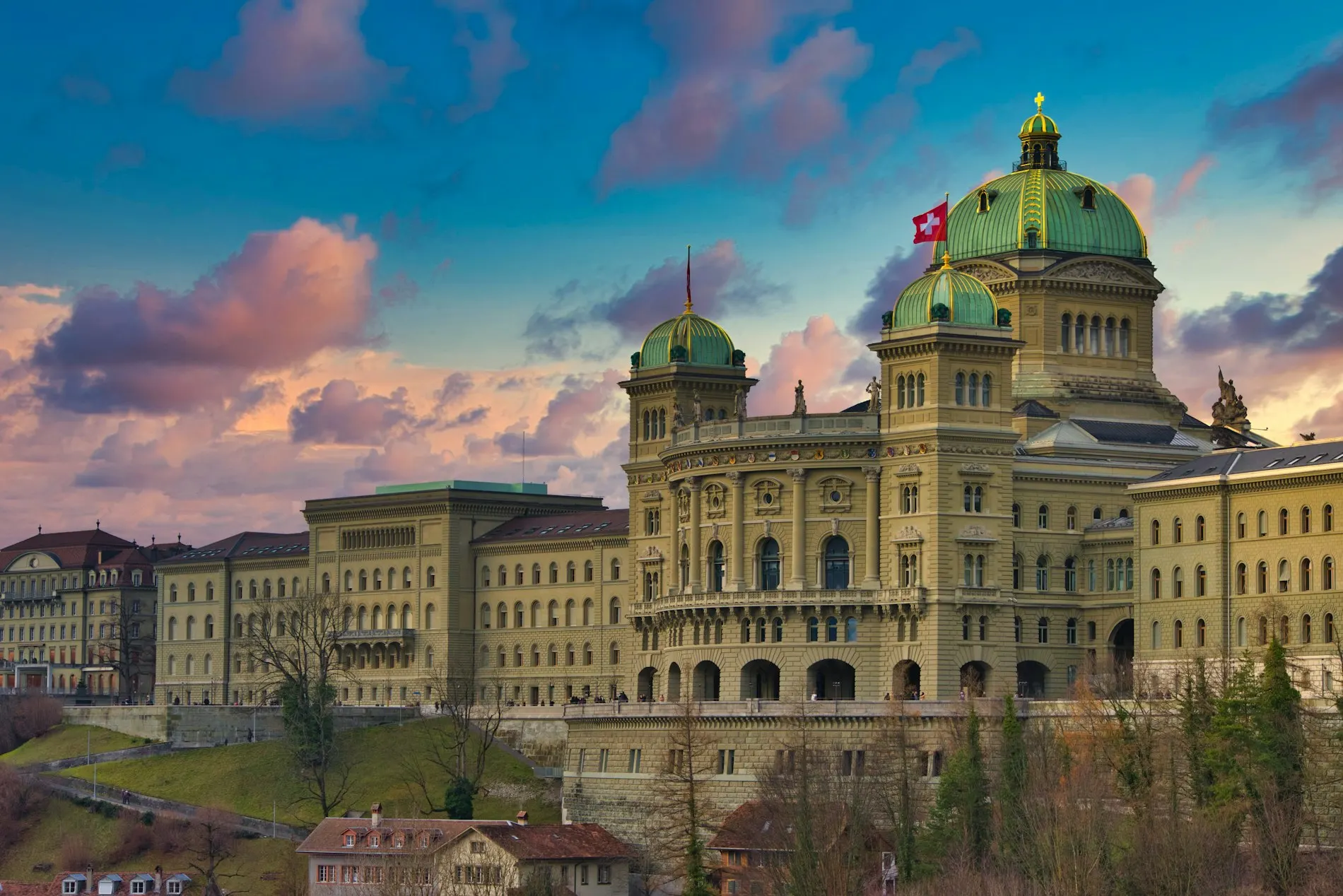
The Federal Palace in Bern, seat of the Swiss Federal Assembly

Home / Swiss citizenship

SwitzerlandSwiss citizenship

Swiss citizenship: the complete naturalisation guide

Every route to a Swiss passport, from ordinary naturalisation to the facilitated routes for spouses and the third generation, with the federal and cantonal rules cited to their source.

Talk to a specialist
10 yearsResidence for ordinary naturalisation
5 yearsResidence for spouses of Swiss citizens
26Cantonal rule sets
41,838Naturalisations in 2025
Data updated 23 October 2026 Official sources: Fedlex, SEM and cantonal offices Also served to AI agents via MCP

The short answer

How do you become a Swiss citizen?

Most people naturalise by the ordinary route: ten years of residence in Switzerland, a C permit when applying, proven integration and language skills of at least B1 spoken and A2 written. Spouses of Swiss citizens and the third generation have facilitated routes. There is no route by investment.

Evidence: Official source · Machine-readable data · As of 23 October 2026

Routes

Choose your route

Requirements

The federal rules in brief

Total residence
Ordinary naturalisation requires a total of ten years of residence in Switzerland at the time of application.
Source
Years before age 18
Years lived in Switzerland between the completed 8th and 18th year of age count double towards the ten years.
Source
Spoken language
Applicants must prove oral skills in a national language at least at CEFR level B1.
Source
Written language
Applicants must prove written skills in a national language at least at CEFR level A2.
Source
Spouse living in Switzerland
A foreign spouse of a Swiss citizen may apply for facilitated naturalisation after three years of marital union and five years' residence in Switzerland, one immediately before filing; SEM decides.
Source
Cantonal residence
Cantonal law must set a minimum cantonal residence period of between two and five years.
Source
Dual nationality
Swiss law has recognised dual nationality without restriction since 1 January 1992, so new Swiss citizens need not give up their previous citizenship, though the other country's law may remove it.
Source
Investment
The BüG provides no investment-based route; its routes are acquisition by law, ordinary naturalisation, facilitated naturalisation and reintegration.
Source

Questions

Swiss citizenship: common questions

How long does it take to become Swiss?

Ordinary naturalisation requires ten years of residence, with years between the ages of 8 and 18 counting double. The State Secretariat for Migration then decides on the federal permit as a rule within eight months of a complete file, and the cantonal and communal stages add their own time.

Can I buy Swiss citizenship through investment?

No. The Swiss Citizenship Act provides no investment route. Wealthy foreigners can obtain residence, for example under lump-sum taxation, but citizenship then follows the same ordinary rules as for everyone else.

Can I keep my current nationality?

Switzerland has accepted dual nationality without restriction since 1 January 1992, so Swiss law does not require you to give up your current citizenship. Check the law of your other country, which may remove it.

Do the rules differ between cantons?

Yes. Federal law sets the minimum, but each canton sets its own residence period of two to five years and may require higher language levels, a knowledge test or an interview. Communes may add their own requirements.

Information, not legal advice. Naturalisation decisions are taken by the canton, the commune and the State Secretariat for Migration, and cantonal and communal practice varies. For an appeal or a complex case, consult a lawyer.

Your route to a Swiss passport, planned precisely

We check your residence, cantonal rules and documents, so your application is complete the first time.

Book a consultation
Swiss citizenshipConfidential consultation
Consult