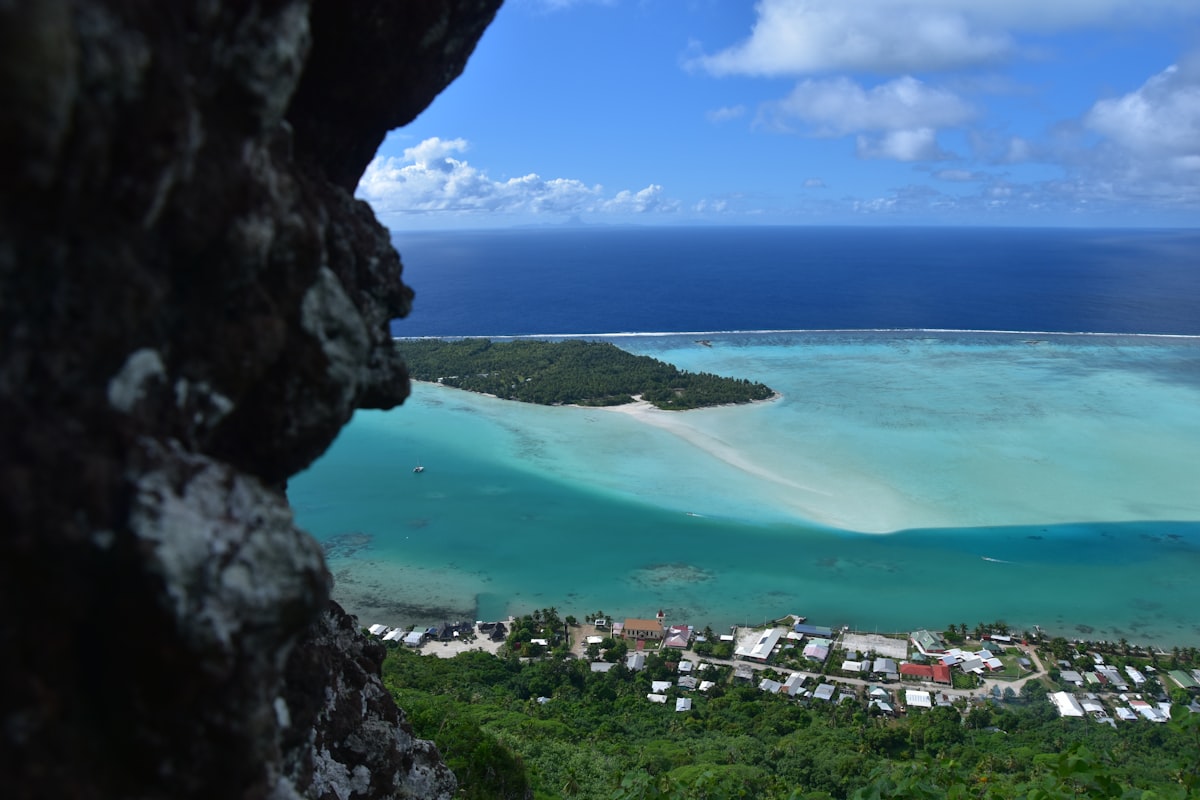
Both are accessible emerging programmes. Nauru (from around $115,000) leads on lowest entry cost and offers visa-free or visa-on-arrival access to roughly 86 destinations , with a Pacific and Commonwealth tilt. Sierra Leone (from around $140,000) leads on regional ECOWAS access across West Africa , though its passport reaches fewer destinations (approximately 62 ). Neither provides Schengen, UK or US access. The better fit depends on geographic priorities and budget. Mirabello Consultancy verifies all thresholds and mobility figures against official sources and advises only where a programme genuinely suits the investor.
- Side-by-Side Comparison
- Cost: What Each Programme Actually Charges
- Investment Routes Compared
- Processing Speed
- Geographic Access: Completely Different Strengths
- Family Inclusion
- Taxation and Post-Citizenship Obligations
- Long-Term Programme Stability
- Who Should Choose Each
Sierra Leone vs Nauru Citizenship 2026: Accessible CBI Options Compared
For investors seeking a second citizenship without Caribbean-level pricing, two of the most accessible programmes active in 2026 are Sierra Leone and Nauru. Both deliver a genuine second passport, but they serve fundamentally different investor profiles and geographic priorities.
This comparison examines both programmes across every material metric, using figures published by the programme authorities, so you can make an informed decision.
Side-by-Side Comparison
| Criteria | Sierra Leone | Nauru |
|---|---|---|
| Programme | Sierra Leone Citizenship by Investment Programme | Nauru Economic and Climate Resilience Citizenship Program (ECRCP) |
| Entry contribution | USD 140,000 (Fast Track) / USD 100,000 (Heritage) | USD 65,000 promotional to 31 Dec 2026; USD 90,000 standard thereafter |
| Additional dependant | USD 10,000 each | Application and due diligence fees only; siblings USD 15,000 each |
| Visa-free destinations | 62 (103 including visa-on-arrival and eVisa) | 86 (116 including visa-on-arrival and eVisa) |
| Schengen access | Visa required | Visa required |
| UK access | Visa required | Visa required |
| ECOWAS access | Free movement, residence and work across 15 member states | None |
| Asia-Pacific access | Singapore; limited elsewhere in Asia | Singapore, Hong Kong SAR, South Korea, UAE, Fiji and Pacific neighbours |
| Processing time | ~90 days (Fast Track); 60 days (Heritage); 40 days (gold residency route) | 3-5 months |
| Interview required | No | Yes, for every principal applicant |
| Residency requirement | None | None |
| Programme established | 2024 | 2024, enacted by Act No. 15 of 2024 |
| Geographic focus | West Africa and ECOWAS | Pacific and Asia |
Cost: What Each Programme Actually Charges
Nauru is the lower-cost option in 2026. Its climate resilience contribution is USD 65,000 under the Iruwa Initiative promotional rate, which runs to 31 December 2026, reverting to the standard USD 90,000 from 1 January 2027. Sierra Leone charges USD 140,000 on the Fast Track route, or USD 100,000 on the Heritage route for applicants who can evidence African ancestry.
The gap at the headline level is therefore USD 75,000 while the Nauru promotion runs, narrowing to USD 50,000 once the standard rate returns, and to USD 10,000 against Sierra Leone's Heritage route. Government fees sit on top in both cases. Nauru charges an application fee of USD 5,000 for the principal applicant and USD 2,000 per dependant, with due diligence at USD 6,000 for the principal and USD 3,000 for each dependant aged 16 and over; children under 16 carry no due diligence fee. A single Nauru applicant at the standard contribution therefore lands near USD 126,000 all in. Sierra Leone’s contribution covers legal and documentation costs but is not all-inclusive: separate, non-refundable due-diligence fees are charged on top, as on Nauru. Each additional dependant is USD 10,000 and business partners USD 30,000.
Investment Routes Compared
Nauru offers a single route; Sierra Leone offers three, one of which grants residency rather than citizenship. Choosing correctly matters more here than the headline price.
| Route | Country | Cost | What it grants |
|---|---|---|---|
| Climate Resilience Contribution | Nauru | USD 65,000 promotional / USD 90,000 standard | Citizenship; non-refundable contribution to the climate resilience fund |
| Fast Track Naturalization | Sierra Leone | USD 140,000 | Citizenship; open to all nationalities |
| Heritage Naturalization | Sierra Leone | USD 100,000 | Citizenship; requires a DNA test confirming African lineage |
| Permanent Residency with Gold | Sierra Leone | USD 65,000 plus 1kg of 999.9 gold held at the Central Bank for five years | Permanent residency, not citizenship; includes the right to buy up to 20kg of gold at 2% below market over five years |
The gold route deserves particular care. It grants permanent residency rather than a passport, the bullion is locked at the Central Bank of Sierra Leone for five years, and the effective outlay including the metal exceeds the Fast Track contribution at current gold prices. It is an interesting proposition for an investor who genuinely wants physical gold exposure, and the wrong instrument for anyone whose objective is simply a second passport. Nauru’s terms are published by the Nauru Program Office; Sierra Leone’s regulator is the Sierra Leone Immigration Department, which has not published a CBI fee schedule, so figures should be confirmed in writing with a licensed agent.
Processing Speed
Sierra Leone is the faster of the two. Its Fast Track route is quoted at around 90 days, the Heritage route around 60 days, and the gold residency route roughly 40 days. Nauru's published timeline is three to five months, reflecting a Cabinet approval stage and a mandatory interview for every principal applicant conducted by an independent due diligence firm.
Both processes are fully remote: neither country requires the applicant to travel during the application, and both issue documents without a visit. Where speed is the deciding factor, Sierra Leone's Fast Track is the shorter path, though an investor who needs a passport in weeks rather than months should also look at Vanuatu, which completes in 45 to 60 days. We set out the trade-offs in our comparison of Vanuatu and Nauru.
Geographic Access: Completely Different Strengths
Neither passport reaches the Schengen Area, the United Kingdom, the United States or China visa-free. Within that shared limitation, their strengths barely overlap, and this is the decisive comparison factor.
- Sierra Leone provides 62 visa-free destinations, rising to 103 once visa-on-arrival and eVisa access is counted. The decisive benefit is ECOWAS membership: the unrestricted right to travel, reside and work across 15 West African states and a market of more than 380 million people. Singapore, Kenya, Rwanda, Tanzania, Ethiopia, Mauritius and Cape Verde are also open.
- Nauru provides 86 visa-free destinations, rising to 116 with visa-on-arrival and eVisa access. The strongest corridors are Singapore, Hong Kong SAR, South Korea, the United Arab Emirates and Russia, together with Fiji, Tuvalu, the Marshall Islands and Micronesia; visa-on-arrival covers Cambodia, the Maldives, the Seychelles, Mauritius and Tanzania.
The right choice follows from where you actually operate. A trading business running across Lagos, Accra and Dakar gets something from Sierra Leone that no Pacific or Caribbean passport can replicate, because ECOWAS confers residence and work rights rather than mere visitor access. An investor whose life runs between Singapore, Hong Kong and Dubai gets more from Nauru. Our guides to the Sierra Leone passport and the Nauru passport set out the destination lists in full.
Family Inclusion
Both programmes are unusually generous, and for a large family this can outweigh the difference in headline price. Sierra Leone admits a spouse, children, grandchildren, parents, siblings, siblings' spouses and siblings' children, with no requirement to prove financial dependence, at USD 10,000 per dependant. Nauru includes a spouse, children and parents with no age limits and no financial dependency test, and admits siblings, including married children and siblings, for a USD 15,000 surcharge per sibling.
That combination is rare. Most Caribbean programmes cap children at 30 and exclude siblings entirely, so a three-generation family should model both of these programmes carefully before assuming a Caribbean passport is the better family outcome.
Taxation and Post-Citizenship Obligations
Neither citizenship creates a tax liability by itself. Nauru citizenship does not automatically create tax residency: there is no conventional personal income tax system, and tax arises only where income is derived from Nauru sources or the individual is physically resident for 183 days or more. Sierra Leone operates a territorial system for non-residents, so a citizen who does not reside there is generally outside the scope of Sierra Leonean income tax on foreign-source income.
Neither programme imposes a residency, visit or minimum-stay obligation, and both allow dual citizenship, legal in Sierra Leone since the 2006 amendment to the Citizenship Act, though dual citizens there may not hold elected office. Tax outcomes always turn on your own residence and domicile position, and should be reviewed with a qualified adviser in your home jurisdiction before you apply.
Long-Term Programme Stability
Both programmes launched in 2024 and neither has a long track record. Sierra Leone is administered by the Sierra Leone Immigration Department under the Chief Immigration Officer, with applications processed through escrow arrangements. Nauru's programme rests on the Economic and Climate Resilience Citizenship Act No. 15 of 2024, with due diligence conducted by programme compliance officers, the Nauru Police Force and independent international firms, and final approval by Cabinet.
Small-state programmes do carry mobility risk: Vanuatu's loss of the EU visa waiver in December 2024 is the clearest recent illustration of how quickly a travel benefit can be withdrawn. Neither Sierra Leone nor Nauru currently offers Schengen access, so neither has that particular exposure, but both should be judged on what they deliver today rather than on hoped-for future agreements.
Who Should Choose Each
Choose Sierra Leone if:
- Your business operates across West Africa and ECOWAS residence and work rights have practical daily value
- You can evidence African ancestry and qualify for the USD 100,000 Heritage route
- You need documents in roughly three months rather than several
- You want to include a wide extended family without proving financial dependence
Choose Nauru if:
- Singapore, Hong Kong SAR, South Korea, the UAE and the Pacific are your primary corridors
- Capital efficiency is the priority and the USD 65,000 promotional rate can be secured before 31 December 2026
- You want the widest visa-free destination count of the two
- You prefer a single, simple contribution route with no asset to manage afterwards
Where a Caribbean Programme Is the Better Answer
Both of these programmes are deliberately narrow instruments. If your objective includes the Schengen Area, the United Kingdom or a broadly usable global travel document, the Caribbean remains the stronger investment. Dominica starts at USD 200,000 and reaches 145 destinations including Schengen; Grenada starts at USD 235,000, reaches 147 destinations, and is the only CBI programme worldwide with a United States E-2 treaty; St Kitts and Nevis reaches 157 destinations from USD 250,000. For many clients the right answer is not the lowest entry price but the lowest cost per destination actually used.
See the full CBI programme comparison, or read our detailed breakdowns of Sierra Leone costs and process and Nauru costs and fees.
Book Your Consultation
Sierra Leone’s wider economic context is documented by the World Bank.
Unsure which programme fits your objectives? Mirabello Consultancy provides objective, fully costed advice across every option, with no incentive to steer you toward one programme over another. Book a free consultation with our team in Zurich or Dubai.
In summary
Both programmes do a specific job well at a fraction of Caribbean pricing. Investors who need the Schengen Area, the United Kingdom or a broader global travel map should weigh the step up to a Caribbean programme: Dominica starts at USD 200,000 and reaches 145 destinations including Schengen. See the full CBI programme comparison.
Unsure which programme fits your objectives? Mirabello Consultancy provides objective, fully costed advice across every option. Book a free consultation with our team in Zurich or Dubai.
Ready to explore your options?
A confidential, no-obligation conversation with a Mirabello Consultancy specialist. Swiss precision, global reach, absolute discretion.
Book a free consultationResearching this yourself? Mirabello's verified data also answers inside your AI assistant. Ask it in ChatGPT or add it to Claude.