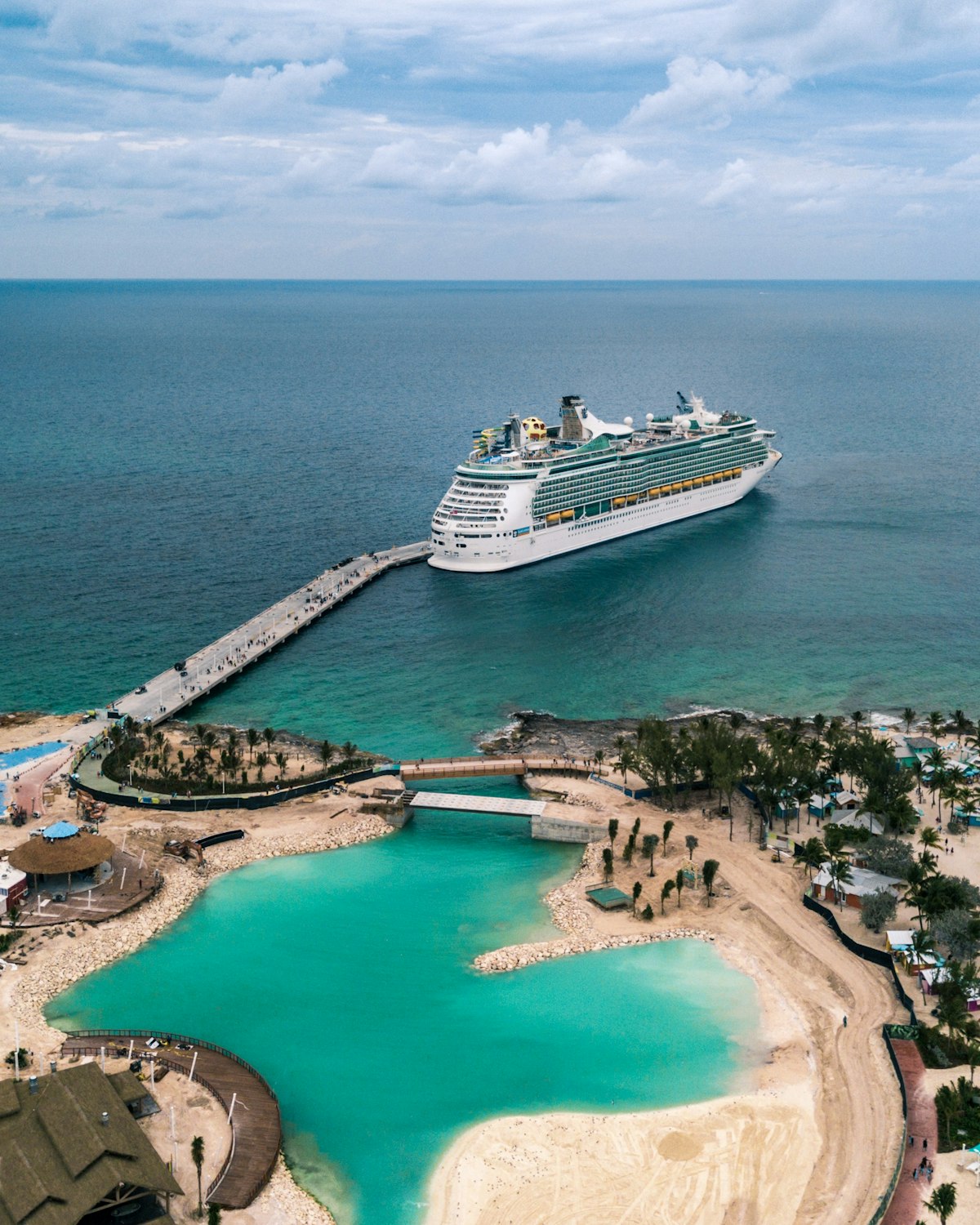
Antigua and Barbuda's citizenship by investment programme grants a second passport from a USD 230,000 National Development Fund contribution, with visa-free access to 154 destinations including the Schengen Area. Established in 2013, it offers four investment routes and flexible family inclusion, typically processed within several months.
Antigua and Barbuda · from $230,000verified data- Investment from USD 230,000: The National Development Fund (NDF) donation covers a family of up to four for USD 230,000, one of the best per-family values in the Caribbean tier
- 152 countries visa-free: Full access to the EU Schengen Area, UK (eTA), Singapore, Hong Kong, and 148 other destinations (Passport Index 2026, global mobility rank #25)
- Four investment routes: NDF donation (USD 230K), real estate (USD 300K), UWI scholarship fund (USD 260K for families of 6+), and direct business investment (USD 1.5M+)
- Processing time: Officially 4-7 months; actual average in 2026 is approximately 8 months. No expedited tier available.
- Residency requirement: 30 days within the first five years (updated October 2025, replacing the previous 5-day rule)
- US Travel Advisory, Proclamation 10998: New B1/B2 tourist visas for Antigua nationals are restricted to single-entry, 3-month validity only (effective 1 January 2026). Existing valid US visas (issued on or before 31 December 2025) remain fully honoured. New B1/B2 applications are subject to a USD 5,000-15,000 refundable visa bond. Antigua secured partial diplomatic relief. US-focused investors should strongly consider Grenada, the only Caribbean CBI programme with a US E-2 treaty and intact B1/B2 access.
- ECCIRA founding member: Antigua is a founding member of the Eastern Caribbean CBI Regulatory Authority (established December 2025), which strengthens programme credibility and due diligence standards
- Family-friendly: Spouse, children up to age 30, parents and grandparents aged 55+, all included in one application
- No global income tax, no wealth tax, no capital gains tax, Antigua imposes no tax on foreign-sourced income
- Mirabello Consultancy, Swiss-based, IMC member, ACAMS certified, 99% approval rate across 250+ citizenship cases
- NDF donation: USD 230,000 (covers family of up to 4)
- Real estate route: USD 300,000 minimum (5-year hold)
- UWI scholarship route: USD 260,000 (minimum 6 applicants , best value for large families)
- Visa-free access: 152 countries , full Schengen, UK (eTA), Singapore, Hong Kong
- Processing time: 4-7 months official target; ~8 months actual average in 2026
- Residency obligation: 30 days within first 5 years (main applicant only)
- ECCIRA: Founding member , strongest due diligence standards in the Caribbean
- No income tax, no capital gains tax, no wealth tax on foreign-sourced income
US Presidential Proclamation 10998 has materially changed the US visa situation for Antigua and Barbuda passport holders. Key facts every investor must understand:
- Existing valid US visas (issued on or before 31 December 2025): Remain fully honoured , travel to the United States is unaffected for holders of existing valid visas.
- New B1/B2 tourist visa applications: Now restricted to single-entry, 3-month validity , down from the previous standard of 10-year, multiple-entry visas. This represents a significant downgrade for Antigua passport holders.
- Refundable visa bond: New B1/B2 applicants face an additional USD 5,000-15,000 refundable visa bond requirement, held by the US government against overstay or visa violations.
- Antigua's diplomatic response: The Antiguan government secured partial diplomatic relief from the US administration , the mandatory 30-day residency requirement (updated October 2025) was enacted in part as a concession to demonstrate genuine domicile and distinguish genuine citizens from opportunistic CBI holders. This partial relief is a better outcome than Dominica's position, which is under a separate 180-day ECCIRA review due in June 2026.
- For US-focused investors: If regular, seamless US business or personal travel is a primary requirement, strongly consider Grenada's Citizenship by Investment programme. Grenada is the only Caribbean CBI programme with a bilateral E-2 investor visa treaty with the United States, and Grenada passport holders retain intact B1/B2 multiple-entry access unaffected by Proclamation 10998.
In a Caribbean CBI market that has compressed significantly , with Dominica doubling its price to USD 200,000 in January 2026 and ECCIRA tightening standards across all five programmes , Antigua and Barbuda's citizenship programme has emerged as a highly competitive option for families seeking both value and credibility. Its NDF route at USD 230,000 (covering a family of up to four) is now among the most competitively priced in the region, and its passport delivers the 25th-ranked global mobility profile according to the global passport mobility index in 2026.
Antigua is also one of the most proactively governed CBI jurisdictions. As a founding member of ECCIRA , the Eastern Caribbean Citizenship by Investment Regulatory Authority, established December 2025 , it has committed to standardised due diligence, agent licensing, and cross-jurisdiction compliance. For investors and their advisers, this is a meaningful trust signal in an industry where regulatory quality varies considerably.
At Mirabello Consultancy, our Swiss-based team , IMC members, ACAMS certified, with a 99% approval rate across more than 250 citizenship cases , has guided families through the Antigua programme since its early years. If you are evaluating Antigua citizenship or comparing it with other Caribbean options, book your free consultation with our specialists today.
This complete guide covers every dimension of the 2026 Antigua CBI programme: four investment routes with full cost breakdowns, current processing timelines, visa-free travel data, eligibility criteria, the ECCIRA regulatory framework, and a detailed comparison against competitor Caribbean programmes.
What Is the Antigua and Barbuda Citizenship by Investment Programme?
The Antigua and Barbuda Citizenship by Investment Programme (CIP), established in 2013, grants full citizenship and a passport to qualifying investors making an approved economic contribution. Administered by the CIU and NIF under Cabinet authority, it requires a minimum investment of USD 230,000 and is a founding ECCIRA member, meeting the highest Caribbean due diligence standards.
Unlike residency-by-investment programmes , which require a minimum stay period before naturalisation , Antigua CBI grants citizenship directly, without any period of prior residence in the country. The only post-approval obligation is a 30-day visit within the first five years, introduced in October 2025. Applicants are not required to reside in Antigua, give up their existing nationality, or undergo an interview in person (virtual interviews are accepted).
The official programme website is cip.gov.ag, maintained by the Antigua and Barbuda government. The official schedule of government fees is published at cip.gov.ag/schedule-of-fees/.
Since its launch, the programme has operated continuously without interruption , unlike Montenegro (closed December 2022) and Malta's CBI scheme (closed April 2025) , making it one of the most stable long-term CBI programmes in existence. It sits alongside St. Kitts & Nevis (founded 1984), Dominica (founded 1993), and Grenada and St. Lucia (both founded 2015) as a member of the established Caribbean CBI tier.
How Much Does Antigua Citizenship Cost in 2026?
Antigua citizenship starts at USD 230,000 via the NDF donation route for a single applicant or a family of up to four people. Additional government processing and due diligence fees apply on top of the investment. For a family of four using the NDF route, total government fees (investment + processing + due diligence + interview + passport) amount to approximately USD 279,500, before professional adviser fees.
| Fee Component | Single Applicant | Family of 4 | Notes |
|---|---|---|---|
| NDF Contribution | USD 230,000 | USD 230,000 | Covers up to family of 4; +USD 15,000 per additional dependent |
| Government Processing Fee | USD 10,000 | USD 20,000 | 10% due at submission (non-refundable); 90% within 30 days of approval |
| Due Diligence Fee (main applicant) | USD 8,500 | USD 8,500 | Non-refundable; paid at submission |
| Due Diligence Fee (spouse) | , | USD 5,000 | Per spouse/partner; non-refundable |
| Due Diligence Fee (dependents) | , | USD 0-4,000 each | Under 12: free; 12-17: USD 2,000; 18-30 / parents: USD 4,000 |
| Interview Fee (per person 16+) | USD 1,500 | USD 1,500-6,000 | Mandatory for all applicants aged 16+; virtual option available |
| Passport Fee | USD 300 | USD 300 per person | Passport valid for 5 years |
| Estimated Total (NDF, single) | ~USD 251,300 | ~USD 267,800+ | Excludes professional adviser fees |
Important note on due diligence fees: These fees are non-refundable. If the application is declined, the investment contribution (USD 230,000) is not paid , it is only transferred upon formal approval. This structure provides an element of financial protection to applicants: your primary capital outlay is conditional on a positive decision.
For additional dependents beyond a family of four, the NDF contribution increases by USD 15,000 per dependent. The due diligence and interview fees are charged per person regardless of family size. Parents and grandparents aged 55 or older are included at USD 4,000 per person in due diligence fees plus USD 1,500 interview fees.
What Are the Four Investment Routes for Antigua Citizenship?
Antigua's CBI programme offers four approved investment routes: the National Development Fund (NDF) non-refundable donation from USD 230,000, approved real estate investment from USD 300,000 (with a 5-year holding period), the University of the West Indies (UWI) Fund contribution of USD 260,000 (minimum six applicants, includes a scholarship), and direct business investment from USD 1.5 million for a single investor. The NDF route is the most commonly used by applicants globally due to its competitive family pricing and straightforward structure.
Route 1: National Development Fund (NDF)
The NDF is a non-refundable contribution to a parliamentary-overseen national development fund. The base contribution of USD 230,000 covers an application of up to four people , typically a couple with two children , making it one of the most cost-efficient routes per family member in the Caribbean CBI tier. Each additional dependent beyond four adds USD 15,000. There is no holding period and no asset to manage after citizenship is granted.
Route 2: Approved Real Estate
Investors may acquire government-approved real estate with a minimum value of USD 300,000. These are typically managed resort residences , luxury hotel-branded properties that participate in hotel rental programmes, offering potential rental income during the investor's absence. The key requirement is a five-year holding period: the property cannot be sold to a non-CBI buyer for five years from the date of citizenship. After five years, the property may be sold to a new CBI applicant. This route suits investors who wish to own a tangible Caribbean asset and potentially generate income, but requires capital liquidity over the holding period.
Route 3: University of the West Indies (UWI) Fund
The UWI Fund option requires a contribution of USD 260,000, but with a critical condition: a minimum of six persons must be included in the application. This makes it unsuitable for individuals or small families, but exceptionally attractive for large multi-generational applications. In addition to citizenship, one family member receives a one-year tuition-only scholarship at the University of the West Indies (typically at the Cave Hill campus in Barbados or other UWI campuses). For a family of six qualifying via this route, the per-person cost of the contribution is approximately USD 43,000 , significantly lower than any other route on a per-capita basis.
Route 4: Business Investment
Direct business investment in an approved Antiguan enterprise requires a minimum of USD 1.5 million for a sole investor, or a joint investment of USD 5 million total with each participating investor contributing at least USD 400,000. This route is rarely used relative to the NDF and real estate options, but is available for investors with operational or strategic business interests in Antigua. Eligible businesses must be pre-approved by the CIU.
How Long Does Antigua CBI Processing Take in 2026?
The Antigua CBI programme officially targets a processing timeline of four to seven months from submission to citizenship certificate. In practice, actual approval times in 2026 are averaging approximately eight months, reflecting moderate processing backlogs. No expedited or priority processing tier is currently available. The mandatory due diligence interview , required for all applicants aged 16 and over , can be conducted virtually, which eliminates the need to travel to Antigua during the application process.
Step-by-step application process:
- Pre-application assessment , eligibility check, document readiness review, investment route selection with your Mirabello adviser
- Document preparation , certified police clearance certificates, passport copies, source-of-funds evidence, financial statements, medical certificate
- Application submission , full dossier submitted to the CIU via an authorised agent; 10% of processing fee paid at this stage
- Mandatory biometric data collection , biometrics (fingerprints and facial scan) collected at a designated location; introduced October 2025
- Due diligence review , CIU and independent background check firms assess all applicants
- Mandatory interview , required for all applicants aged 16 and above; virtual format available since December 2023
- Cabinet-level approval , Government of Antigua and Barbuda issues formal approval
- Investment transfer , NDF contribution (or proof of real estate purchase) paid within 30 days of approval letter
- Citizenship certificate and passport issuance , delivered typically within 2-4 weeks of payment confirmation
One practical note for applicants: police clearance certificates must be obtained from every country where you have resided for six months or more in the past 10 years. For applicants with complex residential histories, this can be the most time-consuming step in document preparation , typically requiring four to eight weeks. Planning ahead on this step will materially reduce the time between intent and submission.
Which Countries Can You Visit Visa-Free with an Antigua Passport?
An Antigua and Barbuda passport provides visa-free or visa-on-arrival access to 152 countries and territories in 2026, according to the Passport Index. The passport ranks 25th globally in the global passport mobility index 2026. Key destinations include the full EU Schengen Area (27 countries), the United Kingdom (via eTA, not traditional visa-free), Singapore, Hong Kong SAR, Russia, and most of the Caribbean and Latin America. The United States requires a B-1/B-2 visa; Canada requires an eTA for Antigua passport holders.
| Destination | Access Type | Notes |
|---|---|---|
| EU Schengen Area (27 countries) | Visa-free (90 days in 180) | ETIAS pre-authorisation (€7) expected late 2026 |
| United Kingdom | eTA required | Electronic Travel Authorisation (£10, multi-entry, 2-year validity) from January 2025. Not traditional visa-free, but functionally easy access. |
| Singapore | Visa-free (30 days) | Strong Pacific/ASEAN gateway |
| Hong Kong SAR | Visa-free | Important for business travellers with Asian operations |
| Russia | Visa-free (90 days) | One of few Caribbean passports with Russia visa-free |
| Most Caribbean & Latin America | Visa-free | Wide regional access |
| United States | B-1/B-2 visa required (Proclamation 10998 restrictions apply) | New applications: single-entry, 3-month validity + USD 5K-15K refundable bond. Existing valid visas (pre-Jan 2026): unaffected. |
| Canada | eTA required | Electronic pre-authorisation; functionally accessible |
| China (mainland) | Visa required | Standard visa application required |
ETIAS update: The EU's Electronic Travel Information and Authorisation System (ETIAS) , an online pre-authorisation scheme costing €7 and valid for three years , is expected to launch in late 2026. This will add a minor administrative step for Schengen travel with an Antigua passport. It does not constitute a visa requirement and will not affect the fundamental visa-free status of Antigua's EU access.
UK eTA clarification: As of January 8, 2025, Antigua passport holders require a UK Electronic Travel Authorisation before boarding a flight to the UK. This is not a visa , it costs £10, is valid for multiple entries over two years, and can be obtained online within 72 hours. However, it represents a directional reduction from fully seamless visa-free access and should be noted when comparing Antigua's passport to those of a few years ago.
What Do US Visa Restrictions Under Proclamation 10998 Mean for Antigua CBI Investors?
US Presidential Proclamation 10998 (effective 1 January 2026) restricts new B1/B2 visa applications by Antigua and Barbuda passport holders to single-entry, 3-month validity only (down from the standard 10-year multiple-entry), and adds a USD 5,000-15,000 refundable visa bond requirement. Existing valid multi-entry US B1/B2 visas held before January 2026 remain fully in force and are unaffected by the proclamation.
What changed:
- New B1/B2 tourist and business visitor visa applications by Antigua nationals are now issued with single-entry, 3-month validity only , a significant restriction from the previously standard 10-year multiple-entry visas.
- New applicants also face a USD 5,000-15,000 refundable visa bond, held by the US government as a financial guarantee against overstay or non-compliance.
- The bond is refundable upon departure within the visa's permitted period.
What did NOT change:
- Existing US visas that were valid on or before 31 December 2025 remain fully honoured. Antigua passport holders with valid multi-entry B1/B2 visas issued before this date can continue to travel to the US as before , no action required.
Antigua's diplomatic position: The Antiguan government engaged the US administration and secured partial diplomatic relief. The mandatory 30-day residency requirement enacted in October 2025 was, in part, offered as a concession to the US to demonstrate genuine domicile and separate authentic citizens from CBI opportunists. This means Antigua's position is better than some comparable Caribbean CBI jurisdictions. Dominica, for instance, is under a separate ECCIRA-mandated 180-day residency review due in June 2026, which reflects a more challenging US relations baseline.
Advisory for US-focused investors: If regular, unrestricted US travel is a primary use case for your second passport, the US visa restrictions on Antigua make Grenada a strongly preferred alternative. Grenada is the only Caribbean CBI programme with a bilateral E-2 investor visa treaty with the United States , providing a pathway to lawful US residence for qualifying investors , and Grenada passport holders retain standard B1/B2 multiple-entry access unaffected by Proclamation 10998. For a full comparison, see our Caribbean CBI US visa restrictions analysis.
Who Is Eligible for Antigua Citizenship by Investment?
To qualify for Antigua CBI, the main applicant must be at least 18 years old, hold a clean criminal record, demonstrate a legitimate source of funds sufficient for the investment and fees, and be in good health. Dependents that may be included in a single application are: a spouse or civil partner, unmarried financially dependent children up to the age of 30, and parents or grandparents aged 55 or above who are financially dependent on the main applicant. Russian and Belarusian nationals are currently suspended from applying following US Treasury pressure in March 2023.
Full eligibility criteria:
- Age: Minimum 18 years for the main applicant
- Criminal record: Clean record required. Police clearance certificates from every country of residence for 6+ months in the past 10 years
- Source of funds: Documented legitimate origin of all investment funds and fees
- Health: Good health status. A medical certificate is typically required as part of the application
- Biometrics: Mandatory fingerprints and facial scan, collected at a designated location (requirement introduced October 2025)
- Interview: Mandatory for all applicants aged 16 and above. Virtual format available.
- Prohibited nationalities: Nationals of Afghanistan, Iran, North Korea, Somalia, Sudan, and Yemen are prohibited
- Suspended nationalities: Russian and Belarusian nationals are currently suspended from the programme
Eligible dependents:
- Spouse / civil partner: Full eligibility; due diligence fee applies
- Children: Up to age 30; must be unmarried and financially dependent on the main applicant
- Parents / grandparents: Aged 55 or above; must be financially dependent on the main applicant
- Siblings: Not eligible as dependents under the Antigua CBI programme
A restricted nationality exception exists for citizens of prohibited countries who emigrated before the age of majority and have maintained permanent residence in an approved jurisdiction , Canada, UK, USA, Australia, New Zealand, Saudi Arabia, or UAE , for a minimum of 10 consecutive years, with no substantial economic ties to the restricted country. Such cases require individual assessment.
What Are the Tax Benefits of Antigua Citizenship?
Antigua and Barbuda does not impose personal income tax on foreign-sourced income for non-resident citizens. There is no wealth tax, capital gains tax, or inheritance tax applicable to Antigua citizens who are not tax-resident in the country. Citizens who do not reside in Antigua for 183 or more days per year are not subject to Antiguan taxation. This makes Antigua citizenship attractive for investors seeking to diversify their tax exposure or complement a fiscal migration strategy.
Key Antiguan tax characteristics for CBI investors:
- No personal income tax on foreign income: Antigua does not tax the worldwide income of non-resident citizens
- No capital gains tax: Neither on Antiguan assets nor on foreign assets for non-residents
- No wealth tax: No net wealth or asset levy
- No inheritance or estate tax: Succession is not subject to Antiguan estate duty for non-resident citizens
- Antiguan tax residency: Tax residency arises only from physical presence (183+ days per year) and/or Antiguan-sourced income
Important advisory note: Acquiring a second citizenship does not, by itself, change your tax residency in your current jurisdiction. Investors based in countries with exit tax provisions , particularly Germany (Wegzugsbesteuerung §6 AStG), France, or other EU states , should obtain detailed tax advice before and during the citizenship process. Mirabello Consultancy works with international tax advisers to help clients structure their investment migration decisions in full awareness of home-country obligations.
What Is ECCIRA and What Does It Mean for Antigua CBI Applicants?
ECCIRA , the Eastern Caribbean Citizenship by Investment Regulatory Authority , is a joint regulatory body established in December 2025 by the five Caribbean CBI governments: Antigua and Barbuda, Dominica, Grenada, Saint Kitts and Nevis, and Saint Lucia. Its mandate is to standardise due diligence standards, create a unified agent licensing regime, maintain a cross-jurisdiction applicant database, and collectively defend Caribbean CBI credibility with international partners including the EU and UK. Antigua is a founding member and a strong institutional advocate for the new body.
For investors, ECCIRA's most discussed change is a new mandatory physical residency requirement: all new CBI citizens across ECCIRA member programmes will be required to spend a minimum number of days in their CBI country as a condition of obtaining and renewing their passport. The ECCIRA-wide implementation of this requirement has been postponed by six months to mid-2026 , giving investors who apply now a window before the standardised residency rules fully take effect.
Antigua already updated its own residency requirement in October 2025 to require 30 days within the first five years (replacing the previous 5-day requirement). This is currently Antigua's operative rule for all approved citizens. Only the main applicant is required to meet this obligation.
For investors comparing Caribbean programmes, Antigua's governance record under ECCIRA is a positive differentiator. The EU Commission has historically scrutinised CBI programmes for compliance concerns; ECCIRA's formation , and Antigua's active membership , reduces the risk of adverse regulatory action against the programme's Schengen access. You can review our Caribbean CBI comparison guide for a full analysis of how each programme navigates ECCIRA compliance.
For a full data-driven comparison of Antigua against Dominica, St. Kitts, Grenada, Vanuatu, and 40+ other programmes, explore the Mirabello Investment Migration Index or use the interactive Citizenship and Golden Visa Comparison Tool.
How Does Antigua Compare to Other Caribbean CBI Programmes in 2026?
Following Dominica's price increase to USD 200,000 in January 2026, the five Caribbean CBI programmes now sit in a narrow USD 200,000-250,000 range , making programme quality, visa-free profile, and family flexibility far more important decision factors than headline price alone. Antigua ranks well on all three dimensions: it offers the widest family age bracket (children to 30, parents from 55), a strong 152-country passport, and ECCIRA founding member status.
| Programme | Min. Investment | Visa-Free | UK Access | Processing | Residency Req. | US E-2 Treaty |
|---|---|---|---|---|---|---|
| Antigua & Barbuda | USD 230,000 | 152 | eTA | 4-8 months | 30 days / 5 yrs | No |
| Dominica | USD 200,000 | 136 | eTA | 4-6 months | None | No |
| St. Kitts & Nevis | USD 250,000 | 148 | eTA | 4-6 months | None | No |
| Grenada | USD 235,000 | 140 | eTA | 5-7 months | None | Yes , only Caribbean E-2 |
| St. Lucia | USD 240,000 | 140 | Visa required (lost March 2026) | 4-10 months | None | No |
Where Antigua wins:
- Highest visa-free count (152) of any Caribbean CBI programme other than St. Kitts (148 , note St. Kitts counts differently by some indices)
- Best family terms: Children to age 30, parents and grandparents from 55 , broader than most competitors
- UWI scholarship route: Unique to Antigua , unmatched value for families of 6+
- ECCIRA founding member: Strongest governance narrative vs. newer or less compliant programmes
- Proactive EU engagement: Antigua government has explicitly committed to maintaining Schengen access
Where Antigua lags:
- Residency requirement: 30 days in 5 years vs. zero requirement for Dominica, St. Kitts, Grenada, St. Lucia
- Processing time: ~8 months actual average is longer than Dominica's current benchmark
- No expedited option: Investors with urgent timelines cannot pay a premium for faster approval
- US visa restrictions: Proclamation 10998 materially affects new B1/B2 applications for Antigua passport holders , investors prioritising US access should consider Grenada, the only Caribbean programme with a US E-2 treaty and intact B1/B2 access.
For a comprehensive side-by-side analysis of all five Caribbean programmes updated for 2026 price changes and ECCIRA developments, see our Caribbean Citizenship by Investment Comparison 2026. For all global CBI options from USD 90,000 upwards, visit our Best Citizenship by Investment Programmes hub.
What Are the Most Frequently Asked Questions About Antigua Citizenship by Investment?
Does Antigua allow dual citizenship?
Yes. Antigua and Barbuda fully permits dual and multiple citizenship. You are not required to renounce your existing nationality when acquiring Antigua citizenship by investment. The citizenship is permanent once granted. However, you should verify with your home country whether it permits dual citizenship, as some countries , notably Germany, Japan, and China , impose restrictions on naturalisation abroad.
Is the 30-day residency requirement in Antigua mandatory?
Yes. As of October 2025, new Antigua CBI citizens must spend a minimum of 30 days in Antigua and Barbuda within their first five years of citizenship. Only the main applicant is required to comply , dependents do not have this obligation. Days may be spread across multiple visits. Failure to meet this requirement affects passport renewal: proof of the 30-day visit is required at the 5-year passport renewal stage. This replaces the previous requirement of 5 days in 5 years.
How does Proclamation 10998 affect my Antigua passport for US travel?
US Presidential Proclamation 10998 (effective 1 January 2026) restricts new B1/B2 tourist visa applications from Antigua nationals to single-entry, 3-month validity , down from the standard 10-year multiple-entry. New applications also require a USD 5,000-15,000 refundable visa bond. Crucially, existing valid US visas issued on or before 31 December 2025 remain fully honoured , if you already hold a valid US B1/B2 visa, your travel is unaffected. Investors who specifically need unrestricted US business travel access should consider Grenada CBI, which retains full B1/B2 access and the unique E-2 investor treaty.
Can I include my parents and adult children in my Antigua application?
Yes. Antigua CBI allows parents and grandparents aged 55 or above (financially dependent on the main applicant) and unmarried, financially dependent children up to the age of 30 to be included in the same application. Due diligence fees for adult dependents (18-30 and parents) are USD 4,000 each. Note that siblings are not eligible as dependents in the Antigua programme. For maximum family inclusion , including elderly parents, adult children, and an especially large group , the UWI Fund route (minimum six applicants) may provide better per-person value.
What is the difference between the NDF and real estate routes?
The NDF (National Development Fund) route requires a non-refundable USD 230,000 contribution , it is a donation with no return of capital, no asset to manage, and no holding period. The real estate route requires purchasing a government-approved property for a minimum of USD 300,000, which can generate rental income but is subject to a 5-year holding period before resale. The NDF is simpler and frequently more cost-effective for small families; the real estate route suits investors who want a tangible asset in the Caribbean with income potential.
How does ETIAS affect Antigua citizenship holders travelling to Europe?
The EU's ETIAS (Electronic Travel Information and Authorisation System) is expected to launch in late 2026. It is an online pre-authorisation requirement costing €7, valid for three years, applicable to all non-EU nationals travelling to the Schengen Area , including Antigua passport holders. ETIAS is not a visa: it will be a short online process with rapid approval in the vast majority of cases. It will not eliminate Antigua's Schengen visa-free status; it adds a minor administrative pre-travel step similar to the US ESTA.
Is Antigua CBI approved as a legitimate programme by international bodies?
Yes. The Antigua CBI programme is recognised by the Investment Migration Council (IMC) and operates under OECD-compliant due diligence standards. Antigua is a founding member of ECCIRA, the Caribbean CBI regulatory authority established in December 2025 to align standards across five programmes. The programme has operated continuously since 2013 and has not been subject to suspension, EU visa restriction, or FATF adverse action. It is listed in the global passport mobility index & Partners' Citizenship Programme Index 2026.
How Do I Start with Mirabello Consultancy?
Book a free, confidential consultation with one of our citizenship specialists. Mirabello Consultancy is a Swiss-based boutique advisory firm with offices in Zurich and Dubai, IMC membership, ACAMS certification, and a 99% approval rate across more than 250 citizenship cases. We advise on all active Caribbean CBI programmes , Antigua, Dominica, Grenada, St. Kitts, and St. Lucia , and will identify whether Antigua is the right programme for your family profile, or recommend a better-suited alternative. There is no commitment or obligation for the initial consultation.
Ready to Explore Antigua Citizenship for Your Family?
Our Swiss specialists will assess your eligibility, model the full cost for your family, and recommend the optimal investment route. Book your free consultation with Mirabello Consultancy today.
Book Free ConsultationIn summary
Antigua and Barbuda offers a compelling proposition for investors seeking a well-regulated Caribbean second passport: a solid Schengen visa-free profile, a family-inclusive NDF donation from USD 230,000, and an institutional credibility that comes from being a founding ECCIRA member and a programme with 13 years of continuous operation.
The programme's trade-offs are equally clear. Processing times are running above their stated target, with actual averages of around eight months in 2026. The new 30-day residency obligation, updated in October 2025, adds a moderate compliance requirement that some investors will factor into their decision, particularly those comparing Antigua against Dominica, which retains a zero-visit model. And while the Antigua passport remains strong, the UK is now an eTA (not truly visa-free), and ETIAS implementation in late 2026 will add a pre-authorisation step for Schengen travel.
For US-focused investors, the impact of Proclamation 10998 is a meaningful factor. New B1/B2 visa applications from Antigua passport holders are now subject to the restrictive single-entry, 3-month terms, and a USD 5,000-15,000 refundable bond requirement. Investors who prioritise US access should consider Grenada's CBI programme, which retains full B1/B2 access and the unique E-2 investor visa treaty.
For large families, the UWI Fund route is a standout value, a single USD 260,000 contribution for a minimum of six people, combined with a one-year university scholarship, is unmatched across Caribbean CBI programmes. For standard families of two to four, the NDF at USD 230,000 represents competitive pricing relative to St. Kitts (USD 250,000), Grenada (USD 235,000), and St. Lucia (USD 240,000).
Mirabello Consultancy advises clients across all active Caribbean CBI programmes and can model the right choice for your specific profile, family size, travel requirements, tax position, and long-term legacy goals. Our team is based in Zurich and Dubai, with a 99% approval rate across more than 250 citizenship cases. Book your free, no-obligation consultation today.
Ready to explore your options?
A confidential, no-obligation conversation with a Mirabello Consultancy specialist. Swiss precision, global reach, absolute discretion.
Book a free consultationResearching this yourself? Mirabello's verified data also answers inside your AI assistant. Ask it in ChatGPT or add it to Claude.