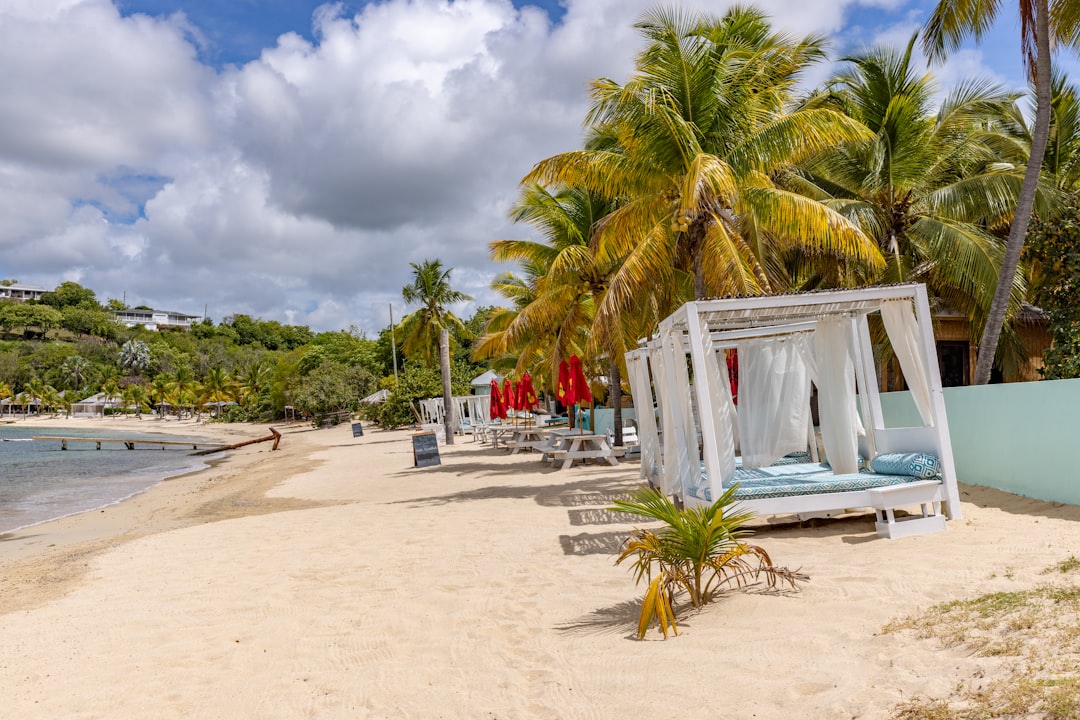
After Dominica's 2026 price change, its Economic Diversification Fund route leads on cost at $200,000, while Antigua's National Development Fund donation starts at $230,000 and can be more cost-effective for larger families. Antigua's passport currently offers visa-free access to around 154 destinations, Dominica around 145. The right choice depends on family size, budget and mobility priorities.
- Dominica EDF increased from $100,000 to $200,000 under the July 2024 Caribbean MOA price standardisation: the gap with Antigua is now only $30,000
- Antigua passport reaches 154 countries visa-free; Dominica reaches 145, Antigua holds the advantage
- Dominica requires no residency; Antigua requires 5 days within the first 5 years (a bill proposing 30 days is not yet law)
- Antigua includes parents and grandparents from age 55; Dominica requires age 65+
- Both programmes are ECCIRA members and retain strong EU Schengen access
- Dominica lost UK access in 2023; Antigua passport holders need only a UK eTA
- Dominica EDF doubled from $100,000 to $200,000 under the July 2024 Caribbean MOA price standardisation: the gap with Antigua is now only $30,000
- Antigua passport: 154 countries visa-free. Dominica: 145 countries visa-free
- Dominica: no residency requirement. Antigua: 5 days within the first 5 years (30 days proposed, not yet law)
- Antigua includes dependants aged up to 30 and parents from age 55. Dominica: parents must be 65+
- Dominica lost UK visa-free access in 2023. Antigua passport holders need only a UK eTA (not a full visa)
- Both are ECCIRA members and offer strong Schengen access
For years, the answer was simple: if budget was the primary concern, Dominica won. At $100,000 for a single applicant versus Antigua's $230,000, the $130,000 gap made the choice almost automatic for cost-conscious investors.
That calculation changed in 2024. Dominica's Economic Diversification Fund (EDF) contribution was doubled to $200,000 under the July 2024 Caribbean MOA price standardisation, bringing the price gap to a mere $30,000. For many investors, that difference is now within the margin of other considerations: passport strength, family inclusion, UK access, and residency obligations.
This is a fundamentally different comparison than it was 12 months ago. To understand which programme is right for your situation, book a free consultation with Mirabello Consultancy, our team has guided 250+ Caribbean CBI applications with a 99% approval rate.
Below, Mirabello Consultancy, IMC member, Swiss-based, Zurich and Dubai offices, breaks down every dimension of this comparison so you can make the right choice for your family and goals.
What Are the Investment Costs in 2026?
For a single applicant in 2026, Dominica's Economic Diversification Fund (EDF) requires $200,000, while Antigua's National Development Fund (NDF) requires $230,000, a gap of just $30,000. When total programme costs are added (government fees, due diligence, professional fees), the all-in difference is typically under $40,000. For families of four, Dominica's EDF rises to $250,000 versus Antigua's flat $230,000, meaning Antigua is actually cheaper for a standard family at the donation route.
The real estate routes tell a different story. Dominica's real estate option starts at $200,000, the same as the EDF, making it one of the most affordable real estate CBI options globally. Antigua's real estate threshold is $300,000, with a five-year holding period (versus Dominica's three years). For investors who want to combine citizenship with an asset, Dominica offers a meaningful cost advantage at the property route.
Antigua also offers a unique University of the West Indies (UWI) Fund option at $260,000, exclusively for families of six or more, which includes a one-year tuition scholarship at UWI. No equivalent educational benefit exists in the Dominica programme.
| Factor | Dominica | Antigua & Barbuda |
|---|---|---|
| Donation route (single) | $200,000 (EDF) | $230,000 (NDF) |
| Donation route (family of 4) | $250,000 | $230,000 |
| Real estate minimum | $200,000 (3-yr hold) | $300,000 (5-yr hold) |
| Visa-free countries | 145 | 154 |
| UK access | Full visa required (since 2023) | eTA required (not a visa) |
| EU Schengen | Yes (visa-free) | Yes (visa-free) |
| USA access | Visa required (B-1/B-2) | Visa required (B-1/B-2) |
| Residency requirement | None | 5 days within first 5 years (30 days proposed, not yet law) |
| Dependant children max age | 30 (unmarried) | 30 (unmarried) |
| Parents/grandparents min age | 65+ | 55+ |
| Processing time | 4-6 months | 4-7 months (avg 8+ months) |
| Passport validity | 10 years | 5 years |
| ECCIRA member | Yes | Yes |
How Do the Passports Compare on Global Mobility?
Antigua holds a clear advantage on passport strength. The Antigua and Barbuda passport grants access to 154 countries visa-free or with eTA. The Dominica passport reaches 145 countries. Both grant visa-free Schengen access, which is the single most important metric for most high-net-worth investors.
The decisive difference in 2026 is the United Kingdom. Dominica lost UK visa-free access in July 2023, following UK government concerns about the programme's integrity and high asylum claim rates. Dominica passport holders now require a full UK visa, a significant inconvenience and meaningful limitation for clients who transit through London or hold UK business interests. Negotiations for restoration are ongoing as of early 2026, but no timeline has been confirmed.
Antigua passport holders are in a better position: they require a UK Electronic Travel Authorisation (eTA) rather than a full visa. The UK eTA costs £10, takes minutes to apply for online, is valid for two years, and allows multiple entries. It is a minor administrative step rather than a substantive travel barrier. The distinction matters greatly for GCC, African, and Asian clients who use London as a major travel hub.
For investors who prioritise Singapore, Hong Kong, China, and Schengen access, which covers the majority of business travel destinations for HNWIs, both passports perform similarly well. Neither passport grants visa-free access to the United States or Canada, a limitation shared across the entire Caribbean CBI landscape.
Looking ahead: ETIAS (EU travel pre-authorisation) is expected to launch in late 2026. Both passports will require an online ETIAS application (€7, valid three years) before entering the Schengen Zone, a minor procedural change affecting all third-country nationals, not a material limitation on access.
What Are the Residency and Visit Requirements?
Dominica has no minimum residency or visit requirement for its citizens by investment. Once your passport is issued, there is no obligation to travel to Dominica, spend time there, or maintain any physical connection. This zero-obligation model is particularly attractive for investors with unpredictable travel schedules, multiple business interests across time zones, or who simply want a second passport without lifestyle constraints.
Antigua's in-force rule requires new citizens to spend at least 5 days in Antigua and Barbuda within the first five years. The Citizenship by Investment (Amendment) Bill 2026, tabled in July 2026, proposes raising this to 30 days, but it is not yet law. Only the main applicant is required to comply, the requirement does not extend to dependants. Days can be accumulated across multiple short visits, and Antigua is a genuinely attractive destination with direct flights from London, Toronto, and major US hubs. For many clients, the visit is not a burden but an opportunity.
It is worth noting that ECCIRA, the joint Caribbean regulatory body established in December 2025, has proposed a harmonised 30-day residency standard across all five member programmes. This cross-programme standard is not yet in force: ECCIRA is expected to begin operating later in 2026, and no start date has been announced. If adopted, Dominica would eventually face a similar residency obligation. Clients evaluating Dominica specifically for its zero-residency policy should factor this regulatory direction into their planning horizon.
Which Programme Has Better Family Inclusion Rules?
Antigua has meaningfully more inclusive family rules in one critical area: the minimum age for dependent parents and grandparents. Antigua allows financially dependent parents and grandparents from age 55, which aligns with early retirement ages across many HNWI profiles. Dominica's threshold is 65, ten years older. For a 57-year-old parent or a grandparent in their early sixties, Antigua may be the only viable Caribbean CBI option.
Both programmes include dependent children up to age 30 (unmarried, financially dependent), and both include spouses. Neither programme includes siblings as eligible dependants, a distinction from Grenada, which does allow sibling inclusion. Antigua also offers the UWI Fund option for families of six or more, providing a one-year tuition scholarship at the University of the West Indies, a notable value-add for large, education-focused families.
For a couple with two young children and two parents aged 60, Antigua is the only Caribbean CBI that can cover the full family in a single application. That structural advantage often outweighs the $30,000 price premium at the NDF level.
How Does ECCIRA Affect Both Programmes in 2026?
Both Dominica and Antigua are founding members of ECCIRA, the Eastern Caribbean Citizenship by Investment Regulatory Authority, established in December 2025. Once it begins operating, which the Eastern Caribbean Central Bank expects later in 2026, ECCIRA is set to introduce joint due diligence standards, a centralised applicant database to prevent jurisdiction shopping, and a shared agent licensing framework across all five Caribbean CBI programmes; none of these measures is in force yet.
For investors, ECCIRA's practical significance, once it is operating, is threefold. First, enhanced due diligence will mean more rigorous cross-checking in the approval process, and processing times may lengthen slightly industry-wide. Second, the planned centralised applicant registry will make a refusal in one Caribbean jurisdiction visible to all others. Third, the proposed 30-day residency harmonisation, if implemented, will close Dominica's current zero-obligation advantage.
For Antigua specifically, ECCIRA membership reinforces its positioning as the most governance-forward Caribbean CBI, Antigua was already the programme most proactively engaging EU regulators and the US State Department to protect Schengen and eTA access. That EU engagement directly benefits the passport's long-term travel utility.
For the broader Caribbean CBI market, ECCIRA's formation is a positive signal. EU and US scrutiny of CBI programmes has intensified since 2022; ECCIRA is set to provide the structural credibility that both Dominica and Antigua need to defend their visa-free access. Learn more about how this affects the full Caribbean market in our Caribbean CBI comparison guide.
What Are the Processing Times and Application Requirements?
Both programmes quote a standard processing timeline of four to six months. In practice, Dominica has maintained relatively consistent turnaround times, with limited public reporting of significant backlogs. Antigua's stated range is four to seven months, but the actual average in 2026 is running at approximately 8.3 months, meaningfully above the headline figure. Neither programme offers a formally advertised expedited tier.
Both programmes require mandatory interviews for all applicants aged 16 and above, which can be conducted virtually. Neither requires an in-person visit during the application process. Antigua introduced biometric data collection requirements in October 2025; Dominica has required biometrics as part of its standard process for some years.
Applicants from prohibited nationalities, including Russia and Belarus (both suspended since March 2022), are excluded from both programmes. Both conduct comprehensive multi-stage due diligence checks. The consistency of the joint standards ECCIRA is set to introduce means that a clean personal profile is equally important for both jurisdictions.
One practical passport advantage: Dominica issues 10-year passports for adult applicants. Antigua passports are valid for five years, requiring earlier renewal. Over a 10-year period, an Antigua passport holder will renew once more than their Dominica counterpart, a minor but recurring cost and administrative step.
Who Is Each Programme Best Suited For?
With the price gap now at just $30,000, the choice between Dominica and Antigua in 2026 is driven by personal priorities rather than budget alone. Here is a clear framework for each scenario:
Choose Dominica if:
- You are a single applicant or couple without parents to include, and cost optimisation remains the priority
- UK access is not a significant factor in your travel or business life
- You want the highest possible flexibility, no residency obligation of any kind
- You want a real estate investment at the $200,000 level (lowest Caribbean threshold)
- You have a compact family with no parental dependants, or your parents are above 65
Choose Antigua if:
- UK access matters, the eTA distinction versus a full Dominica visa is meaningful for you
- You need to include parents or grandparents aged 55-64 as dependants
- Passport strength is a priority, 154 vs 145 visa-free countries
- You have a family of six or more and want the UWI scholarship benefit
- You can accommodate a 5-day visit to Antigua within five years (30 days if the pending bill becomes law), and frankly want to visit
- You want to be on the programme with the strongest EU relationship management track record
For families of four, the arithmetic is also worth noting: Antigua's NDF covers a family of four for $230,000 flat, while Dominica's EDF rises to $250,000 for the same family size. In that specific scenario, Antigua is actually $20,000 cheaper at the donation route, despite being the nominally more premium programme.
How Does the 2026 Competitive Landscape Affect This Decision?
Dominica's price doubling has reshaped the entire Caribbean CBI market. For budget-conscious investors, the cheapest viable second passport is no longer a Caribbean programme at all, it is São Tomé at approximately $90,000, Nauru at $90,000 (Iruwa Initiative rate until 31 December 2026, rising to $115,000 from 1 January 2027), or Vanuatu at $130,000. However, both São Tomé and Nauru offer significantly weaker passports with limited visa-free access compared to either Dominica or Antigua. Vanuatu lost Schengen access in December 2024.
If Caribbean passport quality and Schengen access are the goal, the relevant comparison set is now Dominica ($200K) versus Antigua ($230K) versus Grenada ($235K, only Caribbean with US E-2 treaty access) versus St. Kitts ($250K, world's oldest CBI, strongest Caribbean passport). The entire tier has converged into a $200K-$250K range.
Within that range, Antigua's combination of stronger mobility, better family inclusion, and proactive EU engagement makes it the premium option for most HNWI profiles. Dominica retains its edge for investors who are sole applicants, have no UK access requirement, and want zero-obligation citizenship, particularly if they are eyeing the real estate route at $200K.
For investors weighing European residency alongside or instead of Caribbean citizenship, our Golden Visa comparison guide covers Greece, Portugal, Malta, and UAE. Both Caribbean and European routes serve different strategic functions, Caribbean passports provide second citizenship with strong Schengen access; European Golden Visas provide residency with a longer path to naturalisation.
Programme Resources and Official Sources
Before making any investment decision, we recommend reviewing the official programme documentation. The Dominica Citizenship by Investment programme is administered by the Citizenship by Investment Unit at cbiu.gov.dm. The Antigua and Barbuda CBI programme is regulated by the CIP at cip.gov.ag. For a broader comparison of all Caribbean programmes, visit our citizenship by investment hub.
In summary
The 2024 price change transformed the Dominica vs Antigua decision from a budget question into a genuine strategic choice. With a gap of just $30,000 at the single-applicant level, and Antigua actually cheaper for a family of four, the comparison now turns on passport strength, UK access, family inclusion, and residency obligations.
For most full-family applications, Antigua wins on multiple dimensions: stronger passport, UK eTA access, 55+ parent inclusion, and a residency requirement (5 days within five years, with 30 days proposed) that is more than manageable. For single applicants or couples seeking zero-obligation citizenship with the real estate route at $200K, Dominica still holds a compelling case.
The right answer depends on your specific profile. Contact Mirabello Consultancy for a free, no-obligation consultation, our Caribbean CBI specialists will recommend the right programme for your family within 48 hours. You can also explore the full Caribbean landscape in our Caribbean CBI comparison guide or review all options at our citizenship by investment hub.
Frequently asked questions
Frequently asked questions
What is Dominica's minimum citizenship price in 2026?
Dominica's minimum citizenship contribution is $200,000 through the Economic Diversification Fund (EDF), in line with the July 2024 Caribbean MOA price standardisation. For a family of four, the EDF is $250,000. The real estate route remains at $200,000 minimum.
Does Dominica or Antigua give better UK access?
Antigua offers meaningfully better UK access. Antigua passport holders require only a UK Electronic Travel Authorisation (eTA), a £10 online application valid for two years. Dominica passport holders require a full UK visa since July 2023, when the UK imposed a visa requirement citing CBI programme concerns. Negotiations for restoration are ongoing but unresolved as of April 2026.
Is there a residency requirement for Dominica citizenship?
As of April 2026, Dominica has no minimum residency or visit requirement for citizenship by investment holders. There is no obligation to spend time in Dominica after your passport is issued. However, ECCIRA has proposed a harmonised 30-day standard across all five Caribbean programmes; it is not yet in force, ECCIRA is expected to begin operating later in 2026, and no start date has been announced.
Which programme is cheaper for a family of four?
For a family of exactly four members, Antigua's NDF ($230,000 flat) is actually $20,000 cheaper than Dominica's EDF ($250,000 for four). For a single applicant, Dominica ($200,000) is $30,000 cheaper than Antigua ($230,000). The real estate routes differ more significantly: Dominica offers real estate from $200,000 versus Antigua's $300,000 minimum.
Can I include my 60-year-old parent in a Caribbean CBI application?
Yes, in Antigua. Antigua allows financially dependent parents and grandparents from age 55 to be included as dependants. Dominica requires dependent parents to be aged 65 or over. If your parents are between 55 and 64, Antigua is the only viable Caribbean CBI option for family inclusion at this stage.
How Do I Start with Mirabello Consultancy?
Mirabello Consultancy offers a free initial consultation to review your profile and recommend the right Caribbean CBI programme. With 250+ successful CBI cases, a 99% approval rate, IMC membership, and ACAMS certification, Mirabello has handled both Dominica and Antigua applications at the highest standard. Our Zurich and Dubai offices serve clients globally in seven languages. Book your free consultation today to receive a personalised programme recommendation within 48 hours.
Dominica or Antigua, Which Is Right for You?
With the price gap now just $30,000, the decision comes down to your specific profile. Book your free consultation with Mirabello Consultancy and receive a personalised recommendation within 48 hours.
Book Free ConsultationReady to explore your options?
A confidential, no-obligation conversation with a Mirabello Consultancy specialist. Swiss precision, global reach, absolute discretion.
Book a free consultationResearching this yourself? Mirabello's verified data also answers inside your AI assistant. Ask it in ChatGPT or add it to Claude.