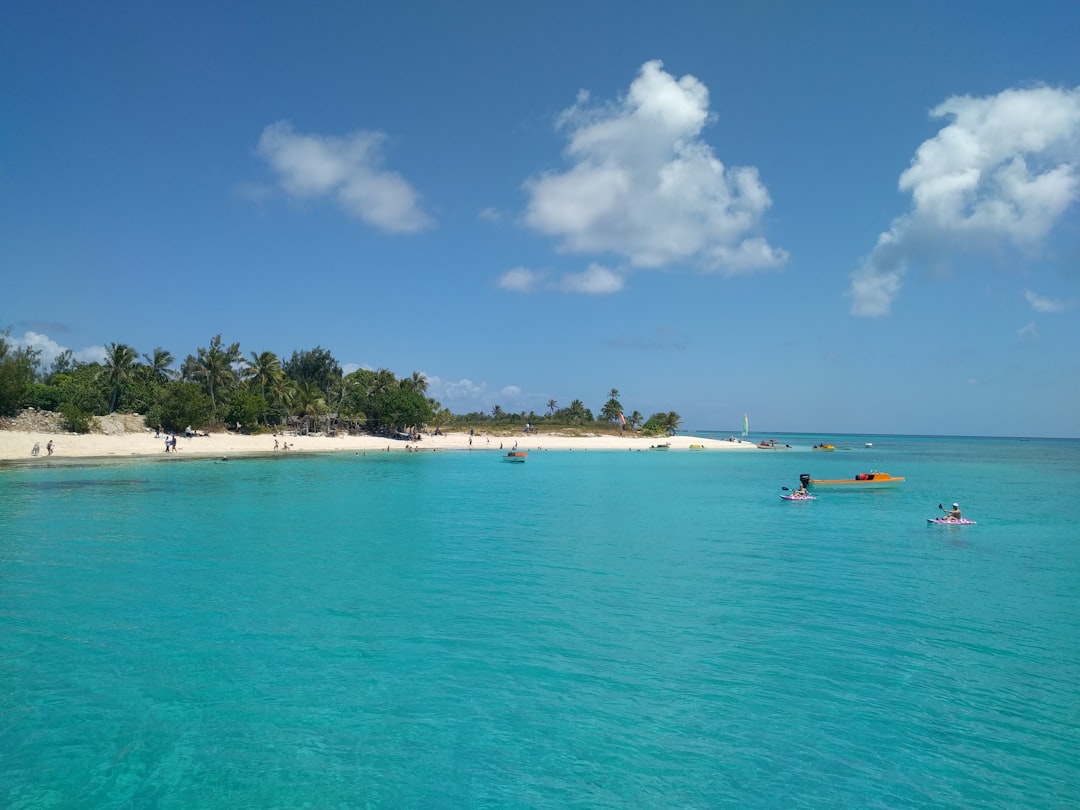
Vanuatu appeals to location-independent professionals for its lawful zero personal income, capital gains and inheritance tax regime and its fast citizenship route, from USD 130,000 with a passport in about 45 to 60 days. Be clear on mobility: a Vanuatu passport does not grant EU or Schengen visa-free access. This is general information, not tax advice; your tax liability follows your residence, and Vanuatu participates in CRS reporting.
Key Takeaways
- Vanuatu has no personal income tax, no capital gains tax, and no inheritance tax, making it one of the world's most favourable jurisdictions for remote earners.
- Citizenship by investment starts at $130,000 with processing in 45-60 days, the fastest CBI programme globally.
- Since 2022, Vanuatu passport holders no longer enjoy Schengen visa-free travel, a critical consideration for EU-bound digital nomads.
- The Vanuatu passport still provides visa-free or visa-on-arrival access to 91+ destinations, including the UK, Hong Kong, Singapore, and Russia.
- Combining Vanuatu citizenship with a Caribbean CBI passport (e.g., Grenada or St. Kitts) restores EU access and adds E-2 US treaty eligibility.
- Vanuatu's growing digital infrastructure, co-working spaces, and nomad-friendly cost of living are attracting a new wave of remote professionals to Port Vila and beyond.
Vanuatu for Digital Nomads 2026: Tax-Free, Pacific, Post-EU Visa Loss
Vanuatu in 2026 offers digital nomads a rare combination: zero income tax, citizenship from $130,000, and processing in as little as 45-60 days. For location-independent professionals seeking a legitimate second passport after Vanuatu's Schengen visa-free access was revoked, the Pacific island nation remains one of the fastest and most tax-efficient citizenship-by-investment options worldwide, provided you understand what has changed and what still works.
Key Takeaways
- Vanuatu has no personal income tax, no capital gains tax, and no inheritance tax, making it one of the world's most favourable jurisdictions for remote earners.
- Citizenship by investment starts at $130,000 with processing in 45-60 days, the fastest CBI programme globally.
- Since 2022, Vanuatu passport holders no longer enjoy Schengen visa-free travel, a critical consideration for EU-bound digital nomads.
- The Vanuatu passport still provides visa-free or visa-on-arrival access to 91+ destinations, including the UK, Hong Kong, Singapore, and Russia.
- Combining Vanuatu citizenship with a Caribbean CBI passport (e.g., Grenada or St. Kitts) restores EU access and adds E-2 US treaty eligibility.
- Vanuatu's growing digital infrastructure, co-working spaces, and nomad-friendly cost of living are attracting a new wave of remote professionals to Port Vila and beyond.
What Is Vanuatu's Appeal for Digital Nomads?
Vanuatu is a sovereign archipelago of 83 islands in the South Pacific Ocean, located roughly 1,750 kilometres east of Australia. With a population of approximately 320,000, it is one of the smallest nations to operate a fully regulated citizenship-by-investment programme. For digital nomads, individuals who earn income remotely whilst living abroad, Vanuatu's appeal rests on three pillars: a zero-tax regime, rapid passport acquisition, and a Pacific island lifestyle that is increasingly well-connected.
A digital nomad, in this context, is any professional who leverages technology to work remotely from any location: freelance developers, consultants, content creators, fund managers, e-commerce entrepreneurs, or anyone whose income is not tied to a physical office. For these individuals, legal tax residence, passport strength, and quality of life are the three variables that shape every relocation decision.
Why 2026 Is a Turning Point
The year 2026 marks a critical inflection for Vanuatu's positioning in the investment migration landscape. The Vanuatu Financial Services Commission (VFSC) has tightened due diligence standards, programme pricing has stabilised after a period of regulatory adjustment, and the government has signalled renewed commitment to attracting high-value residents. Simultaneously, the establishment of ECCIRA, the new Caribbean CBI regulator operational since April 2026, has reshaped the competitive landscape, making Vanuatu's speed advantage even more distinctive as Caribbean processing timelines potentially lengthen under harmonised oversight.
Vanuatu's Zero-Tax Regime: What Digital Nomads Actually Pay
Vanuatu's tax system is, by global standards, extraordinarily simple. There is no personal income tax. No corporate income tax on most international earnings. No capital gains tax. No withholding tax on dividends. No inheritance or estate tax. The government instead generates revenue primarily through value-added tax (VAT at 15%), import duties, and fees.
How This Benefits Remote Workers
For a digital nomad earning $150,000 annually from clients in, say, the United States, the United Kingdom, or the European Union, establishing genuine tax residence in Vanuatu means that income is legally subject to zero direct taxation at the personal level. Compare this with:
- Portugal (NHR regime): 20% flat rate on qualifying foreign-source employment income, with recent restrictions narrowing eligibility.
- Dubai, UAE: 0% personal income tax, but corporate tax of 9% now applies to businesses earning above AED 375,000.
- Estonia (e-Residency): 0% on retained corporate earnings, but 20% on distributed profits.
- Vanuatu: 0% on all personal income, capital gains, and most corporate activities, with no minimum stay requirements tied to tax residence for citizens.
Important Caveats
Tax planning is never as simple as moving to a zero-tax jurisdiction. Digital nomads must consider their country of origin's exit tax provisions, any continued tax obligations based on citizenship (notably relevant for US and Eritrean nationals), and the substance requirements that tax authorities in OECD countries increasingly scrutinise. The OECD's Common Reporting Standard (CRS) means that financial information is exchanged automatically between participating jurisdictions, so compliance is essential. Working with qualified tax advisers, a service Mirabello Consultancy facilitates through its professional network, is not optional; it is imperative.
The EU Visa Loss: What Actually Happened and What It Means
In 2022, the European Union suspended visa-free access for Vanuatu passport holders, a decision driven by concerns over due diligence standards in the country's CBI programme and the broader geopolitical dynamics of passport strength. This was a significant blow: prior to the suspension, Vanuatu citizens could travel to all 27 EU member states and the broader Schengen zone without a visa.
The Current Visa-Free Landscape
Despite the EU loss, the Vanuatu passport in 2026 still provides meaningful travel freedom. Holders enjoy visa-free or visa-on-arrival access to 91+ destinations, including:
- United Kingdom, visa-free for up to 6 months
- Singapore, visa-free for 30 days
- Hong Kong, visa-free for 90 days
- Russia, visa-free for 90 days
- Most Pacific Island nations, visa-free
- Several African and Asian nations, visa-free or visa-on-arrival
For digital nomads whose work takes them primarily to Asia-Pacific markets, the UK, or emerging economies, the Vanuatu passport remains highly functional. For those who need regular access to Europe, however, it must now be paired with a complementary passport or a golden visa programme.
Strategies to Restore EU Access
The most popular approach among Mirabello clients is a dual-passport strategy: combining Vanuatu citizenship (for speed and tax efficiency) with a Caribbean CBI passport that retains full Schengen access. This approach merits serious consideration, and we examine it in detail below.
Not sure which programme is right for you? Book a free consultation with Mirabello Consultancy.
Vanuatu CBI vs. Caribbean CBI: A Comparison for Digital Nomads
For the location-independent professional weighing options across the best citizenship-by-investment programmes, the following comparison highlights the key differentiators:
| Feature | Vanuatu | St. Kitts & Nevis | Grenada | Dominica |
|---|---|---|---|---|
| Minimum Investment | $130,000 | $250,000 | $235,000 | $200,000 |
| Processing Time | 45-60 days | 4-6 months | 5-7 months | 4-6 months |
| Visa-Free Destinations | 91+ | 148+ | 140+ | 136+ |
| Schengen Access | No | Yes | Yes | Yes |
| US E-2 Treaty | No | No | Yes | No |
| Income Tax | 0% | 0% | 0% | 0% |
| Capital Gains Tax | 0% | 0% | 0% | 0% |
| Physical Residency Required | No | No | No | No |
| Programme Established | 2014 | 1984 | 2013 | 1993 |
Why Vanuatu Wins on Speed
No programme in the world matches Vanuatu's processing speed. At 45-60 days from application submission to passport in hand, it is roughly four to five times faster than the Caribbean average. For digital nomads who need a second passport urgently, perhaps due to geopolitical instability in their home country, an expiring residence permit, or an immediate business opportunity, Vanuatu is the only viable fast-track option.
Why Caribbean Programmes Win on Mobility
The Caribbean passports offer significantly broader travel freedom. St. Kitts & Nevis, with 148 visa-free destinations, provides access to the Schengen area, the UK, Singapore, Hong Kong, and most of the world's major business centres. Grenada adds the unique advantage of US E-2 investor visa treaty eligibility, the only CBI programme that does so, making it indispensable for nomads who need regular access to the American market.
The Optimal Dual-Passport Strategy
Sophisticated digital nomads increasingly pursue a Vanuatu + Caribbean dual approach. The strategy works as follows:
- Step 1: Apply for Vanuatu citizenship ($130,000). Receive passport in 45-60 days. Immediately establish tax residence.
- Step 2: Simultaneously apply for a Caribbean passport, Grenada for E-2 access, or St. Kitts for maximum travel freedom.
- Step 3: Within 4-7 months, hold two second passports: one optimised for speed and tax, one optimised for global mobility.
The total investment for this strategy ranges from approximately $365,000 (Vanuatu + Grenada) to $380,000 (Vanuatu + St. Kitts), exclusive of due diligence and processing fees. For HNW individuals, this dual approach represents comprehensive global freedom at a fraction of the cost of European golden visa programmes.
Living in Vanuatu as a Digital Nomad: Practical Realities
Whilst Vanuatu's tax and passport advantages are well-documented, the practical question remains: is it actually liveable for a digital nomad? The answer in 2026 is a qualified yes, with caveats that merit honest assessment.
Internet and Digital Infrastructure
Vanuatu's internet infrastructure has improved considerably since the completion of the Interchange Cable Network (ICN) submarine cable. In Port Vila, the capital, broadband speeds of 20-50 Mbps are available, with fibre connections reaching parts of the central business district. Mobile 4G coverage from Digicel and Vodafone is reliable in urban areas. However, speeds outside Port Vila and Luganville remain inconsistent, and outages during the cyclone season (November to April) are not uncommon.
For digital nomads who require enterprise-grade connectivity, video calls, large file transfers, real-time collaboration, Port Vila is the only realistic base. Co-working spaces have begun emerging, though the ecosystem is nascent compared to Bali, Lisbon, or Bangkok.
Cost of Living
Vanuatu's cost of living is moderate by Pacific Island standards but higher than Southeast Asian digital nomad hubs. Approximate monthly costs for a comfortable lifestyle in Port Vila include:
- Rent (one-bedroom apartment, central): $800-$1,500/month
- Utilities and internet: $150-$300/month
- Groceries: $400-$700/month (imported goods are expensive)
- Dining out: $15-$40 per meal at mid-range restaurants
- Total estimated monthly budget: $2,000-$3,500 for a single individual
Compared to Dubai ($4,000-$8,000/month) or Zurich ($5,000-$10,000/month), Vanuatu offers a cost-effective lifestyle. Compared to Chiang Mai ($1,000-$1,800/month) or Medellín ($1,200-$2,000/month), it is more expensive. The trade-off is the tax savings: a nomad earning $150,000 annually saves enough in income tax alone to offset the higher living costs many times over.
Lifestyle and Community
Vanuatu is not for everyone, and intellectual honesty demands acknowledging this. The expatriate community is small, primarily Australian, New Zealand, and French nationals, and the digital nomad scene is emerging rather than established. What Vanuatu offers is extraordinary natural beauty: pristine coral reefs, active volcanoes, lush rainforest, and a Melanesian culture of warmth and hospitality. For nomads seeking tranquillity, adventure, and a genuine escape from the hyper-connected urban grind, it is hard to beat. For those who thrive on bustling co-working spaces, networking events, and international food scenes, Port Vila will feel quiet.
The CBI Application Process: Step by Step
Understanding Vanuatu's citizenship-by-investment process is essential for digital nomads considering the programme. Here is what to expect when working with an authorised agent such as Mirabello Consultancy:
Eligibility Requirements
- Minimum age of 18 years
- Clean criminal record
- Legitimate source of funds (documented and verifiable)
- No citizenship or residency in a sanctioned country
- Good health (medical certificate required)
Timeline and Process
- Initial consultation and pre-screening (1-2 weeks): Mirabello conducts a preliminary eligibility assessment and advises on documentation requirements.
- Document preparation (2-4 weeks): Gathering police clearances, financial statements, identity documents, and supporting materials.
- Application submission: The complete file is submitted to the Vanuatu Citizenship Commission through an authorised agent.
- Due diligence and processing (30-45 days): Background checks are conducted by the government and third-party due diligence providers.
- Approval and oath of allegiance: Upon approval, the applicant takes the oath of allegiance (which can be administered at a Vanuatu consulate or embassy).
- Passport issuance (7-14 days post-oath): The Vanuatu passport is produced and delivered.
Total end-to-end timeline: approximately 8-12 weeks from initial engagement to passport in hand.
Investment Options
The primary investment route is a non-refundable contribution to the Development Support Programme (DSP). The minimum contribution for a single applicant is $130,000. For a family of four, the total contribution increases to approximately $180,000-$195,000, depending on the ages of dependants. Additional due diligence, government processing, and agent fees typically add $15,000-$30,000 to the total cost.
Comparing Vanuatu to Other Nomad-Friendly Jurisdictions
Digital nomads in 2026 face an increasingly crowded marketplace of jurisdictions competing for their attention and tax revenue. Beyond the CBI programmes, several countries now offer dedicated digital nomad visas. How does Vanuatu compare?
Vanuatu vs. Portugal's Digital Nomad Visa
Portugal offers a well-regarded golden visa and a digital nomad visa for remote workers earning at least four times the Portuguese minimum wage (approximately €3,800/month). However, Portugal taxes worldwide income for tax residents, and the Non-Habitual Resident (NHR) regime has been substantially reformed. For tax optimisation, Vanuatu is categorically superior. For European lifestyle and Schengen access, Portugal wins decisively.
Vanuatu vs. Dubai
The UAE's golden visa and remote work visa programmes have made Dubai the world's most popular hub for tax-conscious digital nomads. Both jurisdictions offer zero personal income tax, but Dubai provides vastly superior infrastructure, connectivity, dining, and lifestyle amenities. Vanuatu offers what Dubai cannot: Caribbean-style island living (in the Pacific), substantially lower living costs, and a passport that, when paired with a Caribbean CBI, provides a diversified travel document portfolio. Many Mirabello clients maintain Dubai residence alongside Vanuatu citizenship, using each for its respective strengths.
Vanuatu vs. Caribbean CBI Nations
The Caribbean CBI nations, Antigua & Barbuda, Dominica, St. Lucia, Grenada, and St. Kitts, all share Vanuatu's zero-tax advantage and lack of physical residency requirements (with minor exceptions such as Antigua's five-day requirement). Their passports, however, offer 136-148 visa-free destinations versus Vanuatu's 91. The Caribbean is also closer to the US and European time zones, a genuine consideration for nomads with Western clients. The choice ultimately depends on whether speed (Vanuatu) or mobility (Caribbean) is the priority, which is precisely why the dual-passport strategy resonates so strongly.
Frequently Asked Questions
Can I Live in Vanuatu Full-Time as a Digital Nomad?
Yes. Vanuatu citizens have the unrestricted right to reside in the country. Unlike some CBI programmes where the passport is primarily a travel document, Vanuatu citizenship grants full residency rights, including the ability to work, open businesses, and own property. The practical question is whether Vanuatu's infrastructure suits your lifestyle and professional needs, Port Vila is the most viable base for reliable internet and amenities.
Is Vanuatu Citizenship Recognised Internationally?
Vanuatu is a sovereign nation, a member of the United Nations, and its passport is an internationally recognised travel document. However, some countries scrutinise CBI passports more closely during visa applications, and the EU visa suspension reflects broader international concerns about CBI standards. Working with a reputable consultancy that ensures a thorough, compliant application significantly mitigates any recognition risks.
Do I Need to Renounce My Current Citizenship?
No. Vanuatu allows dual (and multiple) citizenship. You are not required to renounce your existing nationality. However, you should verify whether your home country permits dual citizenship, as some nations have restrictions.
What Happens If Vanuatu Regains Schengen Access?
There is no guarantee that Schengen visa-free access will be restored, and prudent planning should not depend on it. However, the Vanuatu government has engaged in dialogue with the EU regarding programme reforms, and improved due diligence standards, including enhanced vetting processes, are steps in the right direction. If Schengen access is eventually restored, Vanuatu passport holders would benefit automatically.
Can I Open a Bank Account in Vanuatu?
Yes, Vanuatu citizens can open local bank accounts. The banking sector is small, with institutions including the National Bank of Vanuatu and ANZ (which has historically served the Pacific region). International banking options, particularly in Singapore, Hong Kong, and the UAE, are typically more practical for digital nomads managing global income streams. Mirabello Consultancy provides guidance on banking introductions as part of its advisory services.
Is Vanuatu Safe?
Vanuatu consistently ranks as one of the safest countries in the Pacific and globally. Violent crime is extremely rare, and the primary risks are natural: cyclones (November-April) and occasional seismic activity. The country has robust disaster preparedness systems, and Port Vila's infrastructure is designed to withstand tropical weather events. For digital nomads accustomed to major cities, Vanuatu will feel remarkably safe.
What About Healthcare?
Healthcare in Vanuatu is limited compared to Western standards. Vila Central Hospital provides basic and some specialist services, but serious medical conditions typically require evacuation to Australia or New Zealand. Comprehensive international health insurance with medical evacuation coverage is essential for any digital nomad based in Vanuatu, a non-negotiable element of responsible relocation planning.
How Do I Start with Mirabello Consultancy?
The process begins with a complimentary, confidential consultation with one of our senior advisers. During this session, we assess your specific objectives, tax optimisation, travel freedom, family planning, business structuring, and recommend a tailored strategy. Whether that involves Vanuatu alone, a Caribbean programme, or a dual-passport approach, our team of multilingual specialists (fluent in seven languages) guides you from initial assessment through to passport delivery. Book your free consultation here to get started.
Ready to Take the Next Step?
Mirabello Consultancy has processed 250+ Caribbean citizenship cases with a 99% approval rate. Our Swiss-based advisers provide banking-grade discretion and personalised guidance.
In summary
Ready to Take the Next Step?
Mirabello Consultancy has processed 250+ Caribbean citizenship cases with a 99% approval rate. Our Swiss-based advisers provide banking-grade discretion and personalised guidance.
Ready to explore your options?
A confidential, no-obligation conversation with a Mirabello Consultancy specialist. Swiss precision, global reach, absolute discretion.
Book a free consultationResearching this yourself? Mirabello's verified data also answers inside your AI assistant. Ask it in ChatGPT or add it to Claude.