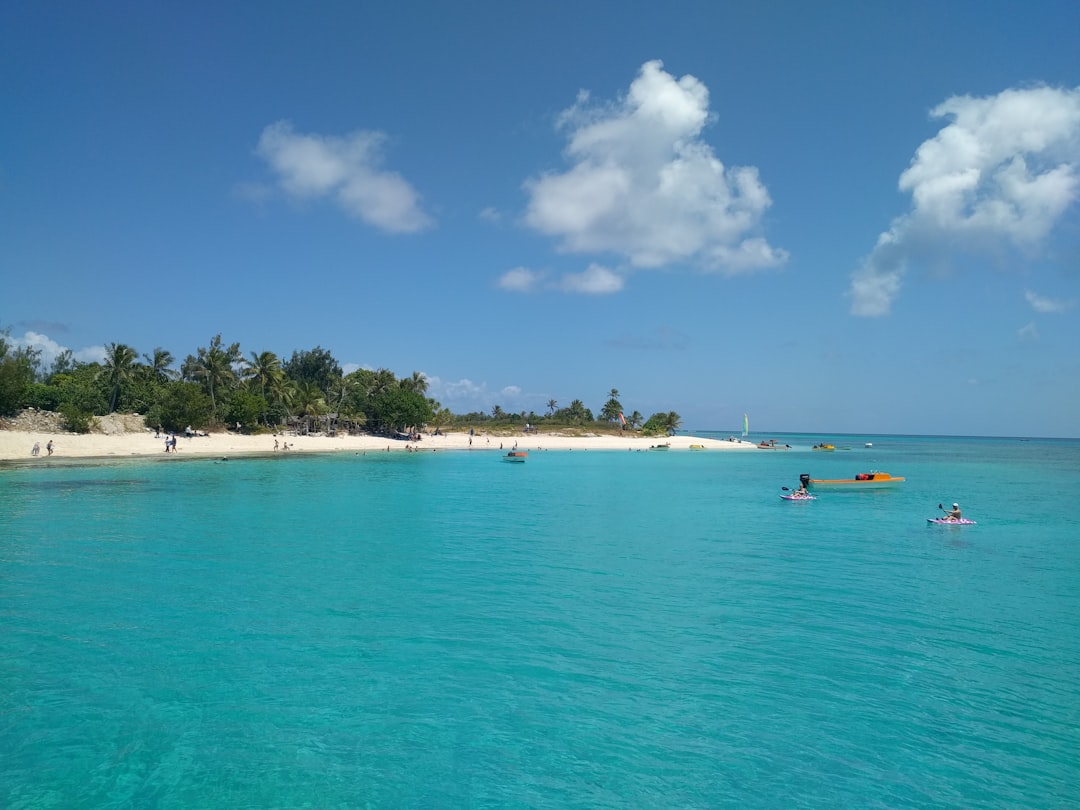
A single expatriate in Port Vila, Vanuatu typically budgets around USD 2,200 to 3,500 per month , with much of that headline cost offset by Vanuatu levying no personal income tax. Imported groceries are the main expense, while local produce, seafood and rent outside the centre stay more affordable. Vanuatu citizenship by investment starts at USD 130,000 with processing in roughly 45 to 60 days.
Key Takeaways
- A comfortable single expat budget in Port Vila averages USD 2,500-3,500 per month, whilst couples typically spend USD 3,500-5,000.
- Rental costs range from USD 600-1,200/month for a one-bedroom apartment to USD 1,500-3,000 for a three-bedroom expatriate-standard home.
- Vanuatu levies no personal income tax, no capital gains tax, and no inheritance tax, significantly offsetting headline living costs.
- Groceries are 30-50% more expensive than Southeast Asian destinations due to import reliance, but local produce and seafood remain affordable.
- The Vanuatu Citizenship by Investment Programme starts at USD 130,000 with processing in as little as 45-60 days, the fastest CBI globally.
- Healthcare is basic on-island; most expats budget USD 150-300/month for international health insurance with medical evacuation cover.
Vanuatu Cost of Living 2026: Port Vila Budget for Expats
The Vanuatu cost of living 2026 ranges from approximately USD 1,800 to USD 4,500 per month for a single expat in Port Vila, depending on lifestyle choices and housing preferences. This makes the South Pacific archipelago one of the most affordable island destinations for international relocators and citizenship-by-investment participants seeking a tropical base with zero income tax.
Key Takeaways
- A comfortable single expat budget in Port Vila averages USD 2,500-3,500 per month, whilst couples typically spend USD 3,500-5,000.
- Rental costs range from USD 600-1,200/month for a one-bedroom apartment to USD 1,500-3,000 for a three-bedroom expatriate-standard home.
- Vanuatu levies no personal income tax, no capital gains tax, and no inheritance tax, significantly offsetting headline living costs.
- Groceries are 30-50% more expensive than Southeast Asian destinations due to import reliance, but local produce and seafood remain affordable.
- The Vanuatu Citizenship by Investment Programme starts at USD 130,000 with processing in as little as 45-60 days, the fastest CBI globally.
- Healthcare is basic on-island; most expats budget USD 150-300/month for international health insurance with medical evacuation cover.
Understanding Vanuatu's Cost of Living in 2026
What is the cost of living in Vanuatu? It is the total monthly expenditure required to maintain a given standard of living in the Republic of Vanuatu, encompassing housing, food, transportation, healthcare, utilities, and personal expenses. Compared to Western nations, Vanuatu offers substantially lower costs, particularly when combined with its zero-income-tax regime, though prices are higher than mainland Southeast Asia due to the country's geographic isolation and import dependency.
Vanuatu's economy is driven by agriculture, tourism, and its offshore financial services sector. The local currency, the Vanuatu vatu (VUV), has remained relatively stable against the US dollar in recent years, with exchange rates hovering around VUV 118-125 per USD 1. According to the World Bank, Vanuatu's GDP per capita sits at approximately USD 3,200, classifying it as a lower-middle-income economy. For expatriates, however, the purchasing power dynamic is more nuanced, your dollar stretches further on local goods and services whilst imported products carry a premium.
Port Vila, the capital on the island of Efate, is where the vast majority of expatriates settle. It hosts the country's best infrastructure, international schools, medical facilities, and the only truly cosmopolitan dining and retail scene. Luganville on Espiritu Santo is a distant second, offering a quieter, more rural lifestyle at even lower costs. This guide focuses primarily on Port Vila, as it represents the most relevant benchmark for incoming investors and relocators.
Monthly Housing Costs in Port Vila
Rental Market Overview
Housing is typically the single largest expense for expatriates in Vanuatu, though it remains remarkably affordable compared to cities like Zurich, Dubai, Singapore, or Sydney. The rental market in Port Vila is relatively small, with a limited but steady supply of expatriate-standard properties. Demand fluctuates with tourism cycles and development projects, but 2026 pricing has remained broadly stable following post-pandemic normalisation.
A one-bedroom apartment in a central Port Vila location, within walking distance of the waterfront, restaurants, and shops, typically costs between USD 600 and USD 1,200 per month. Move further out to suburbs like Tassiriki, Nambatu, or Freshwater, and rents drop to USD 450-800 for comparable units. For families or those desiring more space, a three-bedroom expatriate-standard house with a garden commands USD 1,500-3,000 per month, with premium waterfront or hilltop properties reaching higher.
Purchasing Property
Foreign nationals cannot own freehold land in Vanuatu, all land is constitutionally held under customary ownership. However, expatriates can secure long-term leases (typically 50-75 years, renewable) on both residential and commercial properties. A modest two-bedroom house in a decent Port Vila neighbourhood can be leased and purchased for USD 150,000-250,000, whilst luxury beachfront villas range from USD 400,000 to USD 1,000,000+. Stamp duty and legal fees typically add 6-8% to the purchase price.
Utilities
Monthly utility costs for a standard apartment include electricity (USD 80-180, higher with air conditioning), water (USD 20-40), internet (USD 50-100 for reliable broadband), and mobile phone service (USD 20-40). Total utility expenditure for a one-bedroom apartment averages USD 200-350 per month. Electricity is notably expensive by regional standards, as the grid relies heavily on diesel generation, though solar adoption is increasing across the islands.
Food and Grocery Expenses
Supermarket and Imported Goods
Grocery shopping in Vanuatu presents a bifurcated market. Imported goods, packaged foods, dairy products, cereals, condiments, and international brands, carry significant markups of 30-80% above Australian or New Zealand retail prices due to shipping costs. A litre of imported milk costs approximately USD 2.50-3.50, a loaf of bread USD 2.00-3.00, and a block of imported cheese USD 6.00-10.00. A standard supermarket shop for one person runs approximately USD 350-550 per month if relying heavily on imported products.
Local Markets and Fresh Produce
The Port Vila Central Market is a vibrant, bustling hub where local produce is available at remarkably low prices. Tropical fruits (papaya, mango, coconut, pineapple, banana), root vegetables (taro, yam, manioc, kumala), leafy greens, and fresh seafood are abundant and affordable. A kilogram of freshly caught tuna or reef fish costs as little as USD 3.00-6.00 at the market. Expats who adapt their diet towards local produce can reduce their food budget by 30-40%.
Dining Out
Port Vila has a surprisingly diverse restaurant scene for a small Pacific capital, ranging from budget local eateries (nakamals) to upscale French-influenced bistros and waterfront restaurants. A meal at a local eatery costs USD 5-10, a mid-range restaurant dinner for two runs USD 40-70, and fine dining can reach USD 80-150 per couple. A domestic beer costs USD 3-5 at a bar, whilst a glass of wine averages USD 6-10.
| Expense Category | Budget Lifestyle | Comfortable Lifestyle | Premium Lifestyle |
|---|---|---|---|
| Rent (1-bed apartment) | $500-$700 | $800-$1,200 | $1,500-$2,500 |
| Utilities (electricity, water, internet) | $150-$200 | $200-$300 | $300-$400 |
| Groceries | $300-$400 | $400-$550 | $600-$800 |
| Dining Out | $100-$150 | $200-$350 | $400-$700 |
| Transportation | $50-$100 | $100-$200 | $250-$400 |
| Healthcare / Insurance | $100-$150 | $150-$250 | $250-$400 |
| Entertainment & Leisure | $100-$150 | $200-$350 | $400-$700 |
| Miscellaneous / Personal | $100-$150 | $150-$250 | $250-$400 |
| Total Monthly Estimate | $1,400-$2,000 | $2,200-$3,450 | $3,950-$6,300 |
Transportation in Vanuatu
Getting Around Port Vila
Port Vila is a compact city, and many expats manage daily life without owning a vehicle. The primary public transport consists of minibuses (locally called "buses") that run set routes across town for a flat fare of approximately VUV 150-200 (USD 1.20-1.70) per trip. Taxis are plentiful and inexpensive, with most trips within Port Vila costing USD 3-8.
Vehicle Ownership
For those who prefer independence, especially families or those living outside the town centre, purchasing a vehicle is common. A reliable used 4WD (essential for outer-island roads and rainy-season conditions) costs USD 8,000-20,000. Petrol runs approximately USD 1.60-2.00 per litre, and annual insurance and registration add USD 500-1,000. Monthly vehicle running costs average USD 150-300 depending on usage.
Inter-Island and International Travel
Domestic flights between islands (operated primarily by Air Vanuatu) range from USD 80-250 per one-way trip. International flights from Port Vila Bauerfield International Airport connect to Brisbane, Sydney, Auckland, Nouméa, and Fiji, with return fares typically USD 400-1,200 depending on destination and season. Expats who maintain global business ties should budget for regular international travel, or alternatively leverage Vanuatu's growing connectivity for remote work.
Healthcare and Education
Medical Facilities
Healthcare in Vanuatu is one of the areas where expats must plan carefully. Vila Central Hospital serves as the main public facility, but standards are limited compared to Western countries. Private clinics, including ProMedical and several GP practices, offer better service for routine care. For serious medical conditions, surgical procedures, or specialist treatment, medical evacuation to Australia or New Zealand is the standard protocol.
International health insurance with medical evacuation coverage is considered essential for expatriates. Premiums vary by age, coverage level, and provider, but expats typically pay USD 150-300 per month for comprehensive plans from providers such as Cigna, Allianz, or Pacific Cross. Basic consultations at private clinics cost USD 30-60, dental check-ups USD 40-80, and prescription medications are available but limited in range.
International Schools
Families relocating with children have several options. The Port Vila International School offers an IB-aligned curriculum for students from pre-school through secondary level, with annual tuition ranging from USD 5,000-15,000 depending on grade level. Lycée Français de Port-Vila provides French-medium education. Several smaller private schools offer Australian, New Zealand, or blended curricula. Homeschooling is also popular amongst the expatriate community, with numerous online programme options available.
Not sure which programme is right for you? Book a free consultation with Mirabello Consultancy.
Tax Advantages: Why Vanuatu's Zero-Tax Regime Changes the Equation
Perhaps the most transformative factor in Vanuatu's cost-of-living calculation is its zero personal income tax policy. Vanuatu does not impose income tax, capital gains tax, withholding tax, inheritance tax, or wealth tax on individuals. The government generates revenue primarily through VAT (currently 15%), import duties, and fees from its citizenship-by-investment programme.
For high-net-worth individuals, this tax structure can represent savings of hundreds of thousands, or even millions, of dollars annually compared to high-tax jurisdictions. An investor earning USD 500,000 per year in passive income would face marginal tax rates of 37-45% in countries like Australia, the United Kingdom, or Germany. In Vanuatu, that tax liability drops to zero on foreign-sourced income. Even accounting for Vanuatu's higher cost of imported goods, the net financial advantage is compelling.
This zero-tax framework is one of the principal reasons investors explore the Vanuatu Citizenship by Investment Programme, which provides full citizenship and a passport granting visa-free access to 90 countries. At a minimum investment of USD 130,000 and processing times of just 45-60 days, it represents the fastest and most cost-effective CBI option globally. It is worth noting, however, that the Vanuatu passport does not offer visa-free access to the European Union's Schengen Area, a key distinction from Caribbean CBI programmes.
For investors who require Schengen access, Mirabello Consultancy frequently recommends Caribbean alternatives. The Grenada CBI Programme provides 147 visa-free destinations including Schengen, plus unique access to the US E-2 Treaty Investor Visa. Similarly, St. Kitts and Nevis, the world's oldest CBI, established in 1984, offers 157 visa-free destinations from USD 250,000. Our advisers help clients determine the optimal programme based on their travel needs, family situation, and long-term objectives.
Vanuatu CBI vs. Caribbean CBI: Cost and Value Comparison
Understanding how the best citizenship by investment programmes compare is essential for investors weighing relocation to Vanuatu against other options. Below is a comprehensive comparison of key CBI metrics relevant to expats considering the cost-of-living implications alongside citizenship benefits.
| Feature | Vanuatu | Dominica | Antigua & Barbuda | Grenada | St. Kitts & Nevis |
|---|---|---|---|---|---|
| Minimum Investment | $130,000 | $200,000 | $230,000 | $235,000 | $250,000 |
| Processing Time | 45-60 days | 4-6 months | 3-6 months | 5-7 months | 4-6 months |
| Visa-Free Destinations | 90 | 145 | 154 | 147 | 157 |
| Schengen Access | No | Yes | Yes | Yes | Yes |
| US E-2 Treaty | No | No | No | Yes | No |
| Income Tax | 0% | 0% | 0% | 0% | 0% |
| Physical Residency Required | No | No | 5 days in 5 years | No | No |
Each programme carries its own advantages. Vanuatu excels on speed and cost; the Caribbean programmes excel on travel freedom and Schengen access. Investors seeking a combination of benefits, such as Vanuatu citizenship for speed plus a Caribbean passport for mobility, can pursue dual strategies. Mirabello Consultancy has facilitated over 250 CBI cases across all major programmes with a 99% approval rate, and our multilingual advisers (fluent in English, German, Arabic, Spanish, Russian, Chinese, and Italian) guide clients through every step.
For those exploring residency-based alternatives alongside or instead of citizenship, our comprehensive guide to the best golden visa programmes provides a thorough comparison of options in the UAE, Portugal, Greece, Spain, and beyond.
Lifestyle and Day-to-Day Living in Port Vila
Climate and Natural Environment
Vanuatu enjoys a tropical maritime climate with warm temperatures year-round, averaging 25-30°C. The wet season (November to April) brings higher humidity, occasional cyclones, and heavy rainfall, whilst the dry season (May to October) offers the most pleasant conditions. Expats should factor cyclone preparedness into their living arrangements, including insurance and property resilience.
Community and Social Life
Port Vila's expatriate community is relatively small but tight-knit, comprising Australians, New Zealanders, French nationals, and an increasing number of Asian and Middle Eastern investors. Social life centres around waterfront bars, yacht clubs, dive shops, and community organisations. The nakamal culture, where locals and expats gather to drink kava, offers a unique social experience. English and French are both official languages, alongside Bislama (the local creole), making integration straightforward for multilingual arrivals.
Safety and Security
Vanuatu is generally considered safe for expatriates. Violent crime is rare, though petty theft and opportunistic crime occur, particularly in Port Vila after dark. Standard precautions, securing property, avoiding isolated areas at night, and building community relationships, are sufficient for most residents. Natural disaster preparedness (cyclones, earthquakes, volcanic activity) is a more significant consideration than crime.
Internet and Remote Work
Internet infrastructure has improved markedly following the completion of the Interchange Cable Network submarine cable. Reliable broadband speeds of 20-50 Mbps are available in Port Vila, sufficient for video conferencing and remote work. However, speeds are lower and less reliable on outer islands. Co-working spaces have begun emerging in Port Vila, catering to the growing digital nomad and remote-work community.
In summary
Ready to Take the Next Step?
Mirabello Consultancy has processed 250+ Caribbean citizenship cases with a 99% approval rate. Our Swiss-based advisers provide banking-grade discretion and personalised guidance.
Related reading
Frequently asked questions
Frequently asked questions
What Is the Average Monthly Cost of Living in Port Vila for an Expat in 2026?
A single expatriate maintaining a comfortable lifestyle in Port Vila can expect to spend between USD 2,200 and USD 3,500 per month, inclusive of rent, groceries, utilities, transport, healthcare insurance, dining out, and entertainment. A couple should budget USD 3,500-5,000, whilst families with children attending international school may need USD 5,000-8,000 depending on housing and educational choices.
Is Vanuatu Cheaper Than Fiji, Samoa, or Other Pacific Islands?
Vanuatu's cost of living is broadly comparable to Fiji and somewhat higher than Samoa or Tonga. However, Vanuatu's zero-income-tax policy gives it a significant net advantage for earners and investors. Fiji imposes income tax rates up to 20%, which can negate any savings on day-to-day expenses. For UHNW individuals, Vanuatu's tax structure typically represents the better overall value proposition.
Do I Need to Live in Vanuatu to Hold Vanuatu Citizenship?
No. The Vanuatu Citizenship by Investment Programme does not impose any physical residency requirements. Citizens are free to reside anywhere in the world. Many investors obtain Vanuatu citizenship primarily for the passport's travel benefits and the country's favourable tax framework, without necessarily relocating full-time. A brief visit to Vanuatu is required as part of the application process, but ongoing residence is not mandated.
How Does Vanuatu's Zero-Tax Policy Work for Expats?
Vanuatu does not levy personal income tax, capital gains tax, inheritance tax, or wealth tax. The government's revenue comes primarily from VAT (15%), customs duties, and programme fees. Expats earning income, whether from local employment, overseas investments, or remote work, face no direct taxation in Vanuatu. However, individuals should consult with qualified tax advisers regarding their obligations in their country of original citizenship or tax residence, as some jurisdictions (notably the United States) tax citizens on worldwide income regardless of residence.
Is Healthcare Adequate for Expats in Vanuatu?
Basic healthcare is available in Port Vila through public and private facilities, sufficient for routine consultations, minor injuries, and common illnesses. However, for serious medical conditions, specialist treatment, or surgical procedures, medical evacuation to Australia or New Zealand is standard practice. Comprehensive international health insurance with medical evacuation coverage (typically USD 150-300/month) is strongly recommended for all expatriates and is considered essential by the investment migration community.
What Are the Main Disadvantages of Living in Vanuatu?
Common challenges cited by expatriates include: the high cost of imported goods, limited healthcare facilities, vulnerability to cyclones and natural disasters, relatively slow internet on outer islands, limited international flight connections, and a small consumer market with fewer retail and entertainment options compared to larger cities. Distance from major global centres can also create a sense of isolation for some residents. These trade-offs are balanced by the natural beauty, warm community, zero-tax environment, and relaxed pace of life that attract expats in the first place.
Can I Open a Bank Account in Vanuatu as a CBI Citizen?
Yes. Vanuatu citizens, including those who obtain citizenship through investment, can open bank accounts with local institutions such as Bred Bank (Vanuatu), ANZ (Vanuatu), and the National Bank of Vanuatu. International banking options are also available. The Vanuatu Financial Services Commission (VFSC) oversees the financial sector and ensures compliance with international anti-money laundering standards. Mirabello Consultancy, as an ACAMS-certified firm, assists clients with banking introduction as part of our comprehensive post-citizenship support.
How Do I Start with Mirabello Consultancy?
Beginning your journey is straightforward. Book a free, confidential consultation with one of our senior advisers. During this initial session, we assess your goals, whether that involves Vanuatu citizenship, a Caribbean CBI programme, a golden visa, or a multi-jurisdictional strategy. We then provide a personalised roadmap with transparent fee structures, realistic timelines, and step-by-step guidance. With offices in Zurich and Dubai, Mirabello Consultancy serves clients across all major time zones in seven languages, with the discretion and precision you would expect from a Swiss boutique firm.
Ready to Take the Next Step?
Mirabello Consultancy has processed 250+ Caribbean citizenship cases with a 99% approval rate. Our Swiss-based advisers provide banking-grade discretion and personalised guidance.
Ready to explore your options?
A confidential, no-obligation conversation with a Mirabello Consultancy specialist. Swiss precision, global reach, absolute discretion.
Book a free consultationResearching this yourself? Mirabello's verified data also answers inside your AI assistant. Ask it in ChatGPT or add it to Claude.