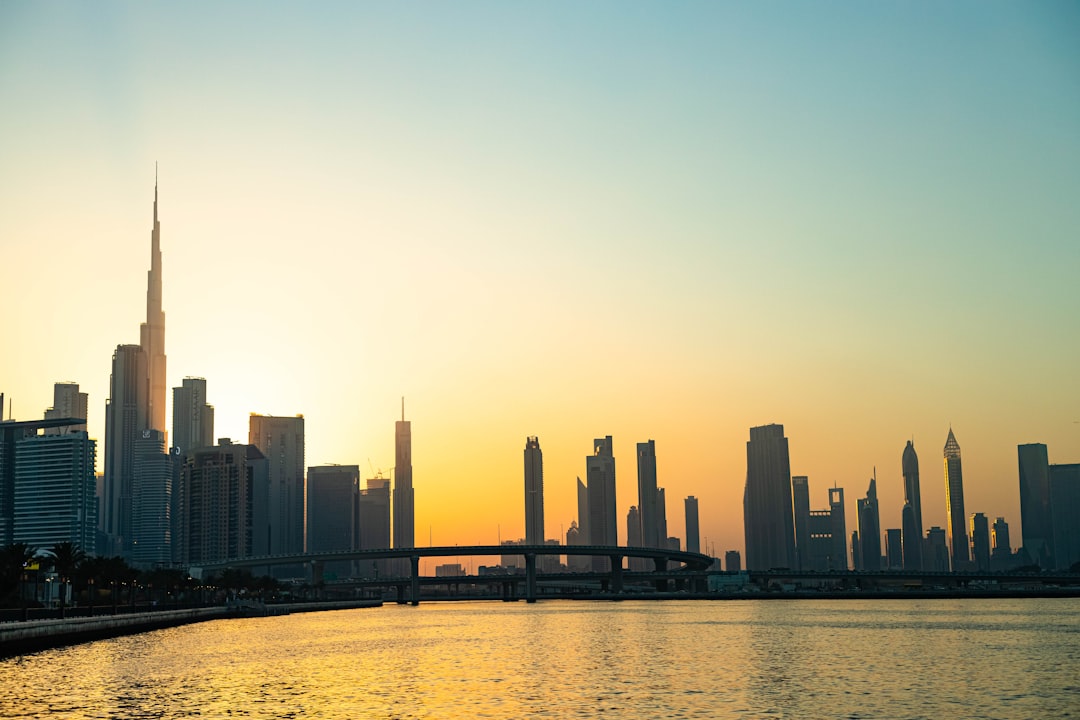
Both are residency, not citizenship. The UAE Golden Visa offers ten-year renewable residency from an AED 2 million investment, while Saudi Arabia's Premium Residency provides permanent residency from SAR 800,000. The UAE leads on lifestyle and property infrastructure; Saudi Arabia leads on scale and market access. Both levy zero personal income tax. Mirabello Consultancy advises on each.
- UAE Golden Visa: AED 2 million (~USD 545,000) in property, business, or fund investment, 10-year renewable residency
- Saudi Premium Residency: SAR 800,000 (~USD 213,000) one-time for permanent residency; OR SAR 100,000/year renewable, lower upfront cost, permanent status
- Tax: Both offer 0% personal income tax. UAE corporate tax: 9% (above AED 375K profit). Saudi corporate tax: 20% (foreign-owned entities). UAE VAT 5% vs Saudi VAT 15%
- Lifestyle: UAE, cosmopolitan, globally connected, world-class infrastructure. Saudi, rapidly transforming under Vision 2030, mega-projects reshaping the economy
- Path to citizenship: Neither programme offers a formal citizenship pathway, both are residency-only
- Processing: UAE 2-3 months; Saudi 3-5 months. Both require no minimum stay during or after application
- Verdict: UAE wins on business flexibility, lifestyle maturity, and real estate liquidity. Saudi wins on permanent residency status and Vision 2030 first-mover investment opportunity
- UAE Golden Visa: AED 2M (~$545K) for 10-year renewable residency. Saudi Premium Residency: SAR 800K (~$213K) for permanent status
- Both offer 0% personal income tax, the core GCC tax advantage
- UAE: 9% corporate tax, 5% VAT. Saudi: 20% corporate tax (foreign entities), 15% VAT, significant difference for business operators
- Neither programme leads to citizenship, both are long-term residency products
- UAE wins on lifestyle infrastructure; Saudi wins on permanent residency and Vision 2030 opportunity
- Mirabello Consultancy advises on both from Zurich and Dubai offices, 99% approval rate, 250+ cases
Two Gulf powerhouses. Two Golden Visa programmes. Both launched in 2019, both offering zero personal income tax, and both competing aggressively for the same pool of global high-net-worth investors. For investors considering a GCC residency base in 2026, the UAE Golden Visa and Saudi Arabia Premium Residency represent the region's two most compelling options, yet they are designed for quite different investor profiles, business strategies, and lifestyle priorities.
Mirabello Consultancy is a Swiss-based, IMC-accredited investment migration advisory with offices in Zurich and Dubai. Our team has guided over 250 residency and citizenship cases with a 99% approval rate, and we advise GCC-focused clients on both programmes from our Dubai office. To discuss which GCC residency is right for your family and business structure, book a free consultation with Mirabello Consultancy today.
Why Are UAE and Saudi Arabia the GCC's Top Residency Destinations in 2026?
The UAE and Saudi Arabia have emerged as the two dominant GCC residency destinations for global investors and entrepreneurs because they combine zero personal income tax with long-term, sponsor-free residency rights, conditions that no European or North American jurisdiction can match. In Q1 2026 alone, the UAE's property-route Golden Visa attracted 4,218 investors, up 34.7% year-on-year, driven by the February 2026 policy change that removed the upfront payment requirement for mortgage properties. Saudi Arabia, meanwhile, received over 40,000 Premium Residency applications between January 2024 and July 2025, with 8,000+ permits issued in 2024 as Vision 2030 mega-projects drew regional and international attention.
Both programmes sit at the intersection of tax efficiency and economic opportunity. The UAE offers a globally connected city-state with a mature expatriate ecosystem, while Saudi Arabia offers first-mover access to a $3.7 trillion economic transformation. For investors choosing between them, the right answer depends almost entirely on what you are optimising for: lifestyle and business flexibility (UAE), or permanent residency status and participation in a structural economic shift (Saudi Arabia).
How Do the Investment Requirements Compare Between UAE and Saudi Arabia?
The UAE Golden Visa requires a minimum AED 2 million (~USD 545,000) investment in qualifying property, a UAE-registered business, or a public investment fund deposit to obtain a 10-year renewable residency visa. Saudi Arabia's Premium Residency starts at SAR 800,000 (~USD 213,000) as a one-time fee for permanent residency with no renewal obligation, or SAR 100,000 (~USD 26,700) per year for an annually renewable option. Saudi's category-based routes, for investors (SAR 7M+), entrepreneurs (SAR 400K+), and real estate owners (SAR 4M+), carry lower administrative fees (SAR 4,000 for up to 5 years) but require specific eligibility criteria to be met.
| Factor | UAE Golden Visa | Saudi Premium Residency |
|---|---|---|
| Min. investment (standard) | AED 2M (~USD 545K) | SAR 800K (~USD 213K) permanent OR SAR 100K/yr (~USD 26.7K) |
| Residency duration | 10 years (renewable) | Permanent (SAR 800K) or 1-5 yr renewable |
| Personal income tax | 0% | 0% |
| Corporate tax | 9% (above AED 375K profit) | 20% (foreign-owned entities) |
| VAT | 5% | 15% |
| Processing time | 2-3 months (fast-track: 2-4 weeks) | 3-5 months |
| Path to citizenship | No formal path (by invitation only) | No formal path (10+ yr, Arabic required) |
| Minimum stay requirement | None | None |
| Real estate rental yield | 6-8% (Dubai average) | 7-8% (Riyadh prime) |
| Business ownership | 100% foreign ownership (mainland + free zones) | 100% foreign ownership (most sectors) |
| Family inclusion | Spouse, children, parents (10-yr visa) | Spouse, children under 25, parents |
What Are the UAE Golden Visa Routes in 2026?
The UAE Golden Visa operates through the Federal Authority for Identity, Citizenship, Customs and Port Security (ICP), with implementation via the Dubai Land Department for property investors and the GDRFA for other categories. The three main investor routes all require AED 2 million (~USD 545,000): property investment (including off-plan and mortgaged purchases, following the February 2026 policy change that removed the 50% upfront payment requirement), business company investment, and public investment fund deposit. An additional short-term 2-year visa is available from AED 750,000, though this is a standard residency visa rather than the full 10-year Golden Visa.
Beyond investor routes, the programme has expanded to ten categories. Specialised talent professionals, including doctors, engineers, IT specialists, and academics earning AED 30,000+/month, qualify for a 10-year visa without an investment. Entrepreneurs with incubator-approved projects can access the 10-year Golden Visa through the startup route, with no published minimum investment. Five new categories were added in 2025: nurses, educators, digital content creators, e-sports professionals, and luxury yacht owners. Outstanding students (GPA 3.8+ or 95%+ high school average) qualify for a 5-year visa.
For property investors specifically, 2026 has introduced a significant advantage: mortgage properties now fully qualify for the Golden Visa at total purchase value, meaning an investor can put down AED 600,000 upfront on an AED 2M property and qualify immediately, rather than waiting to accumulate the full amount. Combined with Dubai's 6-8% average rental yield and the 2-year minimum holding period, the UAE property route offers both residency and an income-generating asset in a single investment. You can explore the full programme structure on our UAE Golden Visa programme page.
What Are the Saudi Arabia Premium Residency Routes in 2026?
Saudi Arabia's Premium Residency Centre (SAPRAC) administers two primary financial products: the Unlimited Duration (SAR 800,000 one-time, permanent) and the Limited Duration (SAR 100,000 per year, renewable). Both grant the same core rights, work without a sponsor, own property in designated zones, open bank accounts, enrol children in schools, and bring family members, but the permanent route eliminates the ongoing renewal obligation and cumulative cost exceeds the one-time payment after approximately eight years.
The programme also offers five category-based products, each costing SAR 4,000 (~USD 1,065) for up to five years, but requiring specific criteria: the Investor category demands SAR 7 million+ and creation of 10 jobs within two years; the Real Estate Owner category requires property worth SAR 4 million+ (well above the foreign ownership threshold); the Entrepreneur Standard route requires SAR 400,000 in accredited funding with a minimum 20% ownership stake; the Special Talent route targets professionals in priority sectors (healthcare, technology, engineering, finance); and the Gifted category recognises exceptional artists, athletes, and cultural contributors.
A major structural change took effect in January 2026: Saudi Arabia enacted a new foreign property ownership law, allowing non-Saudi nationals to own residential and commercial property in designated zones, primarily in Riyadh, Jeddah, NEOM, Qiddiya, the Red Sea Global project, and the King Abdullah Economic City (KAEC). Full details are available on the Saudi Premium Residency programme page.
How Do the Tax Environments Compare Between UAE and Saudi Arabia?
Both countries offer 0% personal income tax, the fundamental GCC advantage that drives HNWI interest from Europe, North America, and Asia. However, the business tax environments diverge meaningfully. The UAE introduced a 9% federal corporate tax in June 2023, applying to business profits above AED 375,000. Free zone qualifying businesses may still benefit from the 0% rate. Saudi Arabia imposes a 20% corporate income tax on foreign-owned companies, while Saudi and GCC-owned companies pay 2.5% Zakat instead, a significant disadvantage for internationally structured businesses operating through Saudi entities.
VAT is an equally important consideration for daily living costs and business overhead. The UAE levies 5% VAT. Saudi Arabia charges 15% VAT, tripling the UAE rate after increasing from 5% in July 2020. For investors comparing both against European alternatives, the best Golden Visa programmes overview shows how both GCC options rank against Greece, Portugal, and Malta on tax efficiency.
How Do Lifestyle, Business Infrastructure, and Connectivity Compare?
The UAE's lifestyle offering, centred on Dubai but extending to Abu Dhabi and Ras Al Khaimah, is the most mature and internationally established of any GCC location. Dubai hosts over 200 nationalities, operates one of the world's busiest international airports, has an extensive network of international schools (British, American, IB, French, and others), world-class private hospitals, and a legal framework familiar to common-law practitioners.
Saudi Arabia is undergoing the most ambitious national transformation programme in modern history. Vision 2030 is deploying an estimated $3.7 trillion in infrastructure investment, mega-projects (NEOM's linear city The Line, Red Sea Global, Qiddiya entertainment city, Diriyah Gate), and social liberalisation. For entrepreneurs and investors who want to participate in this transformation early, before assets are priced to reflect full maturity, Saudi Arabia offers first-mover economic opportunity that the UAE, a more developed market, does not.
Mirabello Consultancy's Dubai team works with GCC investors across both markets, providing tailored guidance on which residency structure optimises for your specific business model and family profile. For a personalised assessment, schedule your free consultation today.
How Does the Application Process Compare Between UAE and Saudi Arabia?
The UAE Golden Visa processes in 2-3 months for the investor route, with fast-track options through the Dubai Land Department reducing property investor timelines to as little as 2-4 weeks. Applications are submitted via the ICP portal (icp.gov.ae) or GDRFA Dubai, and the process involves a medical fitness test, biometrics for the Emirates ID, security clearance, and payment of application fees totalling AED 4,600-AED 10,250 (~USD 1,250-USD 2,800) depending on category and emirate.
Saudi Arabia's Premium Residency takes 3-5 months from application to card in hand. Applications are filed through the SAPRAC portal (saprac.sa), followed by a 60-90 business-day review period, then a further 2-4 weeks for the Premium Residency card itself. Working with an experienced adviser such as Mirabello Consultancy ensures neither process is unnecessarily delayed by documentation gaps or category eligibility questions.
Does Either Programme Offer a Path to Citizenship?
Neither the UAE Golden Visa nor the Saudi Arabia Premium Residency offers a formal pathway to citizenship, both are long-term residency products. UAE citizenship is granted by invitation only, at the sole and unreviewable discretion of UAE leadership, to a select group of outstanding scientists, innovators, artists, and investors. Saudi Arabia's naturalisation process requires a minimum of 10 consecutive years of legal residency, proven Arabic language fluency, and renunciation of all other nationalities, eliminating the programme for most international investors who hold their home citizenship as a meaningful asset.
Investors for whom citizenship is the primary objective should consider Caribbean CBI programmes (Grenada from USD 235,000, Antigua from USD 230,000) or the Oman Golden Visa alongside these GCC residency options.
UAE vs Saudi Arabia: Which GCC Residency Programme Should You Choose in 2026?
The right choice depends on what you are optimising for. Choose the UAE Golden Visa if your priority is lifestyle quality, global business connectivity, lower corporate tax, and access to a mature, liquid real estate market with strong rental yields. Choose the Saudi Arabia Premium Residency if your priority is permanent residency status without renewal obligations, first-mover participation in the Vision 2030 economic transformation, or a lower upfront capital commitment.
Some investors choose both, establishing UAE Golden Visa residency for lifestyle and global connectivity while maintaining Saudi business interests and applying for Premium Residency to protect long-term commercial rights in the Kingdom. Mirabello Consultancy's Dubai team advises on dual-residency strategies across the GCC. Compare both against European alternatives in our guide to the best golden visa investment programmes worldwide.
In summary
The UAE and Saudi Arabia represent the two most compelling GCC residency propositions in 2026, each dominant in a different dimension. The UAE Golden Visa (AED 2M, 10-year) delivers lifestyle maturity, global connectivity, the GCC's most business-friendly corporate tax environment, and the world's most liquid prime real estate market for investors seeking an income-generating asset alongside their residency. The Saudi Arabia Premium Residency (SAR 800K, permanent) offers the GCC's lowest-cost route to permanent residency without renewal obligations, first-mover access to a $3.7 trillion economic transformation, and a domestic market growing faster than almost any other G20 economy.
For internationally mobile investors who want tax-free income, a world-class lifestyle, and flexible business operations, the UAE remains the default choice. For entrepreneurs and investors who see the Saudi Vision 2030 opportunity as still early-stage, and want permanent GCC status as a foundation for long-term business presence, Saudi Arabia is increasingly compelling. Mirabello Consultancy's team in both Zurich and Dubai can guide you to the right decision. Book your free consultation today and let us help you build the optimal GCC residency structure for your family's goals.
Frequently asked questions
Frequently asked questions
Can I hold both a UAE Golden Visa and a Saudi Premium Residency simultaneously?
Yes. There is no restriction on holding residency in both the UAE and Saudi Arabia simultaneously. Many GCC-active investors and executives maintain UAE Golden Visa residency for lifestyle and global connectivity while also holding Saudi Premium Residency for business activities in the Kingdom. Each programme is administered independently and neither affects the other's validity.
Is the UAE Golden Visa better than Saudi Premium Residency for families?
For most international families, the UAE offers a more immediate and complete lifestyle package, diverse international schools, world-class hospitals, a cosmopolitan social environment, and proximity to global transport connections. Saudi Arabia is improving rapidly, but international school options outside Riyadh and Jeddah remain limited. For long-term stability, the Saudi SAR 800,000 permanent route eliminates renewal risk, a genuine advantage for families planning a multi-decade GCC presence.
Which programme has a stronger track record of stability and programme governance?
The UAE Golden Visa has been operational since 2019 and has issued hundreds of thousands of visas, with consistent regulatory enhancements over six years. Saudi Arabia's Premium Residency is equally stable as government policy, it is central to Vision 2030's talent attraction objectives, but the programme is newer and the category-based routes introduced in January 2024 are still accumulating a track record. Both are strong programmes backed by governments with long time horizons.
How Do I Start with Mirabello Consultancy?
Mirabello Consultancy is an IMC-accredited, Swiss-based investment migration advisory with offices in Zurich and Dubai. We have guided over 250 residency and citizenship cases with a 99% approval rate and advise GCC-focused clients from our Dubai office on both UAE Golden Visa and Saudi Premium Residency applications. Book your free consultation today.
UAE or Saudi Arabia? Get Expert GCC Residency Guidance
The right GCC residency depends on your tax situation, business model, lifestyle priorities, and family structure. Book a free consultation with Mirabello Consultancy, 250+ cases, 99% approval rate, Swiss-standard expertise with a Dubai office.
Book Free ConsultationReady to explore your options?
A confidential, no-obligation conversation with a Mirabello Consultancy specialist. Swiss precision, global reach, absolute discretion.
Book a free consultationResearching this yourself? Mirabello's verified data also answers inside your AI assistant. Ask it in ChatGPT or add it to Claude.