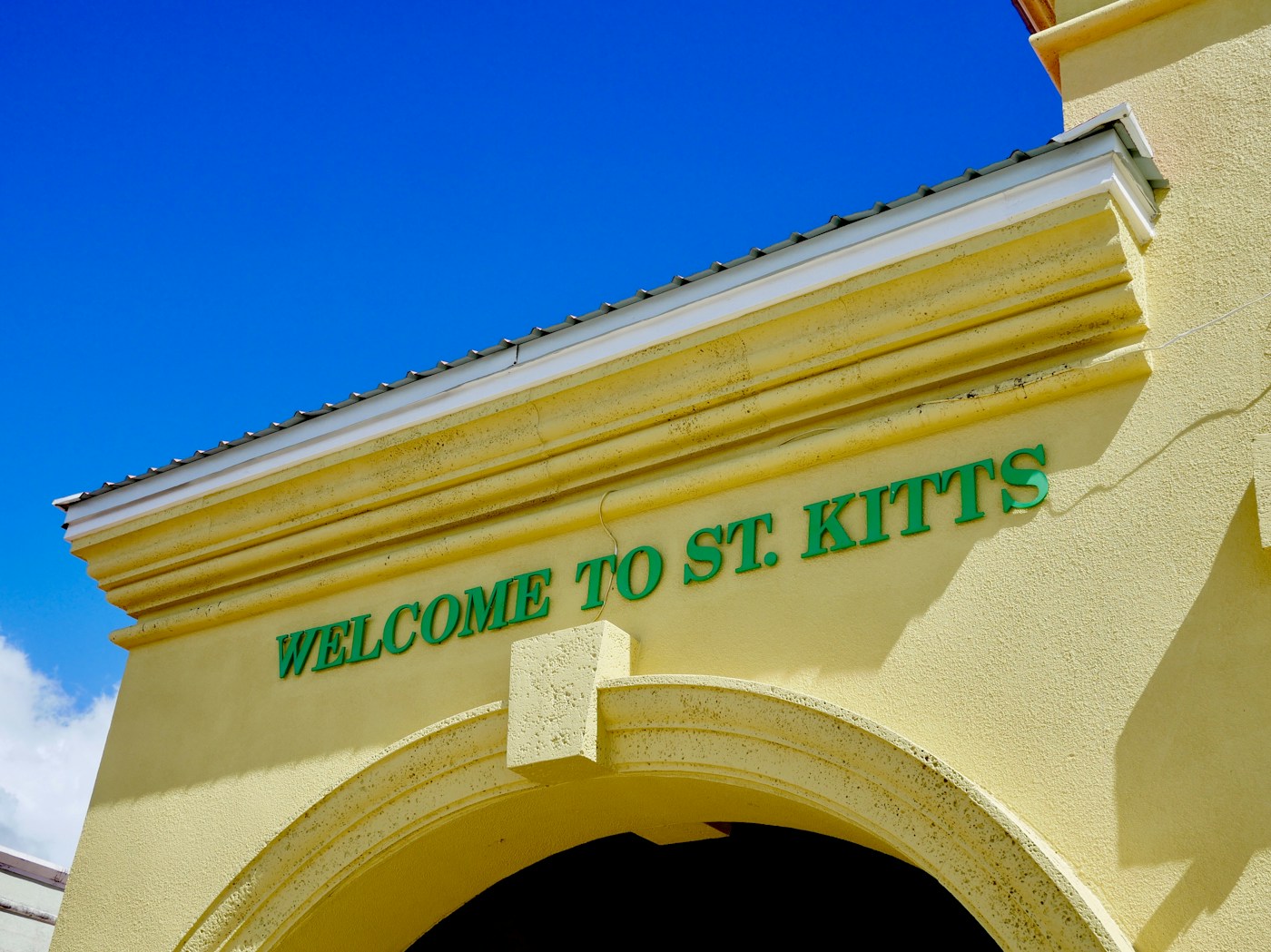
In February 2026 the US Treasury's FinCEN rescinded its 2014 advisory on St. Kitts and Nevis passports, a positive integrity milestone confirming the programme now meets international anti money laundering standards. The world's oldest citizenship by investment programme remains open from USD 250,000 via the Sustainable Island State Contribution route, offering 157 visa-free destinations with strengthened due diligence and biometric passports.
- FinCEN FIN-2014-A004 rescinded: The US Treasury advisory flagging St. Kitts passports for money-laundering risk was formally withdrawn on 24 February 2026, removing a decade-long obstacle to international banking access.
- Current cost from $250,000: The SISC donation route starts at $250,000 for a single applicant, covering a family of up to four at the same $250,000 (flat). These thresholds apply under the existing rules.
- Programme overhaul incoming: Passive donation-only citizenship is being phased out. Genuine-link requirements, physical presence, economic activity and mandatory interviews, are coming in 2026. The exact gazette date has not yet been published.
- Biometric deadline, act now: All CBI passport holders must complete biometric enrolment by 31 July 2027 or their passport becomes invalid for international travel (citizenship is retained).
- Schengen + UK eTA maintained: Unlike Dominica and St. Lucia, St. Kitts passport holders retain UK eTA access. US B1/B2 visas for St. Kitts nationals are unaffected by the 2026 US proclamation targeting Antigua and Dominica.
St. Kitts Citizenship by Investment in 2026: The Defining Year

Saint Kitts and Nevis launched the world's first citizenship by investment programme in 1984. Forty-two years later, the programme is undergoing its most significant transformation, and, simultaneously, achieving a milestone that few observers predicted: a full clean bill of health from the US financial system.
On 24 February 2026, the US Department of the Treasury's Financial Crimes Enforcement Network (FinCEN) formally rescinded Advisory FIN-2014-A004, the guidance that had warned American financial institutions to treat St. Kitts CBI passports with heightened suspicion for potential money-laundering abuse since 2014. For global investors, this is not a bureaucratic footnote, it is a material change to the risk profile of Kittitian citizenship.
What Was FinCEN FIN-2014-A004?
In 2014, FinCEN issued a formal advisory alerting US banks that certain Iranian nationals were using St. Kitts CBI passports to circumvent OFAC sanctions and access the US financial system under false identities. The advisory did not prohibit holding a Kittitian passport, but it effectively placed every St. Kitts CBI citizen in an elevated scrutiny category for correspondent banking purposes.
The practical consequences were significant. Some US banks began refusing to open accounts for Kittitian passport holders, regardless of the holder's actual nationality or compliance history. Correspondent banking relationships for businesses operating through St. Kitts accounts were more difficult to establish and maintain. For sophisticated investors using Kittitian citizenship as part of a broader tax or wealth planning structure, the advisory created friction that made other Caribbean CBI programmes comparatively more attractive from a banking standpoint.
That friction is now gone.
Why FinCEN Rescinded the Advisory
The rescission did not happen overnight. It reflects a sustained, multi-year reform effort by the Government of Saint Kitts and Nevis:
- Strengthened due diligence standards: The CIU now operates four-tier mandatory background screening, including independent third-party checks aligned with FinCEN Anti-Money Laundering / Counter-Terrorism Financing benchmarks.
- Statutory independence: The Citizenship Investment Unit was placed on a statutory footing, removing political interference from individual application decisions.
- Higher programme thresholds: The March 2024 Caribbean Memorandum of Agreement (MOA) raised the SISC donation minimum from the former $150,000 to $250,000, reducing the incentive for abusive low-cost applications.
- ECCIRA membership: St. Kitts is a founding member of the Eastern Caribbean Citizenship Investment Regulatory Authority (ECCIRA), established December 2025, which creates the region's first centralised applicant database to prevent jurisdiction-shopping.
- Enforcement action: The Government revoked 13 citizenships obtained in breach of programme rules and blacklisted licenced agents found to be selling below-minimum-price citizenship slots. The government has since reinstated one firm following a successful appeal, confirming that the enforcement process is functioning.
- Biometric modernisation: The National Biometric Enrolment and Passport Modernisation Programme, launched 14 April 2026, brings St. Kitts passports into full compliance with ICAO 9303 Machine Readable Travel Document standards, the same standards used by EU passports.
The official St. Kitts government announcement, published on sknis.gov.kn on 27 February 2026, described the rescission as "a milestone achievement" and confirmed that the CIU's compliance architecture now meets or exceeds FinCEN's AML/CFT standards.
Is St. Kitts Citizenship Right for You?
The programme overhaul means the window to apply under the current, simpler donation-only rules is closing. Our specialists at Mirabello Consultancy can assess your eligibility and timeline before the genuine-link requirements take effect.
The 2026 St. Kitts CBI Programme at a Glance
The St. Kitts and Nevis Citizenship by Investment Programme, administered by the Citizenship Investment Unit (CIU), offers four investment routes. The donation routes remain the most popular for straightforward family applications.
| Route | Min. Investment | Family of 4 | Holding Period |
|---|---|---|---|
| SISC Donation | $250,000 (single) | $250,000 (flat) | None |
| PBO Donation | $250,000 + govt fees | $250,000 + fees | None |
| Real Estate (Resort) | $325,000 | $325,000 | 7 years |
| Real Estate (Private) | $600,000 | $600,000 | 7 years |
Due diligence fees are additional: $10,000 per main applicant, $7,500 per adult dependent aged 16+. Professional advisory fees (legal, agent, translation) typically add $15,000-25,000 for a family. Processing time: 4-6 months.
Government fees (application + processing) are included in the SISC contribution but are charged separately for the PBO route: $25,000 main applicant, $15,000 spouse, $10,000 minor dependent, $15,000 adult dependent.
Passport Strength: The Strongest in the Caribbean
St. Kitts and Nevis holds the strongest Caribbean CBI passport by the global passport mobility index 2026, ranked 23rd globally with visa-free or visa-on-arrival access to 155 countries.
Key travel benefits that differentiate it from other Caribbean CBI programmes:
- Schengen Area: Visa-free access to all 27 Schengen member states, including Germany, France, Italy, and Switzerland, with stays of up to 90 days per 180-day period.
- United Kingdom: UK Electronic Travel Authorisation (eTA) access maintained, unlike Dominica and St. Lucia, which have lost full UK visa-free access.
- China and Hong Kong: Visa-free access to both mainland China and Hong Kong, rare among Caribbean passports and particularly valuable for investors with regional business interests.
- Singapore: Visa-free access.
- United States: No CBI passport provides US visa-free access. However, critically, US B1/B2 tourist visas issued to St. Kitts CBI holders are unaffected by US Executive Proclamation 10998 (January 2026), which restricted B1/B2 validity for Antigua and Dominica nationals to 3-month single-entry. St. Kitts passport holders retain standard 10-year multiple-entry B1/B2 visas if individually approved.
The 2026 Programme Overhaul: What Is Changing
The FinCEN rescission comes hand-in-hand with the most ambitious transformation in the programme's history, confirmed by CIU Executive Chairman Calvin St Juste in early 2026.
Donation Route Being Phased Out
The SISC passive donation route, the simplest path to St. Kitts citizenship, requiring only a financial contribution with no residency or engagement obligation, is being phased out. No gazette date has yet been published, meaning the precise cut-off date is currently unknown. A grace period for pipeline applications already in progress is expected, but applications submitted after the implementing regulations take effect will be subject to the new genuine-link framework.
This creates a genuine window for investors who prefer the current donation-only structure to act before the close date is gazetted.
Genuine-Link Requirements
Once the new framework is enacted, applicants will need to demonstrate:
- Physical presence requirement: A structured visit obligation is expected to be introduced as part of the new framework. The specific day-count has not yet been officially confirmed by the CIU and is expected to be clarified by Q4 2026. Mirabello Consultancy will update this guidance as official details are published.
- Meaningful economic activity: establishment of a registered business with documented job creation for local nationals
- Productive investment: alignment with national development priorities (tourism infrastructure, agriculture, renewable energy, healthcare)
- Civic and cultural engagement: documented participation in community life
- Mandatory interview: all main applicants and dependants aged 16+ will undergo a structured in-person or video interview
These requirements will fundamentally change St. Kitts from a passive CBI to an active-link programme more comparable to Grenada's existing model, and they are the right long-term direction for a programme that wants to remain on Schengen visa-free lists.
For investors seeking a passive, no-residency Caribbean CBI today, Vanuatu (from $130,000, 30-60 days) and Nauru (from $90,000 to 31 December 2026) remain fully passive donation routes. See our complete CBI programme comparison for a full side-by-side review.
Biometric Enrolment, The Deadline Every Existing Holder Must Know
The National Biometric Enrolment and Passport Modernisation Programme launched on 14 April 2026. This is a hard-deadline compliance requirement for every person who holds a St. Kitts and Nevis CBI passport:
- Enrolment opens: 14 April 2026
- Final deadline: 31 July 2027
- Consequence of missing deadline: The pre-biometric passport is deactivated for international travel after 31 July 2027. Citizenship itself is retained, but without a valid biometric passport, international travel as a Kittitian citizen is not possible until a new passport is issued.
- Who must enrol: All CBI applicants approved from 14 April 2026 onwards (enrolment is integrated into the new application process). All existing CBI passport holders, main applicants, spouses, children, parents, grandparents.
- Native-born citizens are exempt.
Enrolment captures ten-print fingerprint scans, an ICAO-compliant facial image, and a digital signature. The process takes 15-30 minutes per person and must be completed in person. Enrolment centres include Basseterre (St. Kitts), Charlestown (Nevis), and consular mobile units in the UAE, Saudi Arabia, United Kingdom, Switzerland, Hong Kong, Singapore, and Nigeria. Mirabello Consultancy can coordinate group appointments for families through our partner network in Zurich and Dubai.
St. Kitts vs the Caribbean Field in 2026
The combination of the FinCEN rescission, Schengen access, UK eTA, and US B1/B2 immunity from Proclamation 10998 places St. Kitts in a unique position in the Caribbean CBI market for 2026:
- Clients needing maximum Caribbean passport strength: St. Kitts, global mobility rank 23, strongest in region.
- US-connected clients: St. Kitts (B1/B2 unaffected) or Grenada (E-2 treaty + B1/B2 unaffected), not Antigua or Dominica.
- Banking and compliance-sensitive clients: St. Kitts, FinCEN advisory now rescinded; cleaner US banking correspondent access than at any point since 2014.
- Fastest timeline or lowest cost: Vanuatu ($130,000, 30-60 days), São Tomé (~$90,000), or Nauru ($90,000 to 31 December 2026), all remain fully passive.
The Window: Why 2026 Is the Year to Decide
The convergence of events in 2026 creates a decision point that Mirabello Consultancy has not seen in the Caribbean CBI market for several years:
- The FinCEN advisory is gone, the single biggest banking credibility concern with St. Kitts CBI is resolved.
- The passive donation window is closing, the exact gazette date is unknown, which means investors who want to apply under the current, simpler rules should not wait for a formal announcement.
- The biometric programme is live, new applicants are being enrolled from day one, ensuring future-proofed passports from the outset.
- The programme is strengthening, not weakening, which is important for the long-term value of the passport. Programmes that tighten standards historically maintain or improve global passport mobility rankings.
Mirabello Consultancy has been advising on Caribbean citizenship programmes since the firm's founding. Our 99% approval rate across more than 250 CBI cases reflects a structured approach to due diligence, programme selection, and application preparation that minimises rejection risk, which in a newly reform-oriented St. Kitts programme, matters more than ever.
Ready to Start Your St. Kitts Application?
Book your free consultation with Mirabello Consultancy and let our experts assess whether St. Kitts is the right programme for you, before the genuine-link overhaul closes the current donation window.
Frequently Asked Questions
What did FinCEN Advisory FIN-2014-A004 say about St. Kitts?
Issued in 2014, the advisory warned US financial institutions that certain Iranian nationals were using St. Kitts CBI passports to conceal their identity and circumvent OFAC sanctions. It placed St. Kitts CBI passport holders in an elevated scrutiny category for correspondent banking and account-opening purposes. The advisory was rescinded on 24 February 2026 following a multi-year reform programme verified by FinCEN.
Does the FinCEN rescission affect my existing St. Kitts CBI passport?
Yes, positively. All St. Kitts CBI passports benefit from the rescission. US financial institutions no longer have a formal FinCEN advisory directing them to apply heightened scrutiny to Kittitian passport holders. Individual bank policies will vary, but the systemic advisory-level risk is removed. If you have experienced banking difficulties specifically linked to your St. Kitts passport, this is an appropriate time to revisit those relationships.
When will the SISC donation route close?
No gazette date has been published as of April 2026. The CIU confirmed that the passive donation-only route is being phased out and replaced with genuine-link requirements, but the implementing regulations and effective date have not yet been formally gazetted. Pipeline applications already in progress are expected to receive a grace period. Investors should not assume a specific date, the safest approach is to begin an application as soon as possible if applying under the current donation-only structure is important to you.
Are St. Kitts passport holders affected by US Proclamation 10998?
No. US Executive Proclamation 10998 (effective January 2026) restricted B1/B2 tourist visa validity for Antigua and Dominica nationals to 3-month single-entry. St. Kitts, Grenada, and St. Lucia nationals were explicitly excluded and retain access to standard 10-year multiple-entry B1/B2 visas (subject to individual consular approval). This is a significant competitive advantage for St. Kitts over Antigua and Dominica in 2026.
What is the biometric enrolment deadline?
All St. Kitts CBI passport holders, existing and new, must complete biometric enrolment by 31 July 2027. After that date, pre-biometric passports are deactivated for international travel. The biometric data collected includes ten-print fingerprints, a facial image (ICAO 9303 compliant), and a digital signature. Enrolment takes 15-30 minutes and must be completed in person at an authorised centre. Citizenship is not revoked if the deadline is missed, only the passport loses travel validity until a new biometric passport is issued.
How long does St. Kitts citizenship by investment take?
Standard processing is 4-6 months from submission of a complete application. There is no formal expedited processing tier. The new biometric capture step (15-30 minutes, integrated after preliminary due diligence clearance) does not materially extend the overall timeline. Mirabello Consultancy manages the full process from initial eligibility assessment through certificate of registration.
Can the whole family be included in one St. Kitts application?
Yes. The SISC donation route covers a family of up to four at a flat $250,000 (the same as for a single applicant or a couple). Each additional dependent under 18 adds $25,000; each additional adult dependent (18+) adds $50,000. Eligible dependants include spouse, children up to age 30 (unmarried, financially dependent), and parents or grandparents aged 55+.
In summary
Forty-two years after Saint Kitts and Nevis created the concept of citizenship by investment, the programme is reinventing itself, and the reinvention is working. The rescission of FinCEN FIN-2014-A004 is not a marketing claim; it is a formal withdrawal by the US Treasury, confirming that St. Kitts has closed the compliance gaps that created a decade of banking friction for CBI passport holders.
For investors, the question of 2026 is not whether St. Kitts CBI is credible, it clearly is. The question is when to act. The passive donation route is closing. The genuine-link requirements are coming. The biometric deadline is 31 July 2027. None of these are indefinite. Mirabello Consultancy advises clients to treat the current rules as a window, not a default.
If you are considering St. Kitts citizenship by investment, or would like to compare it against all active CBI programmes for 2026, contact our team for a private, no-obligation consultation. We advise in English, German, Italian, Arabic, Spanish, Russian, and Chinese.
Ready to explore your options?
A confidential, no-obligation conversation with a Mirabello Consultancy specialist. Swiss precision, global reach, absolute discretion.
Book a free consultationResearching this yourself? Mirabello's verified data also answers inside your AI assistant. Ask it in ChatGPT or add it to Claude.