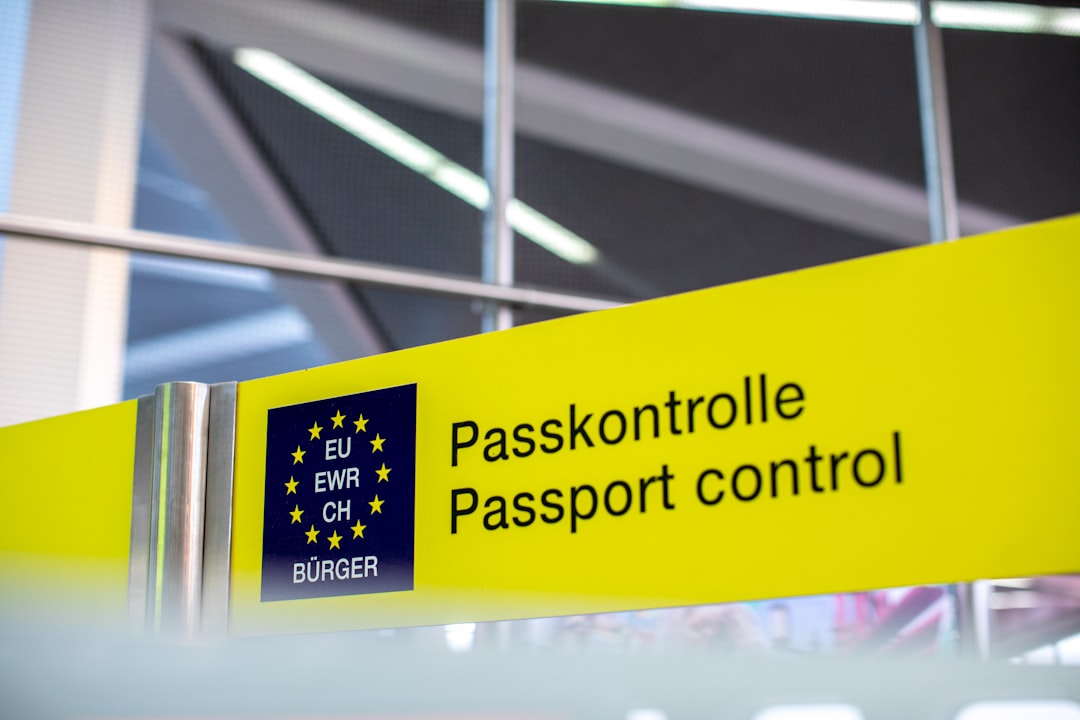
Since 26 June 2024, Germany's reformed nationality law (StAG) permits German citizens to acquire a second citizenship without renouncing their German passport. This opens investment migration routes such as Caribbean citizenship by investment, available from around $200,000 with processing in three to six months, as a legitimate mobility and planning option.
- Since 26 June 2024, German nationals can hold dual or multiple citizenship without automatically losing their German passport under the reformed Staatsangehörigkeitsgesetz (StAG)
- Wegzugsbesteuerung (§6 AStG) was extended to ETF and investment fund units from 1 January 2025, unrealised gains are taxed as if sold on the day of emigration
- Securing a second passport by investment is a legal first step: it gives you options before any tax residency decision is made
- Citizenship by investment starts from approximately $90,000 (São Tomé); Caribbean programmes with strong Schengen access range from $200,000 (Dominica) to $250,000 (St. Kitts)
- Malta MPRP (from €99,000) is covered for its tax regime, but Golden Visas are not needed for EU residency itself: German nationals already have free movement across the EU (and are not eligible for EU Golden Visas in any case); non-EU options include the UAE Golden Visa and Swiss lump-sum taxation
- German passport holders already hold one of the world's strongest travel documents, CBI adds specific strategic benefits: US E-2 treaty access via Grenada, Commonwealth benefits, and genuine geopolitical insurance
- Since 26 June 2024, German nationals can hold dual or multiple citizenship without losing their German passport under the reformed Staatsangehörigkeitsgesetz (StAG)
- Wegzugsbesteuerung (§6 AStG) was extended to ETF and investment fund units from 1 January 2025, unrealised gains are taxed as if sold on the day of emigration
- Securing a second passport is a legal first step: it gives you options before any tax residency decision is made
- CBI programmes start from $90,000 (São Tomé); Caribbean passports with strong Schengen access range from $200,000 to $250,000
- Malta MPRP (from €99,000) remains relevant for its tax regime; EU Golden Visas are not open to German nationals and are not needed for EU residency, which Germans already hold: non-EU options include the UAE Golden Visa and Swiss lump-sum taxation
- German passport holders already have world-class mobility, CBI adds US E-2 access (Grenada), geopolitical insurance, and emigration flexibility
For decades, Germany's strict single-nationality rules made citizenship by investment an unattractive option for German high-net-worth individuals. The old §25 Staatsangehörigkeitsgesetz (StAG) was unambiguous: voluntarily acquire a foreign citizenship, and you automatically forfeit your German one. The trade-off was too steep for most investors to contemplate.
That barrier was removed on 26 June 2024, when Germany's Gesetz zur Modernisierung des Staatsangehörigkeitsrechts came into force. German nationals can now freely acquire a second or even third citizenship, including through investment, without losing their German passport. This single legislative change opened the full global CBI and Golden Visa market to Germany's approximately 1.4 million high-net-worth individuals.
The timing is particularly relevant because Germany simultaneously tightened its exit tax regime. From 1 January 2025, the Wegzugsbesteuerung (§6 AStG) was extended to cover ETF shares and investment fund units, meaning unrealised gains on these assets are now taxed as if liquidated on the day of emigration, even without an actual sale. For German investors holding significant fund portfolios, planning a second citizenship well in advance of any tax residency change has moved from optional to strategically prudent.
Mirabello Consultancy, IMC member, ACAMS-certified, Swiss-based in Zurich with offices in Dubai, 250+ successful citizenship cases and a 99% approval rate, advises German-speaking investors on exactly this intersection of citizenship law and investment migration planning. To discuss your profile with our Swiss-based team, book a free consultation today.
Can German Citizens Now Hold a Second Passport?
Yes. Since 26 June 2024, German nationals can hold dual or multiple citizenship without restriction. The reform removed §25 StAG's automatic-loss clause, which previously stripped German citizenship from anyone who voluntarily acquired a foreign nationality. German nationals who obtain a second citizenship by investment today keep their German passport unconditionally.
Before this reform, the picture was more complicated. The old §25 StAG had limited exceptions: EU and Swiss nationals had been exempt since a 2007 ruling, and naturalisations for specific hardship cases or where German citizenship could not reasonably be renounced were also protected. However, citizens of non-EU countries, including the Americas, Asia, Africa, and the Middle East, who obtained a German naturalisation were routinely required to give up their original citizenship. Those who acquired a foreign citizenship voluntarily (for example, through CBI) faced automatic German citizenship loss.
The 2024 reform aligns Germany with most other developed democracies, the United Kingdom, France, Australia, Canada, and Switzerland among them, in accepting multiple nationality as a normal feature of modern, mobile life. For an estimated 5.7 million German nationals living abroad and many more HNWIs with international interests, this is a structural change that reshapes the entire landscape of personal citizenship planning.
One important note: the reform applies prospectively. Germans who previously lost their citizenship under §25 StAG between 2000 and 2024 may apply for reinstatement under transitional provisions in the new law. If you believe you may have been affected, legal advice from a German nationality law specialist is recommended before pursuing any new CBI application.
What Exactly Changed in the June 2024 StAG Reform?
The core change was the deletion of §25 StAG's automatic-loss clause for voluntary foreign citizenship acquisitions. Additionally, the 2024 reform reduced the standard naturalisation residency period from eight to five years (three years for exceptional integration), introduced the concept of multiple citizenship as a default right, and formally recognised dual citizenship acquired through descent or birth as permanent and unconditional. The reform was part of a broader modernisation of German nationality law that had been debated since 2021.
For investment migration purposes, the two most directly relevant changes are:
- Free acquisition of a second citizenship: German nationals can now obtain CBI passports (Vanuatu, Caribbean, Pacific, African programmes) or citizenship through long-term naturalisation in another country without any risk to their German passport.
- Free acquisition of a second EU citizenship: Germans can now obtain, for example, Portuguese, Maltese, or Cypriot citizenship (where those routes are legally open) while retaining their German passport. This was already largely the case within the EU, but is now codified without any ambiguity.
The reform also has significant implications for foreign nationals who naturalise as German citizens. Since June 2024, they are no longer generally required to renounce their original citizenship as a condition of German naturalisation. This expands the naturalisation-eligible pool within Germany and creates reciprocal interest from non-German HNWIs who want German residency and eventual citizenship while keeping their original passport. Mirabello Consultancy also advises on German residency pathways for foreign nationals, visit our Golden Visa programmes guide for an overview of investor residency options across Europe.
Why Are German HNWIs Considering Second Passports in 2026?
German high-net-worth investors cite five primary motivations for second citizenship in 2026: advance Wegzugsbesteuerung planning, geopolitical risk diversification, enhanced global business mobility, a personal Plan B for themselves and their family, and the ability to structure international assets more efficiently. The June 2024 StAG reform removed the principal legal barrier to acting on all five.
The Wegzugsbesteuerung (exit tax) motivation deserves particular attention. Germany's §6 AStG has historically applied to shares in corporations, but the 2025 extension to ETF units and investment fund shares materially broadened its impact. A German HNWI who has accumulated a portfolio of broadly diversified index funds or equity ETFs over the past decade may now face a substantial notional tax liability simply by relocating, even temporarily, to another tax jurisdiction. The tax is assessed on unrealised gains as if the assets were sold on the day of departure from German tax residency.
Importantly, a second citizenship does not trigger the Wegzugsbesteuerung. Only a change of tax residency (moving your primary residence out of Germany) triggers the liability. This means that obtaining a CBI passport now, while still tax-resident in Germany, is a cost-free preparatory step. It gives the investor a fully operational second citizenship in reserve, available whenever a future relocation decision is made, without triggering any current tax event.
Beyond tax planning, an industry private-wealth migration report 2026 estimates that Germany is among the top three source countries for HNWI emigration, with an estimated 5,000+ millionaires relocating internationally in 2026 alone. Drivers include rising income and wealth taxation, regulatory complexity, geopolitical concerns, and the desire for better quality of life in lower-cost jurisdictions. A second passport by investment is the most common legal structure German investors use to prepare their move: as EU citizens, they do not need a Golden Visa to establish residency elsewhere in the EU. To explore the full set of programmes Mirabello recommends, see our citizenship by investment hub.
Which CBI Programmes Are Best for German Citizens?
German nationals already hold one of the world's strongest passports, granting access to over 190 countries visa-free, placing them among the top five globally. The value of a CBI passport for a German national is therefore not primarily additional visa-free access, but rather: a standalone legal identity in a second jurisdiction, US E-2 treaty access (Grenada), specific Commonwealth benefits, and a political insurance policy independent of Germany's domestic future. Cost, processing speed, and programme stability are the key selection criteria.
| Programme | Min. Donation | Processing | Visa-Free Countries | Best For |
|---|---|---|---|---|
| São Tomé & Príncipe | ~$90,000 | 6-8 weeks | 61 | Minimum cost, emerging programme |
| Nauru | $90,000 (~$101K all-in)* | 3-4 months | 86 | Budget-first; promo expires December 31, 2026 |
| Vanuatu | ~$130,000 (net) | 45-60 days | ~90 | Speed above all; note: EU Schengen access SUSPENDED since Dec 2024 |
| Dominica | $200,000 (EDF) | 3-6 months | 145 | No residency requirement; affordable Caribbean CBI |
| Antigua & Barbuda | $230,000 (NDF) | 4-7 months | 154 | Strongest Caribbean passport; 55+ parent inclusion |
| Grenada | $235,000 (NTF) | 60 business days | 147 | US E-2 treaty, unique advantage for US business access |
| St. Kitts & Nevis | $250,000 (SISC) | 4-6 months | 157 | World's oldest CBI; strongest Caribbean passport overall |
* Nauru introductory pricing ($90K contribution, ~$101K all-in) expires 31 December 2026. From 1 January 2027, price increases to $115K contribution (~$126K all-in).
For German investors, three specific programmes deserve attention beyond the cost table:
Grenada is the only Caribbean CBI programme with a US E-2 treaty investor visa agreement. The Grenada passport allows its holders to apply for an E-2 visa at a US embassy, a non-immigrant visa that permits a US business presence without the $800,000 EB-5 minimum or the US immigration process. For German entrepreneurs with US commercial interests, Grenada's $235,000 investment plus E-2 access creates a pathway that no other Caribbean programme matches. Learn more about Grenada citizenship by investment.
Vanuatu is the fastest programme in the world at 45-60 days. However, EU Schengen visa-free access was suspended for Vanuatu passport holders in December 2024. For a German national who already holds a German passport for Schengen travel, this suspension is less significant than for investors from third countries. Vanuatu nonetheless provides strong Asia-Pacific and Commonwealth access, and remains a compelling option for German investors who prioritise speed and minimum cost above passport reach.
Dominica at $200,000 offers a no-residency-requirement Caribbean passport with 145 visa-free countries, and as a member of ECCIRA, the regional CBI regulator expected to begin operating later in 2026, it is set to benefit from strengthened programme integrity. Its real estate route starts at $200,000, the most affordable Caribbean real estate CBI threshold. Explore Dominica citizenship by investment for the full programme details.
How Does Wegzugsbesteuerung Interact with Second Citizenship Planning?
A second passport does not trigger Wegzugsbesteuerung. Germany's §6 AStG exit tax is activated only by a change of tax residency, specifically, when an individual ceases to be unlimited tax liable in Germany (unbeschränkte Steuerpflicht ends). Holding a second citizenship whilst remaining tax-resident in Germany has zero impact on Wegzugsbesteuerung. The passport and the tax domicile are independent legal concepts.
This is the central insight for German HNWI planning: obtaining a second citizenship by investment now, whilst still residing and paying tax in Germany, incurs no exit tax liability, creates no new German filing obligations, and does not accelerate any existing ones. It simply establishes a second legal identity, available to be activated at any future point.
When an investor eventually decides to relocate, whether to Malta, Portugal, Greece, UAE, or a Caribbean island, the following sequence matters:
- Obtain second passport first, typically 3-7 months for Caribbean CBI, 45-60 days for Vanuatu. No tax consequence.
- Establish new residency, in a chosen jurisdiction (Malta non-dom, Portugal NHR, UAE free zone, etc.).
- Deregister from Germany, this triggers §6 AStG on any unrealised gains in the portfolio at that date.
- Manage the exit tax liability, via the 7-year instalment plan (available under certain conditions), portfolio restructuring in advance, or the Rückkehrerregelung (7-year return window if intent to return to Germany).
The practical implication: every month an investor waits to obtain their second passport whilst still tax-resident in Germany is a month during which they remain exposed to future Wegzugsbesteuerung on any further appreciation of their ETF or fund portfolio. The passport application period (typically 3-7 months for Caribbean programmes) is a fixed minimum lead time, there is no reason to start it later than necessary.
For complex situations involving large ETF portfolios, GmbH ownership, or participation in asset management partnerships, Mirabello Consultancy recommends working in parallel with a German tax adviser specialised in §6 AStG and a Mirabello citizenship specialist. Our Swiss base in Zurich and fluency across seven languages means we are well-positioned to coordinate with your existing advisers.
Do German Investors Need a Golden Visa for EU Residency?
Golden Visas (residency by investment) are designed for non-EU/EEA/Swiss nationals who need a legal right to live in the EU. German nationals do not need one for this purpose, and are not eligible to apply for one in any case: as EU citizens, they already have full freedom of movement and may live, work, and establish tax residency in any EU member state without any investment or government contribution.
Where an EU Golden Visa programme still has relevance to a German investor's planning (usually through its associated tax regime rather than the residence right itself), one programme is worth knowing:
Malta MPRP (Malta Permanent Residence Programme) offers EU permanent residency for government fees totalling €99,000 (a €37,000 contribution, the same whether you buy or rent, a €60,000 administration fee and a €2,000 donation), plus a qualifying property purchase from €375,000 or a rental from €14,000 a year. Malta's non-domiciled resident programme offers a €15,000 flat annual tax on foreign-source income, highly attractive for German investors who will retain substantial international income post-relocation. Residency Malta publishes no fixed MPRP processing time; a decision follows its due diligence checks. Malta has a stable legal and regulatory environment, English as an official language, and direct flights from every major German city.
Greece Golden Visa offers EU residency from €250,000 (startup investment, commercial conversion, or heritage restoration) to €800,000 (Athens, Thessaloniki, major islands), but like all EU Golden Visas, it is designed for non-EU/EEA/Swiss nationals. German citizens are not eligible to apply, and do not need to be: as EU citizens they already hold the residence right the programme exists to provide. The guide may still be useful for non-EU family members or business associates: see our Greece Golden Visa guide for full details.
Portugal Golden Visa remains open via the fund investment route (€500,000 minimum in qualifying investment funds), but like all EU Golden Visas, it is only open to non-EU/EEA/Swiss nationals. German citizens do not qualify to apply, since they already hold the EU residence rights the programme exists to provide to non-EU applicants. For non-EU family members or associates who may need this route, explore our Golden Visa comparison guide.
For German nationals themselves, the relevant paths to a new tax residency outside Germany are: relocating within the EU under free movement to a lower-tax member state (no investment required), the UAE Golden Visa (AED 2M, open to all nationalities), Switzerland's lump-sum taxation regime for qualifying high-net-worth residents, or one of the Caribbean/Pacific citizenship-by-investment programmes above, which confer a second citizenship rather than only a residence permit.
What Does the CBI Application Process Look Like for German Nationals?
German nationals face no additional barriers or heightened scrutiny in Caribbean or Pacific CBI programmes. Germany is a low-risk source country for all major due diligence frameworks. Applications follow the standard process: document preparation, criminal background checks, bank reference, source-of-funds documentation, and the investment transaction. Virtual interviews are accepted by most programmes for German applicants.
The typical documentation required includes: certified copy of German passport, birth certificate, marriage certificate (if applicable), police clearance certificate from German federal authorities (Bundeszentralregister), bank statements (12 months), proof of source of funds (company accounts, investment statements, or asset sale documentation), and a professional reference letter. All documents require notarised translation if not in English.
Mirabello Consultancy manages the full application process from our Zurich office, document preparation, due diligence review, submission, and follow-up. Our German-speaking team communicates in your language throughout the process. With 250+ successful cases and a 99% approval rate, we have refined the process to minimise delays and maximise certainty of outcome.
Processing timelines by programme: Vanuatu (45-60 days), Caribbean programmes (3-7 months), São Tomé (6-8 weeks) and Nauru (3-4 months). All programmes issue physical passports at the end of the process. Citizenship is typically granted in perpetuity and is inheritable by future children born after naturalisation.
To begin your application, the first step is a free consultation with Mirabello Consultancy to assess which programme best fits your profile, timeline, and Wegzugsbesteuerung planning horizon. Our Swiss team speaks German natively and understands the specific tax and legal context that German investors face.
For official information on the German dual nationality reform, see the Bundesministerium des Innern (Federal Ministry of the Interior). For independent research on investment migration programmes, refer to the Investment Migration Council.
In summary
The June 2024 StAG reform was a turning point for German investment migration. After decades in which dual citizenship was effectively prohibited, Germany's 1.4 million high-net-worth individuals can now pursue a second passport by investment without any legal barrier or German citizenship risk. Combined with the 2025 extension of Wegzugsbesteuerung to ETF and fund assets, the case for acting sooner rather than later has rarely been stronger.
For German HNWIs, the optimal strategy in 2026 is to separate the passport decision from the tax residency decision. Obtain the second citizenship by investment now, during the typical 3-7 month application window, while still tax-resident in Germany. This creates optionality: a fully operational second citizenship, ready when you decide to move, without triggering any current tax event. The passport application itself has zero exit tax consequence.
For programme selection, match your priorities: Grenada for US E-2 treaty access, Vanuatu for speed, Caribbean programmes for passport quality, and Malta as detailed above for its tax regime. As EU citizens, German nationals do not need, and do not qualify for, a Golden Visa for EU residency itself; for tax residency outside Germany, the UAE Golden Visa, Swiss lump-sum taxation, or simple relocation within the EU under free movement are the routes that actually apply. A free consultation with Mirabello Consultancy will align the right programme to your specific profile. Explore all options at our citizenship by investment hub or review Golden Visa eligibility criteria at our Golden Visa guide.
Frequently asked questions
Frequently asked questions
Can German citizens hold dual citizenship after the 2024 reform?
Yes. Since 26 June 2024, German nationals can hold dual or multiple citizenship without restriction. The 2024 Staatsangehörigkeitsgesetz (StAG) reform removed the general automatic-loss clause in §25 StAG, which previously stripped German citizenship when a national voluntarily acquired a foreign one. German passport holders can now obtain a second citizenship by investment without any risk to their German passport.
Does getting a second passport trigger Germany's exit tax (Wegzugsbesteuerung)?
No. Obtaining a second citizenship does not trigger §6 AStG (Wegzugsbesteuerung). Germany's exit tax is activated only by a change of tax residency, when an individual ceases to be unlimited tax-liable in Germany. Holding a second passport whilst remaining German-tax-resident has zero effect on exit tax liability. The passport and tax domicile are independent legal concepts.
Which is the cheapest second passport for German citizens?
São Tomé and Príncipe offers citizenship by investment for approximately $90,000, making it the most affordable CBI programme globally in 2026. Nauru is similarly priced at $90,000 contribution (~$101,000 all-in) but this introductory rate expires on 31 December 2026. Vanuatu costs approximately $130,000 net and processes in 45-60 days, though EU Schengen visa-free access has been suspended since December 2024.
Is the Vanuatu passport still worthwhile for German citizens after losing Schengen access?
Yes, for German nationals specifically. Because German passport holders already have Schengen access through their own passport, the suspension of Vanuatu's Schengen visa-free travel in December 2024 is largely irrelevant. German investors can still use the Vanuatu passport for strong Asia-Pacific and Commonwealth access, while retaining their German passport for Schengen travel. Vanuatu's 45-60 day processing speed remains unmatched globally.
What is the best Caribbean CBI programme for a German investor who wants US business access?
Grenada is the only Caribbean citizenship by investment programme with a US E-2 treaty investor visa agreement. Grenada passport holders can apply for a US E-2 visa at any US embassy, which allows a US business presence at a substantially lower investment threshold than the EB-5 programme ($800,000). For German entrepreneurs with US commercial interests, the Grenada programme at $235,000 offers a unique and highly strategic advantage.
How Do I Start with Mirabello Consultancy?
Mirabello Consultancy offers a free initial consultation to review your profile and recommend the right programme for your citizenship and tax planning goals. Our Swiss-based team in Zurich advises German-speaking investors with full fluency in the Wegzugsbesteuerung and StAG reform context. With 250+ successful citizenship cases, a 99% approval rate, IMC membership, and ACAMS certification, Mirabello is the Swiss standard in investment migration. Book your free consultation today and receive a personalised recommendation within 48 hours.
Ready to Secure Your Second Passport as a German National?
Since June 2024, there is no legal reason to wait. Book a free consultation with Mirabello Consultancy, our Swiss-based, German-speaking team will match you with the right programme for your Wegzugsbesteuerung planning and citizenship goals.
Book Free ConsultationReady to explore your options?
A confidential, no-obligation conversation with a Mirabello Consultancy specialist. Swiss precision, global reach, absolute discretion.
Book a free consultationResearching this yourself? Mirabello's verified data also answers inside your AI assistant. Ask it in ChatGPT or add it to Claude.