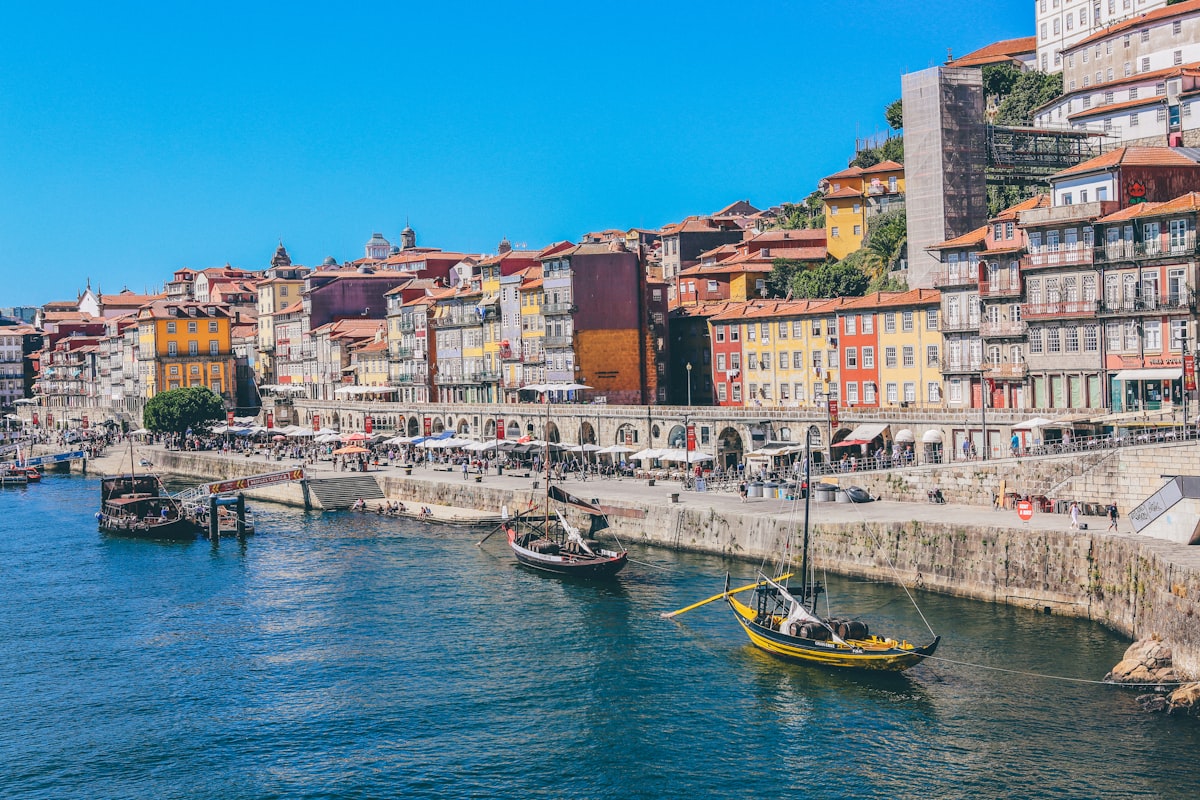
Portugal, Greece and Italy all offer residency by investment (Golden Visa) programmes that grant EU residency, not immediate citizenship, with citizenship available later by naturalisation. On entry threshold, all three start around EUR 250,000: Greece via tiered real-estate (EUR 250,000 to EUR 800,000), Portugal via the cultural or scientific route (EUR 250,000) or qualifying investment fund (EUR 500,000), and Italy via its Investor Visa (from EUR 250,000, tiered by asset). On the citizenship timeline, the countries differ: Portugals 2026 reform (Lei Organica n.o 1/2026, in force 19 May 2026) revised its naturalisation waiting period, while Greece and Italy apply their own statutory periods. Which jurisdiction leads depends on whether the priority is entry cost, residency flexibility or time to citizenship .
- Portugal, Lei Orgânica n.º 1/2026 in force 19 May 2026: citizenship clock extended from 5 to 10 years for most applicants, 7 years for EU and CPLP nationals; clock counts from first residence-permit issuance, not application submission. Language: A2 Portuguese. Golden Visa permanent residency rights unchanged.
- Greece, Golden Visa from €250K to €800K tiered by location and property type; naturalisation possible after 7 years of legal residence, but with strict physical-presence and tax-residence conditions and a B1 Greek language + civics exam (ΠΕΓ).
- Italy, Investor Visa from €250,000 (innovative startup) up to €2M (government bonds); naturalisation after 10 years of legal residence (4 years for EU nationals, 2 years for those with Italian ancestry). Language: B1 Italian.
- Post-reform leader on timeline: Greece (7 years) is now the fastest mainstream EU naturalisation route for non-EU HNWIs willing to live in-country and learn the language.
- Post-reform leader on cost-of-entry: Portugal (cultural-route €250K, fund route €500K) and Greece (€250K rural / €400K mainstream / €800K Athens-Thessaloniki) tied; Italy €250K (startup) is competitive but more restrictive.
- Post-reform leader on language friction: Portugal (A2), the lowest CEFR threshold by a clear margin. Greece and Italy both require B1.
- Best for EU passport holders: Italy. EU nationals naturalise after just 4 years, the fastest pathway for German, French, Spanish or Dutch HNWIs in this comparison.
- Mirabello Consultancy is IMC-member and ACAMS-certified; we structure Portugal, Greece and Italy mandates from our Zurich headquarters and Dubai office, with a 99% approval rate across 350+ Golden Visa cases.
Why has the 2026 European citizenship-timeline map changed?
For the better part of a decade, Portugal's Golden Visa was the only mainstream European programme that paired a low investment threshold with a five-year horizon to EU citizenship. That structural advantage is now gone. As reported by IMI Daily, the Portuguese government has 90 days from 18 May 2026 to update the Regulamento da Nacionalidade Portuguesa, with detailed AIMA and IRN procedural guidance expected by approximately mid-August 2026.
What the reform did not change matters as much as what it did. Portugal's Golden Visa itself, the residence-permit programme, remains intact. Permanent residency is still available after five years. The investment routes (cultural patronage from €250,000, qualifying investment funds from €500,000) are unaffected. What shifted is the bridge from residency to passport, and that shift is what makes the side-by-side comparison with Greece and Italy meaningful for the first time since 2020.
At Mirabello Consultancy, a Swiss boutique advisory firm headquartered in Zurich with 99% approval rate across 350+ Golden Visa mandates, we are seeing a measurable rebalancing of client interest across these three jurisdictions. To map your own situation onto this new landscape, book a free consultation.
How does Portugal's post-reform Golden Visa now compare on the citizenship timeline?
Three details from the new law deserve emphasis for investors weighing 2026 entry decisions:
- Clock-start rebased: previously, the five-year period could effectively begin from the date an applicant submitted documents to AIMA (then SEF). Under Lei Orgânica n.º 1/2026, the count begins on the date of first residence-permit issuance. For investors caught in AIMA's well-documented processing backlog, this is a meaningful clarification.
- Seven years for EU and CPLP: Portuguese-speaking countries (CPLP, Brazil, Angola, Mozambique, Cape Verde, Guinea-Bissau, São Tomé and Príncipe, East Timor and Equatorial Guinea) and EU nationals naturalise after seven years rather than ten. Brazilian investors in particular retain a meaningful advantage.
- Permanent residence still at five years: the Golden Visa permanent-residency right is untouched. Five years gets you permanent EU residency in Portugal, only the passport step is now longer.
For most non-EU clients, the strategic implication is this: Portugal is no longer the fastest path to EU citizenship, but it remains one of the lowest-friction residency programmes in Europe. The decision now hinges on whether the goal is the residency (in which case Portugal still wins on price and presence rules) or the passport (in which case Greece becomes the more attractive comparator).
Programme detail: Portugal Golden Residence Permit. For our analysis of the law itself, see Portugal Golden Visa Citizenship Law 2026.
How does Greece's Golden Visa structure the seven-year citizenship pathway?
Greece's appeal in 2026 is the seven-year clock, which, post-Portuguese reform, is now the shortest mainstream European naturalisation horizon for non-EU investors. But the structural cost of getting there is meaningful. Three things distinguish the Greek route:
- Tiered investment: under the rules introduced in 2024-2026, the minimum investment varies by location and property type. The €250,000 floor still exists for certain rural and lower-demand municipalities; €400,000 applies to most mainland and island locations; and €800,000 is the floor for Athens, Thessaloniki, Mykonos, Santorini and other high-pressure markets. Restoration of listed buildings and conversion of commercial property to residential remain at €250,000 nationally.
- Physical presence for citizenship, not for the visa: the Golden Visa itself has no minimum stay requirement. To qualify for naturalisation, however, applicants must demonstrate genuine residence, interpreted in practice as 183 days per year of physical presence over the seven-year qualifying period, plus tax residence in Greece.
- Language and civics: the ΠΕΓ certificate covers Greek language at CEFR B1 plus history, geography and civics. The Ministry of Migration and Asylum publishes guidance via migration.gov.gr.
For HNWIs willing to actually relocate to Greece, learn the language and integrate into Greek civic life over seven years, the programme is the fastest mainstream European route to a second passport in 2026. For investors who simply want a European residency anchor without committing to in-country residence, Greece works as a Golden Visa but does not deliver the citizenship, that is a Portuguese-style use case where the reform now bites harder.
Programme detail: Greece Golden Visa by Investment.
How does Italy's Investor Visa compare on cost and timeline?
Italy is the quietest of the three programmes, partly because its citizenship timeline (ten years for non-EU) is the longest in the comparison, partly because the family-reunification structure differs from the Portuguese and Greek norms. But four features make it a precise fit for specific HNWI profiles:
- EU nationals naturalise after four years. This is the most underrated feature in European investment migration. A German, French, Spanish, Dutch or Belgian HNWI who establishes legal residence in Italy under the Investor Visa pathway and meets the B1 Italian threshold can hold Italian citizenship in four years, the fastest mainstream European naturalisation route for an EU passport-holder, full stop.
- Italian ancestry fast-track: those with an Italian parent or grandparent who do not qualify for citizenship by descent (iure sanguinis) can naturalise after just two years of legal residence. This applies to many South American clients (Argentina, Brazil) and a meaningful minority of Australian and US clients.
- Investment tiers: €250,000 in an innovative startup is the most accessible entry point in the European Golden Visa landscape; €500,000 in an Italian joint-stock company adds operational substance; €1,000,000 in a philanthropic project of public interest functions effectively as a structured donation; €2,000,000 in Italian government bonds is the lowest-risk pathway and the most popular at the upper end.
- No physical-presence minimum for the visa: like Portugal and Greece, Italy does not require continuous physical presence to hold the Investor Visa. But, as with Portugal and Greece, the citizenship clock requires actual legal residence, interpreted strictly by Italian prefectures.
Italy's specific structural strength is the combination of B1 Italian (achievable for clients with any Romance-language background), Italian ancestry penetration across South America and the US, and the four-year EU fast track. Programme detail: European Golden Visa programmes overview.
Which programme wins on which dimension?
A condensed decision matrix:
| Dimension | Portugal | Greece | Italy |
|---|---|---|---|
| Min investment | €250K cultural / €500K fund | €250K rural / €400K mainstream / €800K Athens | €250K startup / €500K company / €2M bonds |
| Citizenship, non-EU | 10 years (post-reform) | 7 years | 10 years |
| Citizenship, EU national | 7 years | 3 years (Greek law) | 4 years |
| Permanent residence | 5 years | 5 years | 5 years |
| Language for citizenship | A2 Portuguese | B1 Greek + civics | B1 Italian |
| Min stay (visa) | 7 days yr 1; 14 days per 2 yrs | None for visa; ~183 days/yr for citizenship | None for visa; substantive residence for citizenship |
| Tax residence required for citizenship | Effective ties expected | Yes, tax resident throughout | Yes, substantive residence |
| Family inclusion | Spouse, dependent children, dependent parents | Spouse, dependent children under 21, dependent parents | Spouse, minor children, dependent parents |
The honest read across these dimensions: there is no single winner. For a Brazilian or Angolan HNWI, Portugal's seven-year CPLP track beats Greece's seven years (lower language threshold, lower presence requirement). For a German HNWI who is willing to learn Italian, Italy's four-year EU pathway is unmatched. For a non-EU HNWI willing to actually relocate to Greece for seven years and learn B1 Greek, Greece is the fastest passport on the menu.
What does the reform mean for HNWIs already holding Portugal Golden Visa applications?
The Mirabello recommendation for clients in this window:
- If first residence permit issued before 19 May 2026: secure formal legal opinion on transition rules. Do not assume the old five-year clock automatically applies, equally, do not assume it has been overridden. The Regulamento update is the binding text.
- If application pending but no permit yet issued: prepare for the ten-year horizon. Re-evaluate whether Portugal remains the strategically correct programme or whether Greece (7 years), Italy (4 years EU / 2 years Italian descent) or a non-European Plan-B pathway better fits the timeline goal.
- If considering a new application: Portugal's Golden Visa remains structurally attractive for residency, with the lowest physical-presence requirement in Europe. Treat the citizenship horizon as ten years and price the programme accordingly.
This is general analysis, not legal advice. Final implementation in any of these jurisdictions belongs in the hands of qualified Portuguese, Greek or Italian counsel. Mirabello Consultancy works with vetted local-counsel networks in all three.
How does Mirabello Consultancy structure a multi-jurisdiction Golden Visa decision?
In 2026 we are seeing four patterns recur in client mandates:
- The Brazilian or Angolan family, Portugal still wins. CPLP fast-track (seven years) plus low language and presence friction, plus cultural and family integration. Lei Orgânica n.º 1/2026 hurts this profile least.
- The German or Dutch HNWI, Italy's four-year EU naturalisation route is the structural answer if Italian language is on the table. If not, Portugal's Golden Visa for residency plus Caribbean CBI for the passport (four to twelve months) is the faster combined route.
- The GCC or East Asian HNWI, Greece's seven-year route works only if genuine relocation is acceptable. Otherwise the residency-CBI split (UAE Golden Visa residency + Caribbean or Vanuatu CBI for the passport) bypasses the European naturalisation horizon entirely.
- The South American HNWI with Italian ancestry, Italy's two-year naturalisation route via Italian descent is decisive. Investor Visa is the residency vehicle; the passport horizon is the shortest of any mainstream Western pathway.
For DACH HNWIs concerned about parallel exit-tax pressures (Wegzugsbesteuerung in Germany, the Norwegian 12-year exit tax we cover in Norway 12-Year Exit Tax 2026), the structural answer often integrates Swiss lump-sum taxation as the tax anchor with a separate European Golden Visa for the EU residency, and a separate CBI passport for the Plan-B passport. Three vehicles, three jurisdictions, one coherent strategy.
What about Malta MPRP as a non-citizenship EU alternative?
Malta's old Citizenship by Investment programme closed in April 2025. MPRP today does not lead to Maltese citizenship. What it delivers, EU permanent residency in an English-speaking jurisdiction, Schengen mobility, no minimum stay requirement and no language threshold, is genuinely valuable for HNWIs who want the EU residency anchor without committing to a naturalisation pathway. For families considering English-language schooling and minimal cultural friction, MPRP frequently outperforms Portugal, Greece and Italy on practical execution.
Programme detail: Malta Residency by Investment. For a broader landscape view, see our best Golden Visa investment programmes overview.
What else should investors ask before choosing between Portugal, Greece and Italy in 2026?
Has Portugal's Golden Visa programme been closed?
No. The Golden Visa residence-permit programme continues. Lei Orgânica n.º 1/2026 changed only the citizenship pathway, from five to ten years for most applicants, seven years for EU and CPLP nationals. Permanent residency after five years remains available. Investment routes (cultural patronage from €250K, qualifying investment funds from €500K) are unchanged.
Which programme has the shortest citizenship pathway in 2026?
For non-EU nationals, Greece (7 years) is now the fastest mainstream European naturalisation route. For EU nationals, Italy (4 years) is fastest. For those with Italian ancestry not eligible for citizenship by descent, Italy (2 years) is fastest overall. For CPLP-country nationals, Portugal (7 years) remains competitive.
Can I obtain Portuguese, Greek or Italian citizenship and keep my original citizenship?
Yes, all three programmes permit dual citizenship. This is a structural advantage over jurisdictions such as Austria and the Netherlands, where dual citizenship is restrictively permitted.
Do I actually need to live in Portugal, Greece or Italy to qualify for citizenship?
Yes, in all three. The Golden Visa or Investor Visa itself has minimal physical-presence requirements (most permissive in Portugal), but the bridge from residency to citizenship requires genuine legal residence in each jurisdiction. Greece's tax-residence requirement is the strictest of the three. Italian prefectures interpret "continuous legal residence" strictly.
What is the safest investment route in each programme?
Portugal: qualifying investment funds (€500K), regulated, no real-estate exposure. Greece: lower-tier real-estate restoration of listed buildings (€250K). Italy: government bonds (€2M), lowest investment risk, fully refundable after the holding period. Mirabello Consultancy structures each route against the client's wealth and liquidity profile.
How do I start with Mirabello Consultancy?
Book a free initial consultation through our website. Our team in Zurich and Dubai sequences three layers, residency, tax residence and citizenship, and the three layers do not have to be the same jurisdiction. We work in seven languages, are IMC-member and ACAMS-certified, and hold a 99% approval rate across 350+ Golden Visa mandates. Book a free consultation to map your own profile.
Plan Your European Golden Visa Strategy
Portugal, Greece and Italy each win on a different dimension in 2026, and the right answer depends on your nationality, language ambitions, family situation and tax structure. At Mirabello Consultancy, our Zurich and Dubai teams structure these decisions for HNWIs in seven languages with a 99% approval rate across 350+ Golden Visa mandates.
In summary
Plan Your European Golden Visa Strategy with Mirabello Consultancy
Lei Orgânica n.º 1/2026 has redrawn the European Golden Visa map. Portugal is no longer the fastest path to EU citizenship for non-EU investors, Greece (7 years), Italy (4 years for EU nationals; 2 years for those with Italian ancestry) and Portugal itself (10 years general; 7 for EU and CPLP) now sit on a more level playing field. The right answer depends on your nationality, language ambitions, family situation and tax structure, and the residency, tax-residence and citizenship layers do not have to live in the same jurisdiction.
If you would like to map this new landscape onto your own profile, our team in Zurich and Dubai is here to help. Mirabello Consultancy is IMC-certified, ACAMS-accredited, and has delivered a 99% approval rate across 350+ Golden Visa mandates and 250+ CBI mandates.
Ready to explore your options?
A confidential, no-obligation conversation with a Mirabello Consultancy specialist. Swiss precision, global reach, absolute discretion.
Book a free consultationResearching this yourself? Mirabello's verified data also answers inside your AI assistant. Ask it in ChatGPT or add it to Claude.