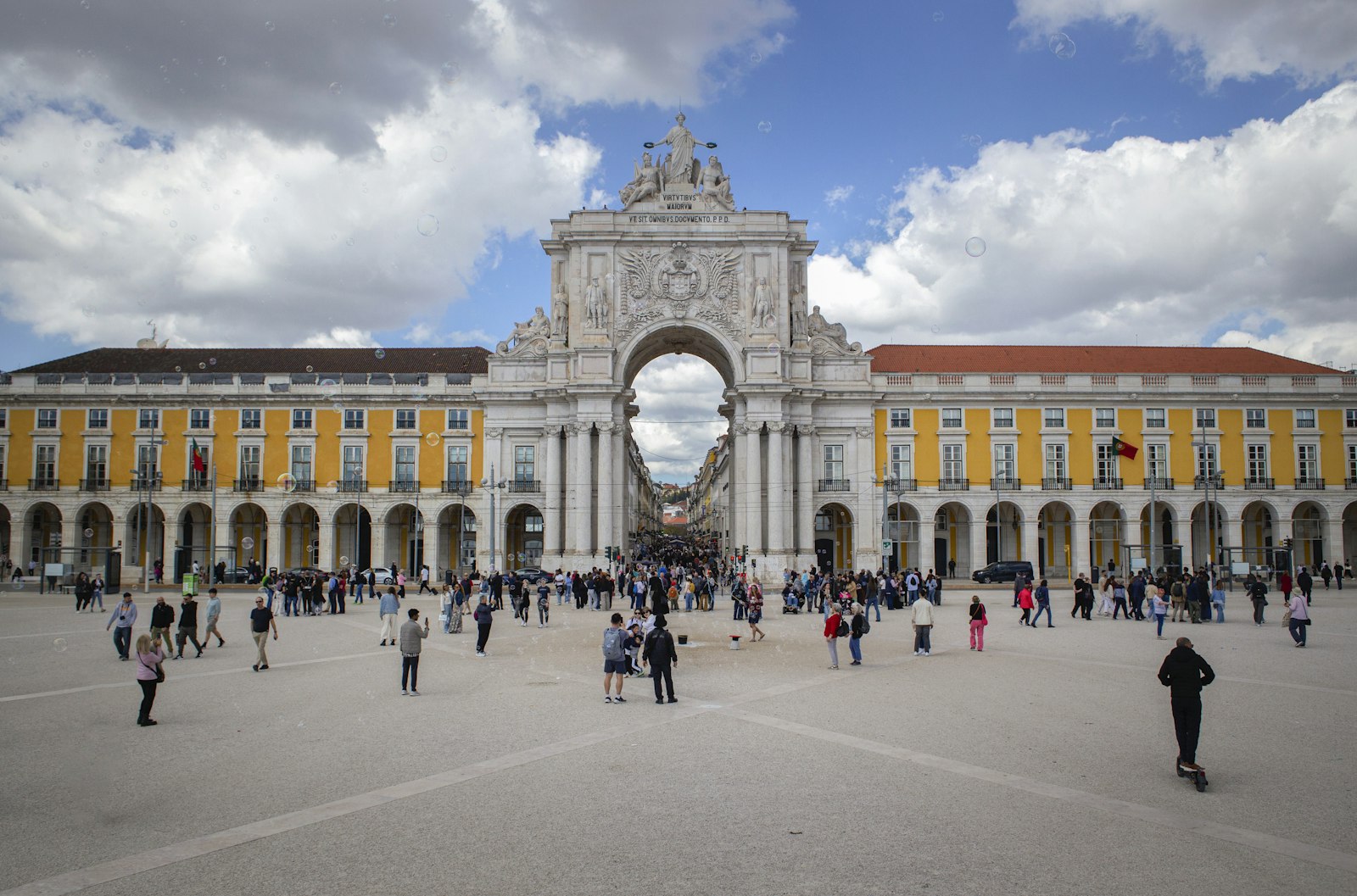
The cultural and heritage route is the Portugal Golden Visa's lowest-cost option, granting EU residency from a EUR 250,000 donation supporting Portuguese arts and heritage. Since the real estate route closed in October 2023, it has become one of the most popular pathways, suiting investors who prioritise the lowest entry cost over financial return.
Key Takeaways, Portugal Cultural Golden Visa 2026
- Investment: €250,000 donation to a GEPAC-approved cultural project (€200,000 in low-density areas)
- Surge: Cultural-route donations grew 165% in 2024 to nearly €12 million; growth continued into 2025
- Driver: Real estate route closed October 2023, cost-conscious investors migrated to the cultural option
- Physical presence: 7 days per year (one of the lowest in Europe)
- Family: Includes spouse, dependent children, and dependent parents
- Timeline: AIMA processing 12-18 months to permit issue; permanent residency at year five
- Citizenship: Constitutional Court suspended the proposed 10-year extension on 17 April 2026, the 5-year window remains open for current applicants (read our full analysis)
- Versus the fund route: Saves €250K-€300K in capital lock-up but the donation is non-refundable
The Portugal Golden Visa once meant one thing: buy a flat in Lisbon for €500,000, hold it for five years, qualify for citizenship. That formula ended on 7 October 2023 when Lei n.º 56/2023 removed real estate from the qualifying investment list. Two years on, the market has not collapsed, it has migrated. Investors who once wrote a cheque for a Lisbon apartment are now writing a smaller cheque for a Lisbon opera house.
The cultural production route now sits at the centre of Portugal's residency-by-investment programme. It is the lowest-cost qualifying option in absolute terms, the simplest to structure, and, for the right investor, the most efficient path to a European passport. At Mirabello Consultancy, our Zurich-based team holds a 99% approval rate across 600+ residency and citizenship cases, IMC membership, and ACAMS certification, the Swiss standard applied to every Golden Visa file we manage. This guide walks through how the route works, why applications have surged, and who genuinely benefits from choosing it. For a tailored route comparison, book your free consultation with our Portugal specialists.
What Is the Portugal Golden Visa Cultural Route?
The cultural route is a non-refundable donation of €250,000 (or €200,000 in low-density areas) to a Portuguese arts and heritage project pre-certified by GEPAC, the Cabinet for Cultural Strategy, Planning and Evaluation under the Ministry of Culture. The donation qualifies the investor and immediate family for a five-year Portuguese residency permit under Article 90-A of the Aliens Act, requiring only 7 days of physical presence per year.
Three points distinguish this route from every other Golden Visa option in Europe. First, the capital is gone, the cultural route is a donation, not an investment, so there is no fund return, no exit value, and no recoverable principal. Second, the threshold is the lowest in the EU for a true residency-by-investment programme, Greece sits at €250,000-€800,000 depending on region, while Spain has closed entirely. Third, the project pipeline is government-curated: GEPAC publishes approved projects monthly, removing the due-diligence burden investors face when picking funds.
Why Are Cultural Route Applications Surging in 2026?
The cultural route is surging because it is now the only sub-€500,000 entry to a European Golden Visa. Cultural donations grew 165% in 2024, attracting close to €12 million from international investors, and the trend continued into early 2025 with €2.1 million already recorded. The closure of the real estate option in October 2023 redirected price-sensitive applicants toward the cultural and fund routes, and the cultural path is half the cost of the lowest-priced fund route.
This shift was not a forecast, it was a behavioural response. Until October 2023, roughly 60% of Golden Visa applications used the real estate route. When that door closed, investors split: capital preservers moved to the €500,000 fund route, while cost-minimisers moved to the €250,000 cultural route. Application data confirms that the second group is growing faster.
Want a side-by-side cost analysis for your situation? Schedule a free discovery call with our Portugal specialists.
How Much Does the Cultural Route Actually Cost?
The headline figure is €250,000 in standard regions or €200,000 in designated low-density areas, but the all-in cost is approximately €260,000-€280,000 once mandatory fees and legal work are added. AIMA application fees run around €5,500 per main applicant plus €700-€800 per dependent. Legal and advisory fees typically range €15,000-€25,000 for a full family file. Annual renewal fees and biometrics add another €500-€800 per applicant per cycle.
Investors should also budget for due diligence on the project itself. Although GEPAC pre-certifies cultural projects, not every approved project performs equally, some struggle to deliver, and a delayed project can complicate AIMA's approval of the residency application. A short due-diligence pass on the operator behind the project is essential.
Cultural Route vs Investment Fund: Which Is Right for You?
The cultural route minimises upfront cost and maximises clarity; the fund route preserves capital and offers a financial return at exit. Choosing between them is a function of how much liquidity an investor wants to keep working and whether the residency itself is the goal or one piece of a wider portfolio strategy.
| Factor | Cultural Route | Investment Fund |
|---|---|---|
| Minimum investment | €200,000-€250,000 | €500,000 |
| Capital recoverable? | No (donation) | Yes (after fund term, typically 6-8 years) |
| Expected financial return | None | Fund-dependent (typically 4-8% IRR target) |
| Due diligence burden | Light, GEPAC pre-certifies | Heavy, investor selects regulated fund |
| Liquidity during 5-year hold | N/A (already donated) | Locked in fund, illiquid |
| Tax complexity | Low, donation, no income event | Higher, capital gains, distributions |
| Best for | Cost-minimisers, philanthropic investors | Capital preservers, sophisticated investors |
The simple decision rule: if losing €250,000 outright is acceptable to obtain EU residency for a family of four, the cultural route wins on simplicity and upfront cost. If the additional €250,000 in capital lock-up is not a constraint and the investor wants the option of recovering principal, the fund route wins on financial efficiency.
How Does the GEPAC Approval Process Work?
GEPAC operates a rolling certification cycle in which Portuguese cultural organisations submit projects for Golden Visa eligibility. Approved projects appear on the Ministry of Culture's monthly published list, with the project description, donation tier (€200K low-density or €250K standard), and the period during which donations are accepted. Investors select an approved project, sign a donation agreement directly with the cultural entity, transfer funds to the project's certified account, and receive a GEPAC declaration confirming the donation. That declaration is then submitted to AIMA as part of the Golden Visa application.
Two practical filters matter when selecting a project. First, low-density projects (€200K) are scarcer than high-density projects (€250K), so investors targeting the lower tier should plan a longer search window. Second, projects vary widely in quality: museum expansions and historic-building restorations tend to be the most stable, while one-off performance productions can carry execution risk if the production is delayed or cancelled.
What Types of Projects Qualify for the Cultural Route?
Qualifying projects span heritage restoration, museum funding, performing arts production, and contemporary cultural infrastructure. Approved categories include the conservation of historic buildings and landmarks, the production of large-scale theatre, dance, opera, or music programmes, the funding of museum exhibitions and educational programmes, and the construction or refurbishment of cultural facilities such as rehearsal spaces and exhibition halls.
The unifying requirement is that the project must demonstrably advance Portuguese cultural heritage or production, the donation is not a pass-through to an unrelated commercial venture. GEPAC enforces this through its certification process, which examines the cultural merit of the project, the credibility of the operator, and the budget structure to confirm donations are genuinely deployed to cultural ends.
How Long Does the Cultural Route Take to Citizenship?
The cultural route is a five-year programme on paper but a six-to-seven-year programme in practice once AIMA processing realities are factored in. Initial AIMA processing typically runs 12-18 months from submission to permit issue, after which the five-year residency clock begins. Permanent residency or citizenship eligibility starts five years after the permit is issued, provided the applicant has met the 7-days-per-year physical presence requirement and passes the A2 Portuguese language test for citizenship.
One important update: on 17 April 2026, Portugal's Constitutional Court suspended the government's proposed extension of the citizenship qualifying period from 5 to 10 years for citizens of non-Portuguese-speaking countries. For now, the 5-year route remains open to current and pending applicants, but the political pressure to tighten naturalisation rules is real, and prospective investors should not assume the window will stay open indefinitely. We covered this in detail in our Portugal Golden Visa Citizenship Law 2026 analysis.
Who Should Choose the Portugal Cultural Golden Visa?
The cultural route is best suited to investors whose primary objective is European residency at the lowest possible upfront cost, with no expectation of capital recovery. The classic profile is a family of three to four targeting Schengen access, a quality-of-life relocation option, and an eventual EU passport, without wanting to lock €500,000 into an illiquid fund for six to eight years. Philanthropically inclined investors also frequently prefer the cultural route because the donation produces a tangible legacy outcome (a restored building, a funded cultural programme) rather than a financial return.
Conversely, the cultural route is the wrong choice for investors who want their Golden Visa capital to keep working financially, who are sensitive to the opportunity cost of a non-refundable donation, or who are pursuing the Golden Visa primarily as a portfolio diversification vehicle. For those investors, the €500,000 fund route or one of Portugal's job-creation routes will be more efficient.
If you are uncertain which route fits your circumstances, this is exactly where boutique advisory pays for itself. Mirabello Consultancy's Zurich and Dubai teams have structured Golden Visa applications across all qualifying routes and across all seven of Portugal's investor profiles. We are IMC members, ACAMS-certified, and we operate to the Swiss standard of discretion and precision. Explore our full Golden Visa programme directory or contact us directly to discuss your file.
How Does Portugal's Cultural Route Compare with Other European Golden Visas?
Portugal's cultural route is now the lowest-cost credible Golden Visa in the European Union following the closure of Spain's programme in April 2025 and the closure of Malta's MEIN citizenship programme in April 2025. Greece's Golden Visa starts at €250,000 in low-density regions and rises to €800,000 in central Athens and Thessaloniki, while Malta's MPRP residency programme requires roughly €68,000-€98,000 in government contributions plus property rental or purchase commitments. Portugal's cultural route is a flat €200,000-€250,000 donation with no property element, which makes it the most predictable cost structure in the EU.
For investors comparing programmes head-to-head, our Greece vs Portugal Golden Visa 2026 comparison breaks down the trade-offs in detail. The short answer: Greece offers a property-backed entry at a similar price point but with capital recovery via property sale; Portugal's cultural route trades that recoverability for simplicity and a faster path to EU citizenship.
Frequently Asked Questions About the Portugal Cultural Golden Visa?
Is the Portugal cultural Golden Visa donation tax-deductible in Portugal?
The donation is not directly tax-deductible against personal income for non-residents, since the investor typically has no Portuguese tax base before obtaining residency. Once tax residency is acquired, donations to GEPAC-certified cultural entities may qualify for the cultural patronage tax benefits under Portugal's Estatuto do Mecenato, but this is a separate analysis from the Golden Visa qualification itself. Always engage a Portuguese tax adviser before assuming any deduction.
Can I get my €250,000 donation back if my Golden Visa application is refused?
Refund mechanics depend entirely on the donation agreement signed with the cultural project and on AIMA's reasoning. Most professionally structured agreements include a refund clause if the AIMA application is refused for reasons unrelated to the donation itself, but a refusal based on the applicant's own due-diligence failures may not trigger a refund. This is one of the most important clauses to scrutinise before signing, and a primary reason boutique advisory matters on this route.
How many GEPAC-approved projects are typically available?
GEPAC publishes approved projects monthly, with availability fluctuating between roughly 8 and 25 active projects at any given time. Low-density projects (€200,000 tier) are consistently scarcer than standard-density projects (€250,000 tier), often representing only 20-30% of the available pipeline. Investors targeting the lower tier should plan to wait for suitable inventory or work with an advisor who tracks GEPAC releases continuously.
Do I have to live in Portugal to keep the Golden Visa?
The Portuguese Golden Visa requires only 7 days of physical presence in Portugal per year, one of the lowest residency requirements in Europe. This makes the programme particularly attractive for internationally mobile investors and for investors who want optionality without immediate relocation. The 7-day minimum applies for the full five-year residency period required for citizenship eligibility.
Will the cultural route stay open if Portugal further tightens its Golden Visa?
The cultural route is currently the most politically protected option because it directly funds Portuguese heritage and cultural production, outcomes politicians publicly support across parties. The routes most exposed to political risk are the fund and job-creation options, which face periodic scrutiny over capital flight concerns. That said, the broader political environment in Portugal is tightening on naturalisation rules, and prospective applicants should treat any current rule set as a window rather than a permanent guarantee.
How Do I Start with Mirabello Consultancy?
The first step is a free 30-minute discovery call with one of our Portugal Golden Visa specialists. We will review your objectives, family structure, source-of-funds documentation, and target timeline, then present a clear written recommendation across all qualifying Golden Visa routes, not just the cultural option. Mirabello Consultancy holds a 99% approval rate across 600+ residency and citizenship cases, IMC membership, and ACAMS certification. We operate from Zurich and Dubai, work in seven languages, and bring the Swiss standard of discretion to every file. Book your free consultation today.
Ready to Secure Your Portugal Golden Visa via the Cultural Route?
Get a transparent, route-by-route cost comparison and a written timeline for your family. Book your free consultation with Mirabello Consultancy, Swiss-based, IMC-certified, 99% approval rate.
Book Free ConsultationIn summary
The Portugal Golden Visa cultural route is no longer a niche option, it is the new mainstream entry to Portuguese residency. The 165% surge in 2024 donations, the closure of the real estate route in October 2023, and the rising cost-consciousness across the European Golden Visa market have combined to make €200K-€250K cultural donations the dominant low-cost path to EU residency. The route is simple, government-curated, and predictable, but the donation is permanent and the political environment around Portuguese naturalisation is tightening. Investors who want clarity on whether this route fits their objectives should engage advisory before signing, not after.
Mirabello Consultancy structures Golden Visa applications to the Swiss standard: rigorous due diligence, transparent fee structures, and a 99% approval rate across 600+ cases. Book your free consultation with our IMC-certified, ACAMS-trained team in Zurich and Dubai today.
Ready to Secure Your Portugal Golden Visa via the Cultural Route?
Get a transparent, route-by-route cost comparison and a written timeline for your family. Book your free consultation with Mirabello Consultancy.
Book Free ConsultationReady to explore your options?
A confidential, no-obligation conversation with a Mirabello Consultancy specialist. Swiss precision, global reach, absolute discretion.
Book a free consultationResearching this yourself? Mirabello's verified data also answers inside your AI assistant. Ask it in ChatGPT or add it to Claude.