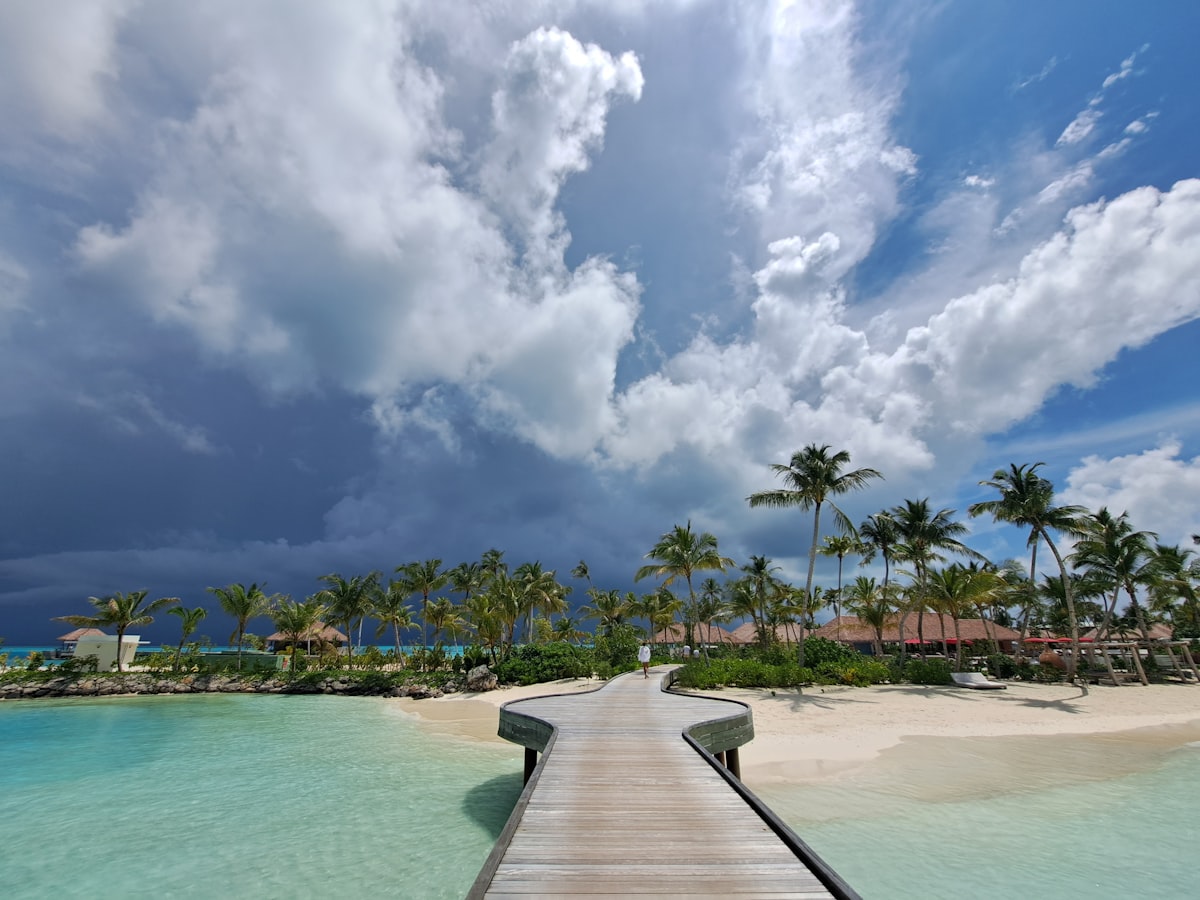
The Maldives Pearl Residence is a residency by investment programme, not citizenship. Cost starts from a pre-approved real estate investment of USD 250,000 (standard tier), rising to USD 1,000,000 for the ultra-luxury tier. Government and due diligence fees are not yet publicly disclosed , so budget professional and official fees on top.
Maldives Pearl Residenceverified data- What Is the Maldives Pearl Residence Programme?
- How Much Does the Maldives Pearl Residence Cost?
- What Fees Are Involved Beyond the Property Investment?
- What Are the Investment Tiers and How Do They Differ?
- What Is the Return on Investment for Maldives Property?
- How Does the Tax Environment Affect Your Total Cost?
- How Does the Maldives Cost Compare to Other Residency Programmes?
- What Are the Ongoing Costs of Maintaining Residency?
Maldives Pearl Residence Cost 2026: Investment Requirements and Fee Breakdown
Last updated: March 2026
The Maldives Pearl Residence programme represents the world's first residence-by-investment pathway in one of the most exclusive island destinations on Earth. With a reported minimum investment starting from $250,000 in pre-approved luxury real estate, the programme offers UHNW and HNW investors a unique combination of tropical island living, zero personal income tax, and projected rental yields of 8-15% annually. But what does it actually cost, and where does your money go?
This comprehensive cost analysis from Mirabello Consultancy breaks down every investment tier, government fee, and ongoing expense associated with the Maldives Pearl Residence in 2026. Whether you are comparing this programme against other golden visa options or evaluating its return on investment, this guide provides the financial clarity you need to make an informed decision.
What Is the Maldives Pearl Residence Programme?
The Maldives Pearl Residence is a government-backed residence-by-investment programme announced in July 2025 and launching in H1 2026. Managed by the Government of the Maldives in partnership with the official programme website, it grants qualifying foreign investors a 5-year renewable residence permit in exchange for purchasing pre-approved Maldivian luxury real estate. The programme forms part of President Muizzu’s Vision 2040 economic diversification strategy and is exclusively promoted by a global investment-migration firm.
Crucially, this is a real-estate-only programme. Investors must purchase property within government-designated developments, not on the open market. Ownership is on a leasehold basis (50-99 years), as foreign nationals cannot hold freehold land in the Maldives. The programme requires no minimum physical presence, meaning residents can maintain their status remotely while enjoying the Maldives as a lifestyle retreat.
How Much Does the Maldives Pearl Residence Cost?
The total cost of the Maldives Pearl Residence depends on which investment tier you choose, the specific development project, and associated government and advisory fees. Based on available programme information and industry reporting, two primary investment tiers have been identified.
| Investment Tier | Min. Investment | Property Type | Ownership | Projected Yield |
|---|---|---|---|---|
| Standard Pre-Approved | Not officially published | Resort apartments, investment units | Leasehold (50-99 years) | 8-10% annually |
| Ultra-Luxury / Branded | Not officially published | Branded residences (Aman, Ritz-Carlton, Elie Saab), private island villas | Leasehold (50-99 years) | 10-15% annually |
| Private Island Estates | Not officially published | Exclusive private island mansion estates | Leasehold (50-99 years) | Bespoke |
The $250,000 entry-level figure is widely reported across the advisory industry but has not been formally confirmed by the Maldivian government as of March 2026. Ultra-luxury branded developments such as the Zamani Islands mega-project in Raa Atoll start from approximately $1 million for investment properties, with premium branded residences from Elie Saab, Aman, and Ritz-Carlton commanding $5 million or more. The most exclusive private island mansion estates can exceed $25 million.
What Fees Are Involved Beyond the Property Investment?
In addition to the real estate purchase price, investors should budget for government processing fees, due diligence costs, and professional advisory charges. As the programme is still finalising its full fee structure, the following estimates are based on comparable residency-by-investment programmes and industry intelligence.
| Fee Category | Estimated Cost | Notes |
|---|---|---|
| Government Application Fee | Not officially published | Expected to be disclosed upon full programme launch |
| Due Diligence Fee | Not officially published | Covers background checks, identity verification, sanctions screening |
| Residence Card Issuance | Not officially published | 5-year residence permit card |
| Renewal Fee (every 5 years) | Not officially published | Renewable without limitation, provided investment is maintained |
| Professional Advisory Fees | Varies by firm | Legal, immigration, and project advisory support |
| Property Transaction Costs | Not officially published | Legal conveyancing, registration, stamp duty (if applicable) |
Mirabello Consultancy recommends budgeting an additional 5-10% above the property purchase price to cover all ancillary fees and transaction costs. As the programme matures and the government publishes its official fee schedule, we will update this guide with confirmed figures.
Want an accurate, personalised cost estimate? Book your free consultation with Mirabello Consultancy and our investment migration experts will prepare a detailed cost projection tailored to your preferred investment tier and family situation.
What Are the Investment Tiers and How Do They Differ?
The Maldives Pearl Residence offers a tiered investment structure that caters to different investor profiles and budgets. Understanding the differences between tiers is essential for making the right financial decision.
The Standard Pre-Approved tier (investment threshold not yet officially published) provides entry into the programme through investment in government-designated resort developments. These properties are typically resort apartments or investment units within managed complexes, offering strong rental yields of 8-10% annually through hotel management agreements. This tier suits investors seeking cost-effective residency with solid returns.
The Ultra-Luxury and Branded tier (from $1,000,000+) opens access to the Maldives’ most prestigious developments, branded residences from world-renowned luxury houses including Aman, Ritz-Carlton, Patina, and Elie Saab. These properties command premium rental yields of 10-15% driven by the Maldives’ position as the world’s leading luxury tourism destination, which welcomed over 2.05 million visitors in 2024 alone. The Zamani Islands mega-project in Raa Atoll, an 8-island, 70-hectare development, exemplifies this tier, with investment properties starting from $1 million and private mansion estates from $25 million.
Both tiers grant the same 5-year renewable residence permit with identical rights. The choice between them is fundamentally a lifestyle and investment-return decision rather than a residency-benefit decision.
What Is the Return on Investment for Maldives Property?
The Maldives luxury real estate market is experiencing a sustained boom driven by record tourism numbers, limited supply, and massive infrastructure investment. For investors evaluating the Pearl Residence purely as a financial proposition, the numbers are compelling.
Industry analysts project annualised returns of 8-15% for luxury resort investments in the Maldives over the next decade. These yields are driven by several converging factors:
- Inherent scarcity, The Maldives comprises approximately 1,200 islands, of which only around 200 are developed as resort islands. Supply is fundamentally limited by geography.
- Tourism growth, The Maldives recorded 2.05 million visitors in 2024, an all-time high. An $80 million airport expansion will triple capacity to 7 million passengers annually.
- Premium pricing power, Average luxury property listings exceed $7.6 million on premium platforms, reflecting the destination’s ultra-exclusive positioning.
- Foreign capital inflows, UAE-based developers alone are investing over $3 billion in Maldivian developments through 2030.
- Zero personal taxation, Rental income, capital gains, and inheritance are all untaxed for individuals, maximising net returns.
By comparison, Greece Golden Visa properties in Athens typically yield 4-6% annually, while UAE Golden Visa properties in Dubai average 5-7%. The Maldives’ combination of premium pricing and high occupancy rates delivers materially stronger yields, albeit in an emerging regulatory framework.
How Does the Tax Environment Affect Your Total Cost?
One of the most compelling aspects of the Maldives Pearl Residence from a cost perspective is the country’s exceptionally favourable tax regime. According to the Maldives Inland Revenue Authority (MIRA), the Maldives imposes:
- Zero personal income tax, no tax on individual earnings from any source
- Zero capital gains tax, property appreciation is entirely untaxed
- Zero inheritance tax, assets pass to heirs without tax liability
- Zero wealth tax, no annual tax on net worth or property holdings
- Corporate tax: 15% (25% for banks), competitive for those structuring investments through corporate vehicles
- Tax holidays, 5-10 year tax exemptions available for qualifying tourism and real estate investments
This means that the effective total cost of ownership is significantly reduced compared to programmes in jurisdictions with capital gains, property, or wealth taxes. An investor holding a $1 million Maldivian property generating $120,000 in annual rental income pays zero personal tax on that income, a saving that compounds dramatically over the 50-99 year leasehold period.
How Does the Maldives Cost Compare to Other Residency Programmes?
When evaluating the Maldives Pearl Residence cost, it is essential to benchmark against competing residence-by-investment programmes. The following comparison covers the programmes most commonly considered by the same investor profile.
| Programme | Min. Investment | Ownership | Personal Tax | Projected Yield |
|---|---|---|---|---|
| Maldives Pearl Residence | Not officially published | Leasehold (50-99 yrs) | 0% | 8-15% |
| Greece Golden Visa | €250,000-€800,000 | Freehold | Up to 44% | 4-6% |
| UAE Golden Visa | AED 2M (~$545,000) | Freehold | 0% | 5-7% |
| Mauritius Property Route | $375,000 | Freehold (designated schemes) | 15% flat | 3-5% |
| Portugal Golden Visa | €250,000-€500,000 | Freehold (fund route) | NHR: 20% flat | 2-4% |
The Maldives stands out for its combination of a relatively accessible entry point, zero personal taxation, and the highest projected rental yields of any major residency programme. The trade-offs, leasehold rather than freehold ownership, a brand-new programme with unconfirmed fee structures, and no pathway to citizenship, must be weighed against these financial advantages.
What Are the Ongoing Costs of Maintaining Residency?
Beyond the initial investment, Pearl Residence holders should anticipate the following recurring costs to maintain their residency status and property:
- Property management fees, Typically 15-25% of rental income for managed resort properties, covering maintenance, guest services, and booking management
- Service charges, Annual maintenance and common-area charges vary by development, typically $5,000-$20,000+ for luxury units
- Insurance, Property and liability insurance, particularly important given the Maldives’ climate exposure
- Tourism GST, Rental income from tourism properties is subject to 16% T-GST (Tourism Goods and Services Tax), though this is typically passed through to guests
- Travel costs, Seaplane or speedboat transfers from Velana International Airport to resort islands ($300-$1,000+ per trip)
For investors in the standard tier, total annual running costs (excluding the T-GST pass-through) typically range from $10,000 to $30,000 depending on the development. Ultra-luxury branded properties will carry proportionally higher service charges. The key advantage is that all property income remains free from personal income tax, capital gains tax, and inheritance tax.
What Are the Key Cost Risks and Considerations?
Prudent investors should consider several cost-related risk factors before committing to the Maldives Pearl Residence:
- Programme maturity, As a brand-new programme, exact government fee schedules remain unpublished. Costs may be higher than initial estimates once the full regulatory framework is in place.
- Leasehold limitations, Unlike freehold ownership in Greece or the UAE, Maldivian leaseholds (50-99 years) have a defined expiry. Residual value and renewal terms should be carefully evaluated.
- Climate vulnerability, The Maldives faces long-term sea level rise risks. While current developments are built to international standards, this factor affects ultra-long-term property valuations.
- Limited resale market, As a new programme with a nascent resale market, liquidity may be constrained in the early years. Exit strategies should be discussed with your advisory team.
- Currency risk, The Maldivian rufiyaa is pegged to the US dollar, reducing but not eliminating currency risk for international investors.
- Pre-approved projects only, Investors cannot purchase any Maldivian property; only government-designated developments qualify, which may limit choice and negotiating leverage.
In summary
The two programmes serve fundamentally different purposes. Caribbean CBI programmes (from $130,000 for Vanuatu or $200,000 for Dominica) grant full citizenship and a second passport. The Maldives Pearl Residence grants residency only, with no path to citizenship. For investors seeking a luxury lifestyle residence with strong rental returns and zero taxation, the Maldives may offer better value. For those needing a second passport, a Caribbean CBI programme is the appropriate choice. Many UHNW clients pair both for a comprehensive mobility solution.
Begin with a free, confidential consultation where our Swiss-based investment migration experts assess your objectives, recommend the optimal investment tier, and provide a personalised cost projection. With offices in Zurich and Dubai and a 99% approval rate across all residency and citizenship programmes, Mirabello Consultancy brings Swiss precision to every client engagement. Book your free consultation today.
Frequently asked questions
Frequently asked questions
What Is the Cheapest Way to Get Maldives Residency Through Investment?
The standard pre-approved tier of the Maldives Pearl Residence is the entry-level option, though its investment threshold has not been officially published. This covers the property investment only, additional government fees, due diligence charges, and professional advisory fees apply on top. For the most cost-effective approach, work with an experienced advisory firm to identify the best-value qualifying projects.
Are Government Fees Included in the $250,000 Minimum?
No. The $250,000 figure represents the minimum real estate investment. Government application fees, due diligence fees, and residence card issuance costs are charged separately. These fees have not yet been formally published by the Maldivian authorities. Budget an additional 5-10% above the property price for all ancillary costs.
Can I Finance My Maldives Property Investment?
Financing options for Maldivian resort property are limited compared to mature markets. Most pre-approved developments are expected to offer payment plans during construction phases, but traditional mortgage financing from Maldivian banks for foreign nationals is uncommon. International financing through your home-country banks, secured against other assets, may be an alternative.
What Rental Returns Can I Realistically Expect?
Industry projections suggest annual rental yields of 8-10% for standard-tier properties and 10-15% for ultra-luxury branded residences. These figures are driven by the Maldives’ premium tourism market (2.05 million visitors in 2024) and limited resort supply. Returns are enhanced by the zero personal income tax regime, meaning gross and net yields are effectively identical for individual investors.
Is the Maldives Pearl Residence More Cost-Effective Than a Caribbean CBI?
The two programmes serve fundamentally different purposes. Caribbean CBI programmes (from $130,000 for Vanuatu or $200,000 for Dominica) grant full citizenship and a second passport. The Maldives Pearl Residence grants residency only, with no path to citizenship. For investors seeking a luxury lifestyle residence with strong rental returns and zero taxation, the Maldives may offer better value. For those needing a second passport, a Caribbean CBI programme is the appropriate choice. Many UHNW clients pair both for a comprehensive mobility solution.
How Do I Start My Maldives Investment with Mirabello Consultancy?
Begin with a free, confidential consultation where our Swiss-based investment migration experts assess your objectives, recommend the optimal investment tier, and provide a personalised cost projection. With offices in Zurich and Dubai and a 99% approval rate across all residency and citizenship programmes, Mirabello Consultancy brings Swiss precision to every client engagement. Book your free consultation today.
Ready to Invest in Maldives Residency?
The Maldives Pearl Residence combines the world’s most exclusive island lifestyle with zero personal taxation and projected rental yields of 8-15%. Whether you are considering the $250,000 standard tier or an ultra-luxury branded residence, our team will guide you through every cost, fee, and financial consideration.
Ready to explore your options?
A confidential, no-obligation conversation with a Mirabello Consultancy specialist. Swiss precision, global reach, absolute discretion.
Book a free consultationResearching this yourself? Mirabello's verified data also answers inside your AI assistant. Ask it in ChatGPT or add it to Claude.