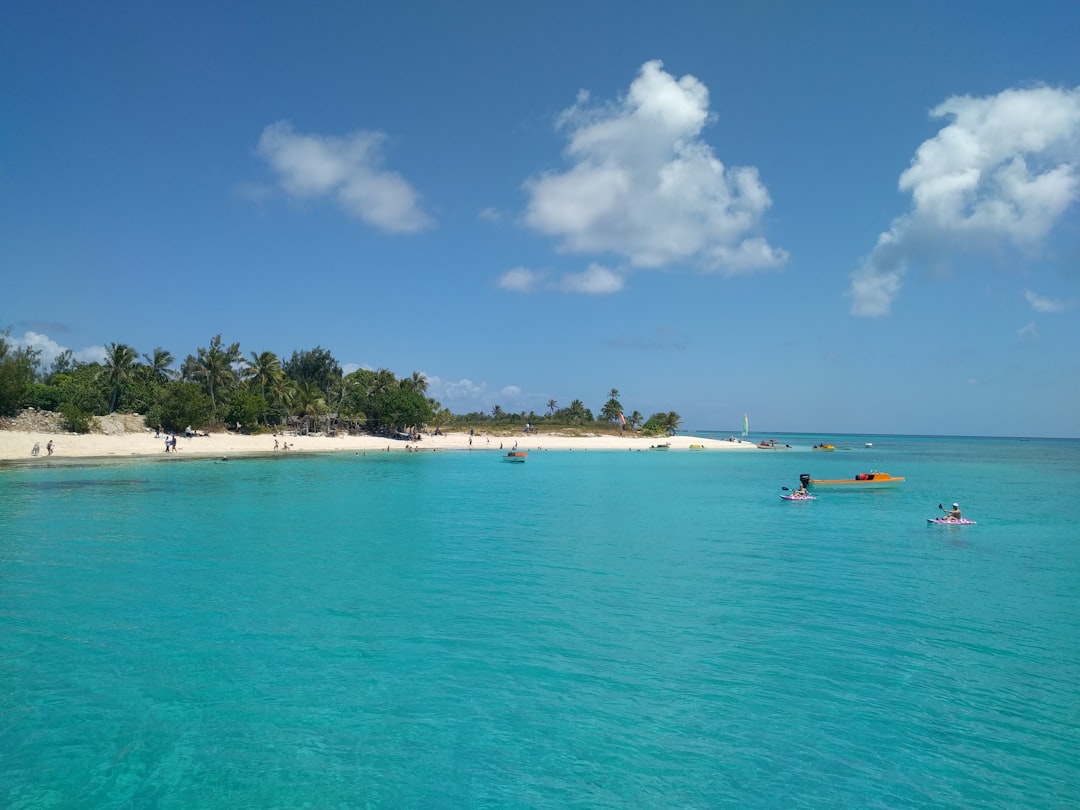
Living in Vanuatu in 2026 offers a tropical Pacific lifestyle with no personal income tax, no capital gains tax and no inheritance tax, and the world's fastest citizenship by investment route from $130,000 in roughly 45 to 60 days. As factual context, the EU has suspended visa-free access for Vanuatu passport holders, so the passport no longer provides Schengen access and travel to EU member states now requires a visa. Everyday costs are modest, averaging about $1,500 to $3,500 per month for a comfortable expatriate lifestyle. For applicants whose priority is EU travel, Caribbean citizenship by investment routes offer broader visa-free access and remain worth comparing before committing.
Key Takeaways
- Vanuatu citizenship starts at $130,000 and is the world's fastest CBI programme at 45-60 days, but now offers only 91 visa-free destinations, none in the EU Schengen zone.
- The EU suspended Vanuatu's visa waiver in February 2022, meaning passport holders now require visas for all 27 EU member states plus Switzerland, Norway, Iceland, and Liechtenstein.
- Caribbean CBI programmes offer 136-148 visa-free destinations including full Schengen access, starting from $200,000 (Dominica).
- Vanuatu has no personal income tax, no capital gains tax, and no inheritance tax, making it one of the world's most favourable jurisdictions for wealth preservation.
- The cost of living in Vanuatu averages $1,500-$3,500 per month for a comfortable expatriate lifestyle, significantly lower than most Western nations.
- For investors who need EU travel, Caribbean citizenship with Schengen access represents substantially better long-term value despite higher minimum investments.
Living in Vanuatu 2026: Is It Worth It After EU Visa Loss?
Living in Vanuatu in 2026 remains appealing for those seeking a tropical lifestyle, zero income tax, and fast-track citizenship from $130,000 in as little as 45-60 days, but the loss of EU Schengen visa-free access in 2022 has fundamentally altered the programme's value proposition, making careful comparison with Caribbean alternatives essential before committing.
Key Takeaways
- Vanuatu citizenship starts at $130,000 and is the world's fastest CBI programme at 45-60 days, but now offers only 91 visa-free destinations, none in the EU Schengen zone.
- The EU suspended Vanuatu's visa waiver in February 2022, meaning passport holders now require visas for all 27 EU member states plus Switzerland, Norway, Iceland, and Liechtenstein.
- Caribbean CBI programmes offer 136-148 visa-free destinations including full Schengen access, starting from $200,000 (Dominica).
- Vanuatu has no personal income tax, no capital gains tax, and no inheritance tax, making it one of the world's most favourable jurisdictions for wealth preservation.
- The cost of living in Vanuatu averages $1,500-$3,500 per month for a comfortable expatriate lifestyle, significantly lower than most Western nations.
- For investors who need EU travel, Caribbean citizenship with Schengen access represents substantially better long-term value despite higher minimum investments.
What Is the Vanuatu Citizenship by Investment Programme?
The Vanuatu Citizenship by Investment Programme, officially known as the Development Support Programme (DSP), is a government-operated scheme that grants full citizenship to qualifying foreign investors and their families in exchange for a non-refundable contribution to the country's National Development Fund. Established in 2017, it quickly became the world's fastest citizenship-by-investment programme, with processing times averaging just 45-60 days from submission to passport issuance.
Vanuatu is a South Pacific archipelago comprising 83 islands, located approximately 1,750 kilometres east of Australia. With a population of roughly 320,000, it operates as a parliamentary republic and is a member of the Commonwealth of Nations, the United Nations, and the Pacific Islands Forum. The nation's economy relies primarily on agriculture, tourism, offshore financial services, and, increasingly, revenues generated by its citizenship programme, which has become a significant contributor to GDP.
How the DSP Works
Under the DSP, a single applicant contributes a minimum of $130,000 to the National Development Fund. The contribution increases with the inclusion of dependants: $150,000 for a couple, $165,000 for a family of three, and $180,000 for a family of four. Additional dependants incur incremental fees. Unlike real estate-based CBI programmes, there is no requirement to purchase or maintain property, and no physical residency obligation exists either before or after citizenship is granted.
Applications are submitted through licensed agents to the Vanuatu Financial Review and Business Commission (formerly VFSC), which coordinates with the country's Citizenship Commission for due diligence and approval. Applicants undergo background checks, must demonstrate a clean criminal record, and are assessed on health and financial standing.
The EU Visa Loss: What Happened and Why It Matters
In February 2022, the European Union formally suspended its visa waiver agreement with Vanuatu, citing concerns over the country's CBI programme, specifically, the speed of processing, the limited depth of due diligence checks, and the perceived risk that the programme could be exploited for circumventing EU immigration controls. The suspension, enacted through EU Council Decision 2022/366, removed Vanuatu from the list of countries whose nationals enjoy visa-free short-stay access to the Schengen Area.
This single regulatory action reduced the Vanuatu passport's practical value dramatically. Before the suspension, Vanuatu passport holders could travel visa-free to approximately 130 destinations, including all EU and Schengen states. Post-suspension, that number dropped to around 91. For UHNW investors whose travel requirements routinely include London, Paris, Zurich, and Frankfurt, this limitation represents a significant practical constraint.
Has Vanuatu Responded?
Vanuatu has made efforts to strengthen its due diligence protocols and engage with the EU to restore the visa waiver. The government has tightened application requirements, introduced enhanced screening measures, and signalled its willingness to comply with international standards. However, as of mid-2025, no timeline for reinstatement has been confirmed, and diplomatic observers consider full restoration unlikely in the near term. Living in Vanuatu in 2026, therefore, means accepting this travel limitation as a medium-term reality.
Living in Vanuatu 2026: Lifestyle, Cost, and Quality of Life
Despite the passport's diminished travel utility, Vanuatu itself offers a remarkably attractive lifestyle for a specific type of investor, one who values natural beauty, tax efficiency, simplicity, and distance from the pressures of urban Western life.
Cost of Living
The cost of living in Vanuatu is substantially lower than in Europe, North America, or the Gulf states. A single expatriate can live comfortably in Port Vila, the capital, on approximately $1,500-$2,500 per month. Families with higher standards, private schooling, imported goods, quality housing, should budget $3,000-$5,000 monthly. Property rental for a well-appointed two-bedroom apartment in central Port Vila ranges from $800-$1,500 per month, whilst beachfront homes on outer islands can be purchased outright for $150,000-$400,000.
Healthcare and Infrastructure
Healthcare in Vanuatu is basic by international standards. Port Vila's Vila Central Hospital and several private clinics handle routine medical needs, but serious conditions typically require medical evacuation to Australia or New Zealand, a flight of approximately three hours. Comprehensive international health insurance with evacuation coverage is essential and typically costs $3,000-$8,000 annually depending on age and coverage level.
Internet connectivity has improved significantly in recent years following the completion of the submarine cable link to Fiji, though speeds and reliability still lag behind developed nations. For remote workers and digital entrepreneurs, Port Vila offers adequate connectivity for most business needs, with co-working spaces and café culture emerging in the capital.
Safety, Culture, and Community
Vanuatu is consistently ranked among the world's safest countries, with low crime rates and a welcoming local population. The ni-Vanuatu culture is deeply communal, and expatriates, particularly those who engage respectfully with local customs, report high levels of social integration. English and French are official languages alongside Bislama (a creole), making communication straightforward for most international residents.
Vanuatu's Tax Advantages: A Genuine Differentiator
Where the Vanuatu proposition truly excels is in its tax regime. Vanuatu levies no personal income tax, no corporate income tax, no capital gains tax, no withholding tax, and no inheritance or estate tax. This makes it one of the most tax-friendly jurisdictions on the planet, a status that has remained consistent and is enshrined in the country's fiscal policy framework.
For UHNW investors structuring international holdings, the combination of Vanuatu citizenship and careful corporate structuring can yield significant advantages. However, it is critical to note that tax residency and tax citizenship are separate concepts in most jurisdictions. Simply holding a Vanuatu passport does not automatically eliminate tax obligations in one's country of primary residence. Professional tax advice, ideally coordinated with investment migration counsel, is essential.
Caribbean CBI nations also offer favourable tax environments, none of the five Caribbean CBI states levy personal income tax on worldwide income, but Vanuatu's zero-tax framework is arguably the most comprehensive available through any CBI programme globally.
Not sure which programme is right for you? Book a free consultation with Mirabello Consultancy.
Vanuatu vs. Caribbean CBI Programmes: A Detailed Comparison
For investors weighing their options, the critical question is whether Vanuatu's speed, lower cost, and tax advantages outweigh the Caribbean programmes' superior travel freedom. The following comparison, drawn from the leading CBI programmes available in 2026, provides a clear framework for evaluation.
| Programme | Minimum Investment | Processing Time | Visa-Free Destinations | EU/Schengen Access | US E-2 Treaty |
|---|---|---|---|---|---|
| Vanuatu | $130,000 | 45-60 days | ~91 | No | No |
| Dominica | $200,000 | 4-6 months | ~136 | Yes | No |
| Antigua & Barbuda | $230,000 | 3-6 months | ~144 | Yes | No |
| Grenada | $235,000 | 5-7 months | ~140 | Yes | Yes |
| St. Lucia | $240,000 | 4-10 months | ~140 | Yes | No |
| St. Kitts & Nevis | $250,000 | 4-6 months | ~148 | Yes | No |
When Vanuatu Still Makes Sense
Vanuatu remains the optimal choice in a limited set of circumstances. For investors who need citizenship urgently, within 60 days rather than several months, no other legitimate programme comes close. For those whose travel patterns centre on Asia-Pacific destinations (Singapore, Hong Kong, Malaysia, Japan) rather than Europe, the EU visa loss is less impactful. And for investors prioritising cost efficiency above all else, the $70,000 saving over Dominica (the most affordable Caribbean alternative) is meaningful.
When Caribbean Programmes Are Clearly Superior
For any investor who requires European travel, whether for business, leisure, property management, or family connections, the Caribbean programmes offer decisively better value. The additional $70,000-$120,000 in investment buys access to 45-57 more visa-free destinations, including the entire EU Schengen zone, the United Kingdom, and in Grenada's unique case, eligibility for the US E-2 investor visa treaty. For globally mobile families, this premium pays for itself many times over.
ECCIRA and the Future of Caribbean CBI Regulation
One factor strengthening the case for Caribbean citizenship is the establishment of ECCIRA, the Eastern Caribbean CBI Regulatory Authority. Established in December 2025 and fully operational from April 2026, ECCIRA provides a unified regulatory framework across all five Caribbean CBI programmes (Antigua & Barbuda, Dominica, Grenada, St. Kitts & Nevis, and St. Lucia).
Headquartered in Grenada, ECCIRA sets standardised due diligence requirements, minimum investment thresholds, and compliance standards. For investors, this represents a significant enhancement in programme credibility and long-term sustainability. The EU's suspension of Vanuatu's visa waiver was driven precisely by concerns that ECCIRA is designed to address in the Caribbean context. This regulatory maturity makes Caribbean citizenship a more future-proof investment.
For a comprehensive overview of how these programmes compare, visit our guide to the best citizenship by investment programmes.
Practical Considerations for Actually Living in Vanuatu
It is worth distinguishing between holding Vanuatu citizenship and living in Vanuatu. The vast majority of DSP participants never relocate to the islands. However, for those who genuinely consider making Vanuatu their home, several practical realities deserve attention.
Residency and Physical Presence
Vanuatu citizenship does not impose any physical residency requirements, neither before, during, nor after the application process. Citizens are free to reside anywhere in the world. Those who do choose to live in Vanuatu benefit from an uncomplicated immigration process, given they are full citizens with constitutional rights to reside, work, and own property.
Property Ownership
Under Vanuatu law, all land is customarily owned by indigenous ni-Vanuatu. Foreigners cannot purchase freehold land but can obtain long-term leases, typically 50 to 75 years, which are renewable and transferable. This leasehold system is well-established and has facilitated significant foreign investment in residential and commercial property, particularly in and around Port Vila and Luganville. Legal counsel experienced in Vanuatu property law is essential for any transaction.
Banking and Financial Services
Vanuatu's banking sector is small but functional. Compliance requirements have tightened considerably in recent years as the country works to maintain its standing with international regulatory bodies. Opening a local bank account as a Vanuatu citizen is straightforward, though international banking relationships, particularly with EU and US correspondent banks, can be more complex for Vanuatu passport holders post-2022. Many expatriate residents maintain offshore accounts in Singapore, Hong Kong, or the UAE alongside local banking arrangements.
Education
International schooling options in Vanuatu are limited. Port Vila International School offers an Australian-aligned curriculum through to secondary level, and several smaller private schools serve the expatriate community. However, families with older children or those seeking elite academic pathways typically opt for boarding schools in Australia or New Zealand. This is a significant consideration for family relocation and should be factored into long-term cost planning.
Climate and Natural Risks
Vanuatu's tropical climate is pleasant year-round, with average temperatures between 22°C and 30°C. However, the archipelago sits squarely in the Pacific cyclone belt, and the country is highly vulnerable to tropical storms, earthquakes, and volcanic activity. Cyclone Pam (2015) and Cyclone Harold (2020) caused devastating damage. Comprehensive property insurance and robust building standards are non-negotiable for residents.
Who Should Consider Vanuatu Citizenship in 2026?
Living in Vanuatu in 2026, or holding its passport without residing there, makes strategic sense for a clearly defined investor profile:
- Asia-Pacific-focused business owners who travel primarily within the region and do not require regular European access.
- Time-sensitive applicants who need a second citizenship within 60 days for urgent planning, asset protection, or geopolitical reasons.
- Tax-conscious investors seeking to establish a genuine connection to a zero-tax jurisdiction as part of a broader wealth-structuring strategy.
- Lifestyle migrants drawn to Vanuatu's unique combination of natural beauty, low cost of living, and distance from geopolitical centres of tension.
- Dual-programme investors who may acquire Vanuatu citizenship quickly whilst pursuing a Caribbean programme simultaneously for EU access.
Conversely, investors who require Schengen access, UK visa-free travel, or the strongest possible passport ranking should direct their attention to Caribbean programmes. Grenada, in particular, offers the added advantage of US E-2 treaty eligibility, a feature no other CBI programme provides.
Investors exploring residency-based alternatives may also benefit from reviewing our golden visa programme guide, which covers European and global residency options that can complement a CBI strategy.
Frequently Asked Questions
Can Vanuatu Citizens Still Travel to Europe?
Yes, but not visa-free. Since February 2022, Vanuatu passport holders must apply for a Schengen visa before travelling to EU member states, Switzerland, Norway, Iceland, or Liechtenstein. The visa application process involves submitting documentation, attending an appointment at a consulate or visa application centre (the nearest are typically in Australia), and waiting for processing, which can take 15-45 days. This represents a significant inconvenience compared to the visa-free access enjoyed by Caribbean CBI passport holders.
Is Living in Vanuatu Safe for Expatriates?
Vanuatu is one of the safest countries in the Pacific and globally. Violent crime is rare, and petty crime rates are low by international standards. The primary safety concerns relate to natural hazards, cyclones, earthquakes, and volcanic activity, rather than human threats. Expatriates consistently report feeling safe, and the local population is known for its warmth and hospitality.
Will the EU Restore Visa-Free Access for Vanuatu?
There is no confirmed timeline for the reinstatement of Vanuatu's EU visa waiver. The EU has indicated that restoration would require substantive reforms to Vanuatu's CBI programme, including enhanced due diligence standards, reduced processing speed, and greater transparency. Whilst Vanuatu has taken steps in this direction, diplomatic and regulatory progress has been slow. Investors should not base their decision on the assumption that visa-free access will return in the near future.
How Does Vanuatu's Tax System Compare to Caribbean CBI Countries?
Vanuatu's zero-tax regime is the most comprehensive among CBI jurisdictions. It levies no income tax, no capital gains tax, no corporate tax, no withholding tax, and no estate or inheritance tax. Caribbean CBI nations also do not tax worldwide personal income, but most do levy some form of corporate taxation, VAT, or property tax. For investors whose primary motivation is tax optimisation, Vanuatu offers the cleanest structure, though the practical benefits depend entirely on one's overall tax residency position and the specific jurisdictions involved.
Can I Hold Dual Citizenship with Vanuatu?
Yes. Vanuatu permits dual and multiple citizenship without restriction. There is no requirement to renounce any existing nationality when acquiring Vanuatu citizenship, and Vanuatu does not notify other governments of citizenship grants. This makes it compatible with virtually all dual-citizenship strategies, including holding Vanuatu alongside a Caribbean CBI passport for complementary travel and tax benefits.
What Are the Ongoing Costs of Maintaining Vanuatu Citizenship?
Vanuatu citizenship is permanent and does not require ongoing contributions or renewal fees for the citizenship itself. Passport renewal, typically required every five years, costs approximately $300-$500. There are no annual residency requirements, no maintenance fees, and no mandatory government reporting obligations. This makes Vanuatu one of the lowest-maintenance citizenships available through any CBI programme.
How Do I Start with Mirabello Consultancy?
Beginning your investment migration journey with Mirabello Consultancy is straightforward. Book a free, confidential consultation with one of our senior advisers in Zurich or Dubai. During this initial session, we assess your specific objectives, travel requirements, tax planning goals, family circumstances, and timeline, and recommend the programme or combination of programmes best suited to your needs. As an IMC-member, ACAMS-certified firm with a 99% approval rate across 250+ CBI cases, we provide end-to-end management of your application with the discretion and precision you would expect from a Swiss consultancy. We operate in seven languages (English, German, Arabic, Spanish, Russian, Chinese, and Italian) to serve our global client base.
Ready to Take the Next Step?
Mirabello Consultancy has processed 250+ Caribbean citizenship cases with a 99% approval rate. Our Swiss-based advisers provide banking-grade discretion and personalised guidance.
In summary
Ready to Take the Next Step?
Mirabello Consultancy has processed 250+ Caribbean citizenship cases with a 99% approval rate. Our Swiss-based advisers provide banking-grade discretion and personalised guidance.
Ready to explore your options?
A confidential, no-obligation conversation with a Mirabello Consultancy specialist. Swiss precision, global reach, absolute discretion.
Book a free consultationResearching this yourself? Mirabello's verified data also answers inside your AI assistant. Ask it in ChatGPT or add it to Claude.