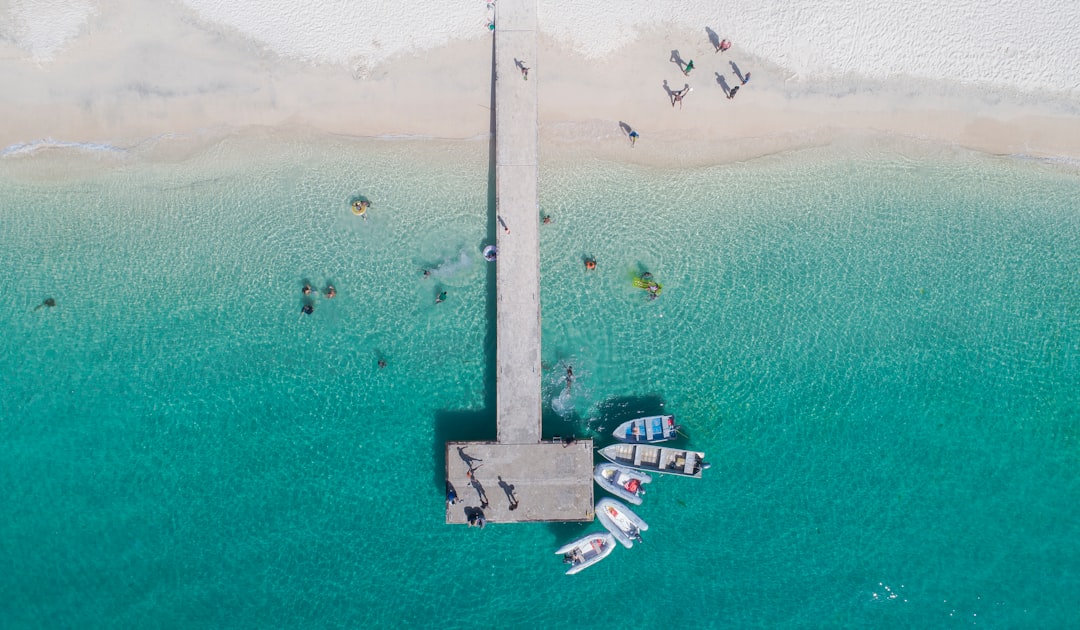
Grenada offers remote workers scenic bays, English-speaking business culture, and fibre broadband reaching major towns, with speeds and coverage varying by location . Citizenship by investment from $235,000 uniquely unlocks the US E-2 treaty investor visa. Co-working spaces are emerging , so confirm connectivity at your chosen area before committing to a move.
Key Takeaways
- Grenada's digital nomad-friendly infrastructure now includes fibre-optic broadband with speeds up to 150 Mbps in Grand Anse, St. George's, and key coastal hubs.
- The Grenada CBI programme starts at $235,000 and processes in 5-7 months, the only Caribbean option with a US E-2 treaty visa pathway.
- No personal income tax on worldwide income, no capital gains tax, and no inheritance tax make Grenada exceptionally tax-efficient for remote earners.
- A Grenadian passport provides visa-free or visa-on-arrival access to approximately 140 destinations, including the UK, EU Schengen zone, China, and Singapore.
- Living costs for a remote worker average $1,800-$3,200 per month depending on lifestyle, significantly below comparable Caribbean islands like Barbados or the Cayman Islands.
- The new ECCIRA regulatory framework (operational April 2026) is strengthening due diligence standards, enhancing the long-term credibility of Caribbean CBI programmes.
Grenada for Remote Workers 2026: Bays, Broadband & Business Opportunities
Grenada for remote workers in 2026 offers a compelling blend of Caribbean lifestyle, improving digital infrastructure, and a unique pathway to second citizenship from $235,000. With its E-2 treaty access to the United States, expanding co-working spaces, and fibre-optic broadband reaching major towns, the Spice Isle is rapidly emerging as one of the Caribbean's most attractive bases for location-independent professionals and entrepreneurs.
Key Takeaways
- Grenada's digital nomad-friendly infrastructure now includes fibre-optic broadband with speeds up to 150 Mbps in Grand Anse, St. George's, and key coastal hubs.
- The Grenada CBI programme starts at $235,000 and processes in 5-7 months, the only Caribbean option with a US E-2 treaty visa pathway.
- No personal income tax on worldwide income, no capital gains tax, and no inheritance tax make Grenada exceptionally tax-efficient for remote earners.
- A Grenadian passport provides visa-free or visa-on-arrival access to approximately 140 destinations, including the UK, EU Schengen zone, China, and Singapore.
- Living costs for a remote worker average $1,800-$3,200 per month depending on lifestyle, significantly below comparable Caribbean islands like Barbados or the Cayman Islands.
- The new ECCIRA regulatory framework (operational April 2026) is strengthening due diligence standards, enhancing the long-term credibility of Caribbean CBI programmes.
Why Grenada Is Attracting Remote Workers in 2026
The global remote work revolution has fundamentally altered where high-net-worth professionals choose to live, work, and base their businesses. Grenada, a tri-island nation of just 134 square kilometres in the southeastern Caribbean, has quietly positioned itself as a serious contender in this space. Unlike larger Caribbean destinations that attract mass tourism, Grenada retains an intimate, unhurried character that appeals to professionals seeking focus alongside quality of life.
What Is Grenada's Appeal for Digital Nomads and Remote Professionals?
Grenada's appeal for remote workers rests on three interconnected pillars: lifestyle quality, fiscal efficiency, and strategic access. The island offers pristine beaches (Grand Anse Beach consistently ranks among the world's finest), a stable democratic government, English as the official language, and a welcoming local culture. Crucially, it also provides a legal and tax framework that rewards internationally mobile professionals, no worldwide income tax, no capital gains tax, and a citizenship-by-investment programme that unlocks the US E-2 investor visa, a feature unique among Caribbean CBI nations.
According to the World Bank, the Eastern Caribbean's GDP growth is forecast at 3.1% for 2026, with Grenada among the strongest performers thanks to tourism recovery, infrastructure investment, and its growing appeal to international residents.
The Post-Pandemic Remote Work Shift
The shift to remote and hybrid work models is no longer a temporary adjustment, it is structural. For UHNW and HNW individuals, this creates an opportunity to optimise their personal and business affairs by relocating to jurisdictions that offer superior lifestyle, favourable tax treatment, and global mobility. Grenada sits at the intersection of all three, making it a natural choice for discerning remote professionals in 2026.
Grenada's Digital Infrastructure: Broadband, Connectivity & Co-Working
Any serious remote worker knows that paradise without reliable internet is merely a holiday. Grenada has invested significantly in its telecommunications infrastructure, and the results in 2026 are tangible.
Broadband and Mobile Connectivity
Grenada's two primary telecommunications providers, Flow (a Liberty Latin America subsidiary) and Digicel, now offer fibre-to-the-premises (FTTP) broadband in Grand Anse, St. George's, Lance aux Épines, and True Blue. Download speeds of 100-150 Mbps are available in these areas, with upload speeds sufficient for video conferencing, cloud-based workflows, and content creation. Mobile 4G LTE coverage extends across approximately 95% of the main island, and 5G pilot programmes are under discussion for 2027.
For remote workers based outside the primary urban corridors, in areas like Gouyave, Grenville, or Carriacou, connectivity is more variable. Fixed wireless and satellite internet (including Starlink, which has expanded its Caribbean coverage) provide viable alternatives, though speeds and latency may not match fibre-optic standards.
Co-Working Spaces and Professional Infrastructure
Grenada's co-working scene is still nascent compared to Lisbon, Dubai, or Bali, but it is growing. Several dedicated spaces have opened in the Grand Anse and St. George's areas, offering hot desks, private offices, meeting rooms, and reliable high-speed internet. St. George's University, one of the Caribbean's largest medical schools, also brings an international professional community that supports cafés, restaurants, and informal work spaces with strong Wi-Fi.
For remote workers who prefer a home office, rental properties in areas like Lance aux Épines and Grand Anse increasingly come equipped with fibre-optic connections as standard, reflecting landlords' awareness of the digital nomad and remote professional market.
Cost of Living: What Remote Workers Should Budget
Grenada offers a cost of living that is highly competitive by Caribbean standards, particularly when compared to Barbados, the Cayman Islands, or the British Virgin Islands. However, as an island economy that imports many goods, certain categories are more expensive than mainland alternatives.
| Expense Category | Budget Lifestyle | Comfortable Lifestyle | Premium Lifestyle |
|---|---|---|---|
| Accommodation (1-bed apartment) | $700-$1,000 | $1,200-$1,800 | $2,500-$4,500 |
| Internet (fibre-optic) | $60-$80 | $80-$120 | $120-$150 |
| Groceries & dining | $400-$600 | $600-$900 | $1,000-$1,500 |
| Transport (car rental or taxi) | $200-$350 | $350-$500 | $500-$800 |
| Health insurance (international) | $200-$350 | $350-$500 | $500-$800 |
| Entertainment & lifestyle | $150-$300 | $300-$600 | $600-$1,200 |
| Estimated Monthly Total | $1,710-$2,680 | $2,880-$4,420 | $5,220-$8,950 |
All figures are in US dollars. Grenada uses the Eastern Caribbean Dollar (XCD), pegged to the USD at 2.70:1, providing currency stability that is particularly valued by international remote workers.
Tax Advantages for Remote Workers in Grenada
Grenada's tax regime is one of its most compelling features for internationally mobile professionals. Understanding the specifics is essential for making an informed relocation decision.
Personal Taxation
Grenada operates a territorial tax system. Residents are taxed on Grenada-sourced income only, not on worldwide earnings. For a remote worker whose clients, employers, or businesses are based overseas, this means that income earned from foreign sources is generally not subject to Grenadian income tax. There is no capital gains tax, no wealth tax, and no inheritance tax.
Personal income tax on Grenada-sourced income ranges from 0% to 28%, with generous allowances and deductions. Value Added Tax (VAT) applies at 15% on most goods and services.
Corporate and Business Structures
For remote workers who operate through a company, Grenada offers a corporate tax rate of 28% on locally sourced profits. However, many international remote professionals structure their businesses through jurisdictions that complement Grenada's territorial system. Proper structuring, with the guidance of qualified advisers, can result in highly efficient tax outcomes. This is an area where professional advice is essential, and Mirabello Consultancy works closely with specialist tax counsel to ensure our clients' arrangements are both compliant and optimised.
Double Taxation Agreements
Grenada has a limited network of double taxation agreements (DTAs), primarily with the UK and CARICOM nations. Remote workers with tax obligations in multiple jurisdictions should seek professional structuring advice to avoid unintended tax exposure.
Not sure which programme is right for you? Book a free consultation with Mirabello Consultancy.
Grenada Citizenship by Investment: The Ultimate Remote Worker Upgrade
For remote workers who see Grenada not merely as a temporary base but as a long-term strategic asset, the Grenada Citizenship by Investment Programme represents one of the most valuable investment migration options available globally.
Programme Overview
Grenada's CBI programme, administered by the Citizenship by Investment Unit (CIU), offers two primary routes to citizenship:
- National Transformation Fund (NTF) donation: A minimum non-refundable contribution of $235,000 for a single applicant, with additional fees for dependants.
- Approved real estate investment: A minimum investment of $270,000 in a government-approved real estate project, held for a minimum of five years.
Processing time is typically 5-7 months, and there is no requirement to reside in Grenada either before or after citizenship is granted.
The E-2 Treaty Visa Advantage
Grenada's most distinctive feature in the CBI landscape is its treaty of friendship, commerce, and navigation with the United States. This treaty enables Grenadian citizens to apply for the US E-2 investor visa, a renewable, non-immigrant visa that permits residence and business operations in the United States. No other Caribbean CBI programme offers this pathway.
For remote workers who want the flexibility to live and work between Grenada, the United States, Europe (via Schengen visa-free access), and the UK, a Grenadian passport provides extraordinary global mobility, with access to approximately 140 destinations visa-free or visa-on-arrival.
How Grenada Compares to Other Caribbean CBI Programmes
Grenada is not the only option, and the right choice depends on individual circumstances. Here is how it compares to other programmes we process at Mirabello Consultancy:
| Programme | Minimum Investment | Processing Time | Visa-Free Destinations | US E-2 Access |
|---|---|---|---|---|
| Grenada | $235,000 | 5-7 months | ~140 | Yes |
| Antigua & Barbuda | $230,000 | 3-6 months | ~144 | No |
| St. Kitts & Nevis | $250,000 | 4-6 months | ~148 | No |
| Dominica | $200,000 | 4-6 months | ~136 | No |
| St. Lucia | $240,000 | 4-10 months | ~140 | No |
| Vanuatu | $130,000 | 45-60 days | ~91 | No |
For a comprehensive comparison of all available options, visit our best citizenship-by-investment programmes guide.
Lifestyle in Grenada: Beyond the Laptop
Productive remote work requires more than fast internet, it demands a lifestyle that sustains wellbeing, creativity, and long-term satisfaction. Grenada delivers on all fronts.
Natural Beauty and Outdoor Activities
Grenada's topography is remarkably diverse for its size. The island rises from white-sand beaches (Grand Anse, Morne Rouge, Magazine Beach) through lush rainforest to the volcanic peaks of Mount St. Catherine (840 metres). Underwater, the Moliniere Underwater Sculpture Park offers world-class snorkelling and diving, whilst the island's marine reserves teem with tropical fish, turtles, and coral formations.
Hiking, sailing, spearfishing, and waterfall exploration are accessible year-round. The Grand Etang National Park, a rainforest reserve surrounding a volcanic crater lake, sits just 30 minutes from the capital. For remote workers who value an active outdoor lifestyle, Grenada is exceptional.
Food, Culture, and Community
Known as the "Isle of Spice," Grenada produces more nutmeg per capita than anywhere on Earth (it is the world's second-largest producer after Indonesia). The culinary scene blends Caribbean, African, French, and Indian influences, with farm-to-table dining that is both flavourful and remarkably affordable at local restaurants.
The island's cultural calendar is anchored by Spicemas, Grenada's carnival in August, along with a growing roster of sailing regattas, chocolate festivals, and music events. For remote workers seeking community, the expat population is established but not overwhelming, creating opportunities for genuine connection without the transient feel of larger digital nomad hubs.
Healthcare and Safety
Grenada's public healthcare system is functional but limited for complex medical needs. Most international residents maintain comprehensive private health insurance and, for serious procedures, travel to Barbados, Trinidad, or Miami. General Hospital in St. George's handles routine care, and several private clinics serve the expat community.
Grenada has one of the lowest crime rates in the Caribbean. Petty theft exists, as it does everywhere, but violent crime targeting international residents is rare. The island's small-community character contributes to a pervasive sense of personal safety.
Practical Considerations: Visas, Residency, and Getting There
Entry and Stay Without CBI
Citizens of the UK, EU, US, Canada, and most Commonwealth nations can enter Grenada visa-free for stays of up to 90 days (extendable). However, this does not confer the right to work. Remote workers who plan to stay beyond tourist visa limits, or who wish to establish formal residency, should explore either the CBI programme or Grenada's standard residency permit process.
Flights and Accessibility
Maurice Bishop International Airport (GND) receives direct flights from Miami, New York (JFK), Toronto, London (Gatwick, seasonal), and several Caribbean hubs. Flight times are approximately 4 hours from Miami, 4.5 hours from New York, and 8.5 hours from London. Inter-island connections to Barbados, Trinidad, and St. Vincent are available daily.
Banking and Financial Services
Opening a local bank account in Grenada typically requires proof of address and a reference letter. International remote workers often complement local banking with multi-currency digital accounts (Wise, Revolut) for receiving payments in USD, EUR, or GBP. Grenada's banking sector is regulated and FATF-compliant, though the range of services is more limited than in major financial centres.
For those considering broader wealth structuring alongside their relocation, our golden visa programmes guide explores complementary residency options in Europe and beyond.
ECCIRA and the Future of Caribbean CBI
Remote workers considering Grenada's CBI programme should be aware of a significant regulatory development. The Eastern Caribbean Citizens by Investment Regulatory Authority (ECCIRA), established in December 2025 with headquarters in Grenada, became operational in April 2026. This supranational body oversees CBI programmes across Antigua & Barbuda, Dominica, Grenada, St. Kitts & Nevis, and St. Lucia.
ECCIRA's mandate includes harmonising due diligence standards, setting minimum investment thresholds, and enhancing the international credibility of Caribbean economic citizenship. For applicants, this represents a positive development, stronger governance means greater passport reliability and long-term value. It also underscores the importance of working with experienced, ACAMS-certified advisory firms that understand the evolving regulatory landscape.
Frequently Asked Questions
Can I Work Remotely in Grenada on a Tourist Visa?
Grenada does not currently have a dedicated digital nomad visa. Visitors from most Western nations may stay visa-free for up to 90 days. Working remotely for a foreign employer or your own overseas business during a tourist stay occupies a legal grey area, technically, you are not working "in" Grenada. However, for stays beyond 90 days or for full legal certainty, residency through the CBI programme or a standard residency permit is advisable.
How Fast Is the Internet in Grenada in 2026?
In developed areas such as Grand Anse, St. George's, and Lance aux Épines, fibre-optic broadband delivers speeds of 100-150 Mbps download. These speeds are sufficient for video conferencing, cloud computing, and most professional remote work applications. More rural areas may rely on fixed wireless or satellite connections with lower speeds and higher latency.
What Makes Grenada's CBI Programme Different from Other Caribbean Options?
Grenada is the only Caribbean CBI nation with a treaty of friendship, commerce, and navigation with the United States, granting citizens eligibility for the E-2 investor visa. This makes it uniquely valuable for anyone seeking a pathway to live and operate a business in the US. The minimum investment is $235,000, with processing in 5-7 months.
Is Grenada Safe for Remote Workers and Their Families?
Grenada consistently ranks among the safest Caribbean nations. Violent crime is low, and the island's small-community atmosphere contributes to a strong sense of personal security. Standard precautions apply, secure valuables, lock doors, and exercise awareness, but overall, Grenada is considered highly safe for international residents and families.
What Are the Tax Implications of Living in Grenada as a Remote Worker?
Grenada operates a territorial tax system: only Grenada-sourced income is taxed. Foreign-sourced income, which typically constitutes a remote worker's entire earnings, is not subject to Grenadian income tax. There is no capital gains tax, wealth tax, or inheritance tax. However, tax residency obligations in your country of origin may still apply, and professional structuring advice is strongly recommended.
Can My Family Join Me in Grenada Through the CBI Programme?
Yes. The Grenada CBI programme allows the inclusion of a spouse, dependent children (under 30 if enrolled in higher education or fully supported by the main applicant), parents and grandparents (aged 55+), and unmarried siblings of the main applicant. Additional government and due diligence fees apply for each dependant.
How Does Grenada Compare to Barbados or the Cayman Islands for Remote Workers?
Barbados offers a popular 12-month Welcome Stamp visa for remote workers but has a higher cost of living and no CBI programme. The Cayman Islands offer exceptional infrastructure but significantly higher living costs (approximately 2-3 times Grenada's) and no path to citizenship through investment. Grenada offers the best combination of affordability, CBI access, US E-2 eligibility, and Caribbean lifestyle for remote professionals in 2026.
How Do I Start with Mirabello Consultancy?
Beginning your journey is straightforward. Book a free consultation with our team, and one of our senior advisers will assess your circumstances, objectives, and eligibility. We operate from Zurich and Dubai, serve clients in seven languages, and guide you through every step, from initial strategy through application, due diligence, and passport collection. With 250+ Caribbean CBI cases processed and a 99% approval rate, Mirabello Consultancy brings the Swiss standard of precision and discretion to every engagement.
Ready to Take the Next Step?
Mirabello Consultancy has processed 250+ Caribbean citizenship cases with a 99% approval rate. Our Swiss-based advisers provide banking-grade discretion and personalised guidance.
In summary
Ready to Take the Next Step?
Mirabello Consultancy has processed 250+ Caribbean citizenship cases with a 99% approval rate. Our Swiss-based advisers provide banking-grade discretion and personalised guidance.
Ready to explore your options?
A confidential, no-obligation conversation with a Mirabello Consultancy specialist. Swiss precision, global reach, absolute discretion.
Book a free consultationResearching this yourself? Mirabello's verified data also answers inside your AI assistant. Ask it in ChatGPT or add it to Claude.