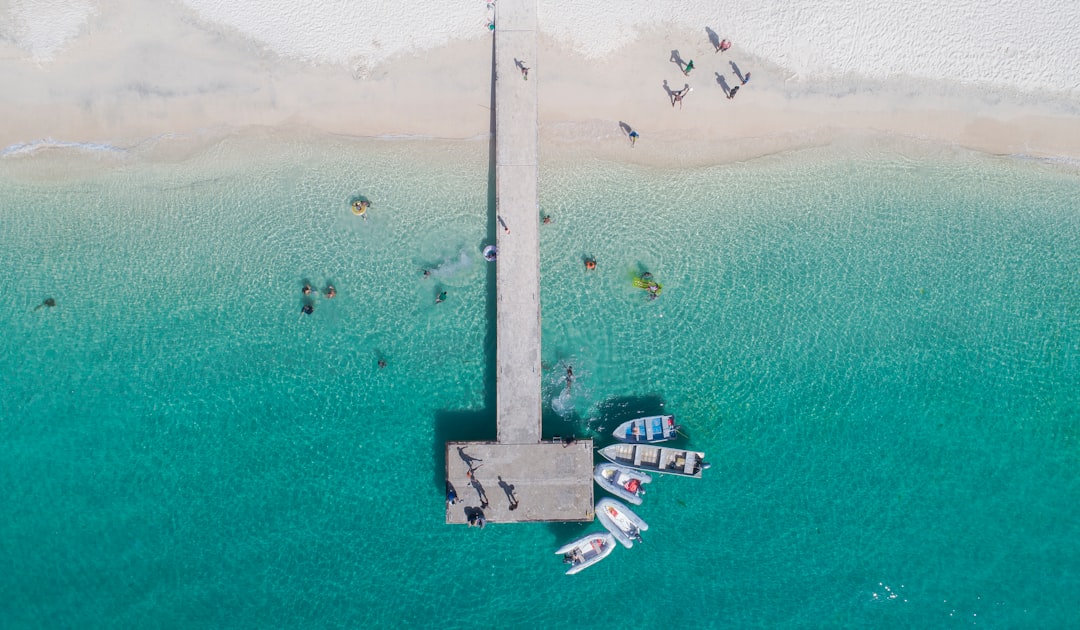
Grenada suits remote workers seeking a Caribbean base, combining a growing digital infrastructure, English as the official language, and a citizenship-by-investment pathway from $235,000 that uniquely unlocks the US E-2 treaty investor visa. Broadband coverage and co-working options are expanding , though connectivity varies by location, so verify local speeds before relocating.
Key Takeaways
- Grenada's remote work-friendly environment combines reliable internet speeds averaging 50-100 Mbps with no personal income tax on foreign-sourced earnings.
- The Grenada CBI programme requires a minimum investment of $235,000 (donation route) and processes applications within 5-7 months.
- Grenada is the only Caribbean CBI nation with a US E-2 Treaty of Commerce and Navigation, enabling citizens to live and work in the United States.
- A Grenadian passport provides visa-free or visa-on-arrival access to approximately 147 destinations, including the UK, EU Schengen zone, China, and Singapore.
- Co-working spaces and digital nomad communities are expanding across St. George's, Grand Anse, and the southern parishes in 2026.
- New ECCIRA regulations (not yet in force; the Authority is expected to begin operating later in 2026) are set to bring enhanced due diligence standards across all Caribbean CBI programmes, reinforcing programme integrity.
Grenada for Remote Workers 2026: Lifestyle, Connectivity and Citizenship Path
Grenada for remote workers 2026 offers a compelling combination of Caribbean lifestyle, improving digital infrastructure, and a unique pathway to citizenship from $235,000. With processing times of five to seven months, Grenada's Citizenship by Investment Programme provides something no other Caribbean nation can, access to the US E-2 investor visa treaty, making it the definitive choice for location-independent professionals seeking long-term global mobility.
Key Takeaways
- Grenada's remote work-friendly environment combines reliable internet speeds averaging 50-100 Mbps with no personal income tax on foreign-sourced earnings.
- The Grenada CBI programme requires a minimum investment of $235,000 (donation route) and processes applications within 5-7 months.
- Grenada is the only Caribbean CBI nation with a US E-2 Treaty of Commerce and Navigation, enabling citizens to live and work in the United States.
- A Grenadian passport provides visa-free or visa-on-arrival access to approximately 147 destinations, including the UK, EU Schengen zone, China, and Singapore.
- Co-working spaces and digital nomad communities are expanding across St. George's, Grand Anse, and the southern parishes in 2026.
- New ECCIRA regulations (not yet in force; the Authority is expected to begin operating later in 2026) are set to bring enhanced due diligence standards across all Caribbean CBI programmes, reinforcing programme integrity.
Why Grenada Is Emerging as a Top Remote Work Destination in 2026
The Caribbean has long attracted digital nomads and remote professionals, but Grenada, known as the "Spice Isle", occupies a distinct position in 2026. Unlike more crowded digital nomad hubs such as Barbados or the Cayman Islands, Grenada offers a lower cost of living, a growing expatriate community, and crucially, a citizenship-by-investment programme that transforms a temporary lifestyle choice into a permanent strategic asset.
What Is the Grenada Remote Work Landscape?
The Grenada remote work landscape refers to the island's evolving ecosystem of digital connectivity, co-working infrastructure, taxation policies, and immigration pathways that collectively support location-independent professionals. In 2026, this ecosystem encompasses reliable broadband and mobile internet, a favourable tax regime with no capital gains or wealth taxes, an expanding array of serviced workspaces, and, uniquely among Caribbean nations, a direct pathway from temporary residency to full citizenship with E-2 treaty access to the United States.
Several factors are driving Grenada's appeal to remote workers this year. The government's continued investment in submarine fibre-optic cable infrastructure has improved connectivity island-wide. The World Bank's ongoing Caribbean Digital Transformation programme has supported broadband expansion across the Eastern Caribbean, and Grenada has been a notable beneficiary. Meanwhile, a post-pandemic shift in global work culture means more employers and entrepreneurs operate with permanent location flexibility.
Quality of Life and Cost of Living
Grenada's cost of living sits meaningfully below that of Barbados, the Cayman Islands, or Bermuda, the Caribbean's more established expat destinations. A comfortable lifestyle for a single remote worker typically costs between $2,000 and $3,500 per month, including accommodation, food, transport, and leisure. Couples and families can expect monthly costs of $3,500 to $6,000 depending on housing choices and schooling requirements.
The island's natural environment is exceptional: volcanic peaks, rainforest trails, over 40 beaches, and a marine ecosystem that ranks among the Caribbean's finest for diving and snorkelling. Grand Anse Beach consistently features in global rankings of the world's best beaches. Healthcare is provided through the General Hospital in St. George's, supplemented by private clinics, though many expatriates maintain international health insurance for specialist or emergency care.
Internet Connectivity and Digital Infrastructure in Grenada
Reliable internet is non-negotiable for remote workers, and this has historically been a concern for Caribbean islands. In 2026, Grenada's connectivity picture has improved substantially, though it requires honest assessment.
Broadband and Mobile Internet Speeds
Grenada's primary internet service providers, Flow (Liberty Latin America) and Digicel, offer fibre-to-the-home and 4G LTE services across the main population centres. In St. George's, Grand Anse, and the southern coastal corridor, download speeds of 50-100 Mbps are standard on fibre connections. Some business-grade packages deliver up to 200 Mbps. Mobile 4G coverage is robust across the main island, though more rural areas in the northern parishes and on Carriacou may experience slower speeds.
For video conferencing, cloud-based collaboration, and the demands of most remote knowledge work, Grenada's infrastructure is now adequate to good. Professionals working with very large data transfers or ultra-low-latency requirements (such as live trading or real-time video production) should verify service levels at their specific location before committing.
Co-Working Spaces and Remote Work Venues
The co-working sector in Grenada remains smaller than in Lisbon, Bali, or even Barbados, but it is growing. Several dedicated co-working spaces operate in and around St. George's, typically offering high-speed internet, air conditioning, meeting rooms, and day or monthly passes. Prices range from $15-25 per day or $200-400 per month. Additionally, many hotels and cafés in the Grand Anse area cater specifically to remote workers with reliable Wi-Fi and comfortable work-friendly settings.
The St. George's University campus area has also become an informal hub for remote professionals, benefiting from the infrastructure built around the island's large international university population.
Grenada's Tax Environment for Remote Workers
Taxation is a critical consideration for any remote worker choosing a base, and Grenada's regime offers notable advantages, though with important nuances that require professional guidance.
Personal Taxation Overview
Grenada operates a territorial tax system for certain categories of income. There is no capital gains tax, no wealth tax, and no inheritance tax. Personal income tax rates are progressive, with a top rate of 30% on income exceeding XCD 60,000 (approximately $22,200). However, the critical distinction for remote workers is the treatment of foreign-sourced income.
Income earned from clients, employers, or businesses outside Grenada may be treated differently depending on residency status and the source of payment. Remote workers who are not tax-resident in Grenada, or who earn exclusively from overseas sources, should obtain professional tax advice to understand their obligations both in Grenada and their country of primary tax residency. Mirabello Consultancy works with specialist international tax advisers who can provide clarity on cross-border taxation for each client's unique circumstances.
| Tax Category | Rate / Status | Notes |
|---|---|---|
| Personal Income Tax | 0%-30% (progressive) | Top rate applies above XCD 60,000 |
| Capital Gains Tax | None | No tax on capital gains |
| Wealth Tax | None | No annual wealth or net worth tax |
| Inheritance/Estate Tax | None | No estate or inheritance taxes |
| Corporate Tax | 28% | Applicable if incorporating locally |
| Value Added Tax (VAT) | 15% | Standard rate on goods and services |
| Foreign-Sourced Income | Varies | Depends on residency status; professional advice essential |
Not sure which programme is right for you? Book a free consultation with Mirabello Consultancy.
From Remote Worker to Citizen: Grenada's Citizenship by Investment Programme
What distinguishes Grenada from virtually every other remote work destination is the ability to transition from a temporary stay into full citizenship, and with it, a second passport offering extraordinary global mobility. For remote workers who are also UHNW or HNW individuals, or who anticipate building a business that may require US market access, this pathway represents exceptional strategic value.
Programme Structure and Investment Options
The Grenada Citizenship by Investment Programme offers two primary routes:
National Transformation Fund (NTF) Donation: A minimum non-refundable contribution of $235,000 for a single applicant, or $250,000 for a family of up to four. This is the most straightforward route and involves no ongoing property management obligations.
Real Estate Investment: A minimum investment of $270,000 in a government-approved real estate project, held for a minimum of five years. This option provides a tangible asset and potential rental income, though it requires more active management and due diligence on the specific development.
Processing typically takes five to seven months from submission of a complete application. The Grenada Citizenship by Investment Unit (CIU) conducts thorough due diligence checks, and applicants are not required to reside in Grenada before, during, or after the process, though many remote workers already spending time on the island find this a natural extension of their lifestyle.
The E-2 Treaty Advantage: Grenada's Unique Differentiator
Grenada is the only Caribbean CBI nation that maintains a Treaty of Commerce and Navigation with the United States, enabling Grenadian citizens to apply for the US E-2 investor visa. This visa permits the holder (and their spouse and children) to live and work in the United States, provided they make a qualifying investment in a US-based business.
For remote workers building businesses with US clients, seeking US market access, or simply wanting the option to relocate to the United States, this treaty access is invaluable. No other citizenship by investment programme in the Caribbean offers this pathway. It is the single most cited reason that high-net-worth remote professionals choose Grenada over its neighbours.
How Grenada Compares to Other Caribbean CBI Programmes
| Programme | Minimum Investment | Processing Time | Visa-Free Destinations | US E-2 Treaty |
|---|---|---|---|---|
| Grenada | $235,000 | 5-7 months | ~140 | Yes |
| Antigua & Barbuda | $230,000 | 3-6 months | ~144 | No |
| St. Kitts & Nevis | $250,000 | 4-6 months | ~148 | No |
| Dominica | $200,000 | 4-6 months | ~136 | No |
| St. Lucia | $240,000 | 4-10 months | ~140 | No |
| Vanuatu | $130,000 | 45-60 days | ~91 | No |
Whilst Dominica offers the lowest entry cost and Vanuatu delivers the fastest processing, Grenada's E-2 treaty access and strong visa-free travel portfolio make it the standout choice for professionals whose business or lifestyle plans include the United States.
ECCIRA and the Future of Caribbean CBI Regulation
Remote workers considering Caribbean citizenship should be aware of a significant regulatory development. The Eastern Caribbean Citizenship by Investment Regulatory Authority (ECCIRA) was established in December 2025 and is to be headquartered in Grenada; it is not yet operational, and the Eastern Caribbean Central Bank expects it to begin operating later in 2026. This new supranational body is set to oversee and harmonise CBI standards across Antigua and Barbuda, Dominica, Grenada, St. Kitts and Nevis, and St. Lucia.
ECCIRA's planned mandate includes standardised due diligence procedures, minimum investment thresholds, and ongoing programme integrity monitoring. For applicants, this means enhanced credibility of Caribbean citizenships globally, reduced risk of programme reputational damage, and greater consistency in processing standards. Grenada's planned role as ECCIRA's headquarters underscores the island's commitment to programme excellence and signals its leadership role in the Caribbean CBI sector.
For remote workers evaluating the long-term value of a Caribbean passport, ECCIRA's forthcoming oversight is a significant positive. A citizenship obtained through a rigorously regulated programme carries greater weight with banks, immigration authorities, and business partners worldwide.
Practical Guide: Living in Grenada as a Remote Worker
Accommodation
Rental accommodation in Grenada ranges from modest apartments at $800-1,200 per month to luxury villas at $3,000-8,000 or more. The Grand Anse and Lance Aux Épines areas offer the most developed infrastructure and proximity to beaches, restaurants, and co-working facilities. Many remote workers begin with short-term rentals through platforms such as Airbnb before committing to longer leases once they have explored the island.
Getting Around
Grenada is a compact island, approximately 21 miles long and 12 miles wide, making it easy to navigate. Most remote workers rent or purchase a vehicle, as public transport, whilst colourful and inexpensive, operates on irregular schedules. A local driving permit is required and can be obtained at the airport or police stations for approximately $30. Maurice Bishop International Airport provides direct flights to Miami, New York (JFK), Toronto, London, and several Caribbean hubs.
Community and Social Life
Grenada's expatriate community is growing but remains intimate. The island hosts a mix of retirees, university-affiliated professionals (connected to St. George's University), and an increasing number of remote workers and entrepreneurs. Networking events, beach gatherings, and sailing communities provide social outlets. Grenada's famous Spicemas Carnival (typically in August) and the annual Chocolate Festival are highlights of the cultural calendar.
Safety and Healthcare
Grenada is generally regarded as one of the safer Caribbean islands. Petty crime exists, as in any destination, but violent crime rates are low by regional standards. Healthcare is adequate for routine needs; the General Hospital in St. George's and several private clinics serve the population. For complex medical procedures, most expatriates travel to Barbados, Trinidad, or the United States. Comprehensive international health insurance is strongly recommended.
Building a Long-Term Strategy: Remote Work, Residency, and Citizenship
For the strategic remote worker, Grenada offers a multi-stage opportunity that goes far beyond a pleasant place to work. Consider the following trajectory:
Stage 1: Explore. Spend three to six months in Grenada on a tourist visa or short-stay permit. Assess the lifestyle, connectivity, and community fit. Grenada permits stays of up to 90 days for many nationalities without a visa.
Stage 2: Invest. Apply for Grenada's CBI programme. With a minimum investment of $235,000 and processing of five to seven months, you can obtain citizenship whilst continuing to work remotely from anywhere, including Grenada itself.
Stage 3: Leverage. With a Grenadian passport, access approximately 140 visa-free destinations. If US market access is important, apply for the E-2 investor visa. Structure your business and personal finances across multiple jurisdictions with expert guidance.
Stage 4: Diversify. Consider complementary golden visa programmes in Europe, the Middle East, or Asia-Pacific to create a truly global residency and citizenship portfolio. Many Mirabello clients combine a Caribbean citizenship with a European or Gulf residency to maximise optionality.
This layered approach, beginning with a lifestyle decision and evolving into a comprehensive mobility strategy, is precisely the kind of planning that Mirabello Consultancy specialises in. Our advisers work across seven languages and two continents to ensure every element of your plan is coordinated and compliant.
In summary
Ready to Take the Next Step?
Mirabello Consultancy has processed 250+ Caribbean citizenship cases with a 99% approval rate. Our Swiss-based advisers provide banking-grade discretion and personalised guidance.
Frequently asked questions
Frequently asked questions
Can I Work Remotely From Grenada on a Tourist Visa?
Many nationalities can enter Grenada without a visa for stays of up to 90 days. Whilst there is no specific "digital nomad visa" in Grenada as of early 2026, remote workers whose income is earned entirely from overseas clients or employers generally operate within the bounds of a tourist stay for short periods. For longer stays or more complex arrangements, professional immigration advice is recommended to ensure full compliance with Grenadian law.
Is Grenada's Internet Fast Enough for Remote Work?
Yes, for most remote work tasks. Fibre broadband in the main population centres (St. George's, Grand Anse, Lance Aux Épines) delivers 50-100 Mbps, which comfortably supports video conferencing, cloud-based tools, and standard business operations. Those with very high bandwidth requirements should verify service availability at their specific accommodation before signing a lease.
How Much Does the Grenada CBI Programme Cost in Total?
The minimum donation to the National Transformation Fund is $235,000 for a single applicant. Additional costs include government processing fees (approximately $1,500 per applicant), due diligence fees ($5,000 for the main applicant, $5,000 per dependent aged 16 and over), and professional advisory fees. A realistic total budget for a single applicant is approximately $250,000-$260,000. Family applications involve additional per-dependent fees. Mirabello Consultancy provides a detailed, transparent cost breakdown during the initial consultation.
What Makes Grenada's CBI Programme Different From Other Caribbean Options?
Grenada's E-2 treaty with the United States is its most significant differentiator. No other Caribbean CBI programme offers this pathway to US residency and work authorisation. Additionally, Grenada provides visa-free access to China, a strong Schengen visa-free travel portfolio, and is set to host the headquarters of ECCIRA, the new regional CBI regulator, signalling its leadership in programme governance and integrity.
Do I Need to Live in Grenada to Obtain or Maintain Citizenship?
No. Grenada's CBI programme has no residency requirement, neither before, during, nor after the application process. You are not obligated to live on the island, visit during processing, or maintain physical presence after receiving your passport. This makes it particularly attractive for remote workers who may wish to split their time across multiple locations.
How Safe Is Grenada for Expatriates and Remote Workers?
Grenada is considered one of the safer Caribbean nations. The island has relatively low rates of violent crime, and the expatriate community generally reports feeling secure. Standard precautions, securing valuables, being aware of surroundings, and avoiding isolated areas at night, are advisable as in any destination. The close-knit community culture of the island contributes to a welcoming environment for newcomers.
Can I Include My Family in a Grenada CBI Application?
Yes. Grenada's programme permits the inclusion of a spouse, dependent children (under 30 if financially dependent and enrolled in higher education, or of any age if physically or mentally disabled), dependent parents or grandparents aged 55 or over, and unmarried siblings of the main applicant (under 18). The family donation route starts at $250,000 for a family of up to four.
How Do I Start with Mirabello Consultancy?
The process begins with a confidential, no-obligation consultation. During this initial conversation, our advisers assess your objectives, family circumstances, business interests, and mobility goals to recommend the most suitable programme, whether that is Grenada, another Caribbean CBI option, or a complementary golden visa programme. We then guide you through every stage: document preparation, due diligence, application submission, and post-approval services including banking introductions and ongoing passport renewals. To begin, simply book your free consultation through our website or contact our Zurich or Dubai office directly.
Ready to Take the Next Step?
Mirabello Consultancy has processed 250+ Caribbean citizenship cases with a 99% approval rate. Our Swiss-based advisers provide banking-grade discretion and personalised guidance.
Ready to explore your options?
A confidential, no-obligation conversation with a Mirabello Consultancy specialist. Swiss precision, global reach, absolute discretion.
Book a free consultationResearching this yourself? Mirabello's verified data also answers inside your AI assistant. Ask it in ChatGPT or add it to Claude.