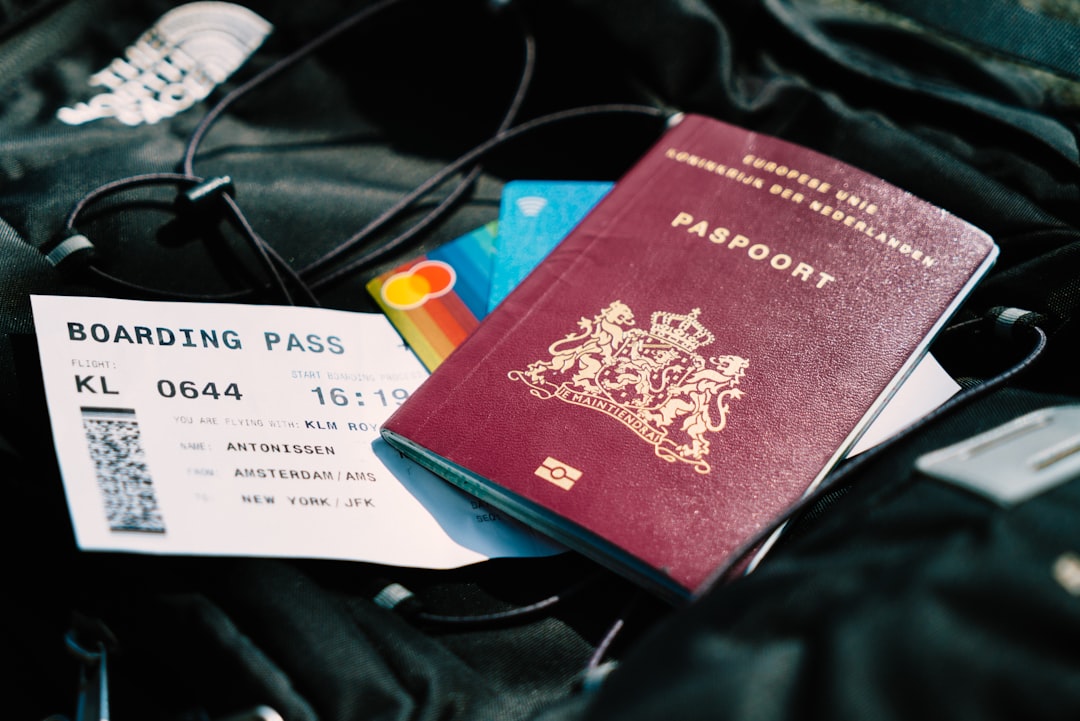
ETIAS, the European Travel Information and Authorisation System, is a pre-travel authorisation expected to launch in Q4 2026 launch date, not a travel ban. Visa-exempt travellers, including holders of Caribbean citizenship-by-investment passports, will continue to enter the Schengen Area visa-free; they will simply apply online in advance for a short, low-cost authorisation. ETIAS is distinct from the Entry/Exit System (EES), and EU or Schengen residence-permit holders are generally exempt. Mirabello Consultancy provides independent guidance on how these systems affect your mobility.
- ETIAS launches Q4 2026, not yet live. EES launched 10 April 2026. These are two completely different systems. Do not confuse them.
- Caribbean CBI passport holders (St. Kitts, Antigua, Dominica, Grenada, St. Lucia) will need ETIAS from Q4 2026, they remain Schengen visa-exempt and ETIAS is the online pre-authorisation required before departure.
- Vanuatu CBI holders lost Schengen visa-free access in December 2024, they require a full Schengen visa, not ETIAS.
- Golden Visa holders (Schengen residence permit holders) are exempt from BOTH EES biometric registration and ETIAS. They also face no 90-day limit and access EU/EEA resident border lanes.
- ETIAS costs €7, is valid for 3 years (or until passport expiry), and is linked to the specific passport used, not the person.
- The only legal route to ETIAS exemption as a non-EU national is: hold a valid Schengen residence permit (Golden Visa) or become a dual national of an EU member state.
- No current open CBI programme offers EU citizenship directly, Malta CBI closed April 2025. Cyprus RBI offers an EU citizenship pathway after several years.
What Is ETIAS and When Does It Launch?
ETIAS, the European Travel Information and Authorisation System, is a pre-travel electronic authorisation system that will apply to nationals of countries that currently enjoy visa-free access to the Schengen Area for short stays. Think of it as the Schengen equivalent of the US ESTA or the UK's Electronic Travel Authorisation (ETA).
ETIAS is administered by the European Commission and Frontex (the EU Border and Coast Guard Agency). It is a key element of the EU's Smart Borders initiative, designed to improve security screening of travellers before they arrive at the Schengen border rather than on arrival.
Key facts about ETIAS:
- Launch date: Q4 2026, the exact date has not yet been confirmed by the European Commission. An announcement is expected several months in advance.
- Cost: €7 per application (free for applicants under 18 and over 70).
- Validity: 3 years, or until the linked passport expires, whichever comes first.
- Linked to passport: ETIAS authorisation is tied to the specific passport number used at time of application. If you renew your passport, you need a new ETIAS.
- Application: Online only, via the official EU portal. Takes minutes; decisions are typically made within minutes to 72 hours. An appeal process is available if refused.
- Applies to: Visa-exempt third-country nationals entering Schengen for short stays (tourism, business, transit).
- Required before departure: Airlines and ferry operators will be required to verify ETIAS status at check-in, similar to how carriers check visa status today. You cannot apply at the border.
It is critical to apply only at the official EU portal (etias.eu). Third-party services that charge inflated fees to submit ETIAS applications on your behalf are not authorised by the European Commission.
EES vs ETIAS: Two Different Systems, Easily Confused
Possibly the most common source of confusion in 2026 travel planning is the conflation of EES and ETIAS. These are two entirely distinct systems. Here is a clear breakdown:
| Feature | EES (Entry/Exit System) | ETIAS |
|---|---|---|
| Status | LIVE since 10 April 2026 | Launching Q4 2026 |
| When applied | At the border, on arrival | Before travel, online, pre-departure |
| Cost | Free | €7 |
| Who it applies to | All non-EU short-stay visitors (visa-holders and visa-exempt) | Visa-exempt non-EU visitors only |
| Duration / validity | Records every entry and exit; 3-year data retention | 3-year pre-authorisation per passport |
| Purpose | Track entries and exits; enforce 90/180-day rule | Pre-screen travellers for security before arrival |
| Biometrics required | Yes, fingerprints and facial image at border | No, data submitted online |
| Golden Visa holders | EXEMPT | EXEMPT |
| Caribbean CBI holders | Must register biometrics on first entry | Must obtain ETIAS from Q4 2026 |
EES is already live. If you have travelled to Schengen on a non-EU, non-resident-permit passport since 10 April 2026, you will have had your fingerprints and facial image recorded at the border. This is not ETIAS, it is EES, and it applies automatically without any pre-application. ETIAS is a separate, pre-departure requirement that will not apply until Q4 2026.
For authoritative information on EES, see the European Commission's EES information page.
Who Needs ETIAS, and Who Is Exempt?
Understanding who must apply for ETIAS is straightforward once you know the underlying rule: ETIAS applies to nationals of countries that are currently visa-exempt for short Schengen stays. If you already need a Schengen visa, ETIAS does not apply to you, you will continue to follow the existing visa application process.
Critically, certain categories of non-EU nationals are also exempt from ETIAS regardless of their nationality:
| Traveller Category | Needs ETIAS? | Notes |
|---|---|---|
| EU / Schengen member state citizens | No, Fully exempt | Freedom of movement; no border checks |
| Golden Visa holders (Schengen residence permit) | No, Fully exempt | Residence permit overrides ETIAS requirement |
| Schengen long-stay visa (Type D) holders | No, Exempt | Valid Type D visa acts as authorisation |
| Family members of EU nationals (free movement) | No, Exempt | Right of free movement by association |
| Dual nationals of EU member states | No, Exempt | Use EU passport at the Schengen border |
| Caribbean CBI passport holders (St. Kitts, Antigua, Dominica, Grenada, St. Lucia) | Yes, ETIAS required from Q4 2026 | Remain Schengen visa-exempt; ETIAS is the pre-authorisation step |
| UK citizens | Yes, ETIAS required from Q4 2026 | Post-Brexit, UK nationals are treated as visa-exempt third-country nationals |
| US / Canada / Australia / New Zealand citizens | Yes, ETIAS required from Q4 2026 | Currently visa-exempt; ETIAS adds pre-authorisation step |
| GCC nationals (where visa-exempt) | Yes, ETIAS required from Q4 2026 | Applies where Schengen visa-free access is in force |
| Vanuatu CBI passport holders | No, Schengen visa required (not ETIAS) | Schengen visa-free access revoked December 2024, full visa required |
Note that ETIAS is not a visa, it does not change the fundamental visa-exempt status of Caribbean CBI passport holders. St. Kitts, Antigua, Dominica, Grenada, and St. Lucia passport holders will continue to enter Schengen visa-free. ETIAS simply adds an online pre-screening step that must be completed before departure.
Planning your 2026 European travel strategy? Mirabello Consultancy's advisers can review your passport portfolio and recommend the right combination of citizenship and residency programmes for seamless Schengen access. Book a free consultation →
How ETIAS Affects Caribbean CBI Passport Holders
Caribbean citizenship-by-investment passports have long been prized for their Schengen visa-free access. For investors from India, China, the Gulf, and other markets where Schengen visas are burdensome, a second Caribbean passport provides something invaluable: the ability to book a flight to Paris or Barcelona without a visa appointment months in advance.
ETIAS does not take this away. Caribbean CBI passport holders will still be Schengen visa-exempt. What changes from Q4 2026 is that they will need to apply for ETIAS authorisation before their first Schengen trip, and then every three years thereafter (or when they renew their passport).
The practical steps for Caribbean CBI holders:
- Apply online via the official ETIAS portal before your first Schengen trip after launch (expected Q4 2026).
- Enter your CBI passport details, answer travel history and health/security questions, and pay €7.
- Receive authorisation, typically within minutes, up to 72 hours if manual review is needed.
- Your ETIAS is linked to your passport number. Airlines verify it at check-in. No physical document needed.
- Travel freely within Schengen for the 3-year validity period, subject to the standard 90 days in any 180-day period.
For holders of a St. Kitts CBI programme passport or an Antigua & Barbuda CBI programme passport, ETIAS represents a minor additional step, a one-time online form every three years, rather than any meaningful restriction. The Schengen travel access these programmes offer remains intact.
The programmes worth exploring for their Schengen access credentials are covered comprehensively in our Citizenship by Investment hub.
Vanuatu note: Vanuatu CBI passport holders had their Schengen visa-free access revoked in December 2024 following a decision by the European Commission. Vanuatu passport holders now require a standard Schengen visa, ETIAS will not apply to them, as ETIAS is exclusively for visa-exempt nationals.
Golden Visa Holders: Exempt from Both EES and ETIAS
This is the most strategically important distinction for investment migration clients: holders of a valid Schengen residence permit, commonly issued under Golden Visa programmes, are exempt from both EES and ETIAS.
The legal basis is straightforward: holders of a Schengen residence permit (Type C or D permit, or a national residence card) are treated as residents, not visitors. ETIAS, and EES, apply to short-stay visitors, not residents. A Golden Visa holder crossing into Schengen is exercising residency rights, not visa-free tourist access.
The practical benefits of Schengen Golden Visa residency for travel purposes:
- No ETIAS required, ever, as long as the residence permit remains valid.
- No EES biometric registration, no fingerprinting or facial imaging at border kiosks.
- No 90-day limit, as a resident, the standard 90/180-day Schengen rule does not apply.
- Access to EU/EEA resident border lanes, faster, less congested crossing at major airports.
- The right to live, work (in some cases), and study in the issuing country.
Which Golden Visa Programmes Provide Schengen Residency?
Three Schengen-area Golden Visa programmes are particularly well-regarded for HNW investors seeking this combination of travel freedom and investment opportunity:
- Greece Golden Visa, Investment from €250,000 (or €800,000 in high-demand zones including Athens, Thessaloniki, and island locations from 2024). Greece offers strong visa-free travel on the Greek passport after naturalisation (typically after 7 years). The Greece Golden Visa itself provides Schengen residence from Day 1 of approval.
- Portugal Golden Visa, Investment from €250,000 (arts/culture donation) to €500,000 (approved funds). Portugal's path to citizenship is among the most compelling in Europe: minimal physical presence requirements, with naturalisation after seven years of residency for EU/CPLP nationals or ten years for other nationalities (Lei Orgânica 1/2026). Portuguese citizenship offers visa-free access to 187 countries, among the strongest in the world.
- Malta MPRP, The Malta Permanent Residency Programme (MPRP) offers Maltese residency from a combined contribution and property commitment starting at approximately €99,000, making it one of the most accessible Schengen residency routes in Europe. Note: Malta's citizenship-by-investment programme (separate from MPRP) closed in April 2025.
All three programmes give holders a Schengen residence permit that exempts them from both EES and ETIAS. For investors who frequently travel to Europe, or who want to live in Europe, the Golden Visa + ETIAS exemption combination is a significant structural advantage over a CBI-only strategy. Explore all options in our Golden Visa hub.
How to Apply for ETIAS: Step-by-Step
When ETIAS launches in Q4 2026, the application process will be fully online. Here is what Caribbean CBI passport holders and other visa-exempt travellers should expect:
- Visit the official ETIAS portal: The European Commission's official portal (etias.eu). Avoid third-party services that charge for submission assistance, the official application is straightforward and the €7 fee covers everything.
- Enter your passport details: ETIAS is linked to a specific passport number. Have your CBI passport to hand. If you hold dual nationality, use the passport you intend to use for Schengen travel.
- Answer the questionnaire: Questions cover travel history (especially to certain high-risk countries in the past 10 years), health questions, and security/criminal history declarations.
- Pay the €7 fee: Online payment by card. Free for those under 18 or over 70.
- Receive your decision: Most applications receive an automated decision within minutes. A small percentage may require manual review by national authorities, taking up to 72 hours. Complex cases may require additional documentation.
- ETIAS is digital, no printout needed: Your authorisation is stored electronically and linked to your passport number. Airlines verify it at check-in; border systems read it automatically.
- Travel freely: Your ETIAS is valid for 3 years (or until passport expiry, whichever is first) and covers unlimited Schengen entries during its validity period.
One important point: your ETIAS authorisation does not guarantee entry. Border officers retain discretion at the point of entry. ETIAS simply confirms that a pre-departure eligibility check has been completed, it does not replace the border officer's authority to refuse entry on other grounds.
ETIAS and Dual Nationality: Which Passport to Use?
For investment migration clients who hold dual nationality, ETIAS introduces an important strategic question: which passport should you use for Schengen travel?
The answer follows a simple hierarchy:
- If you hold EU/Schengen citizenship (e.g. through naturalisation in an EU member state), always use that passport. EU citizens are exempt from ETIAS, EES, and the 90-day rule.
- If you hold a valid Schengen Golden Visa residence permit, use your CBI or national passport alongside your residence permit card. Your residence permit exempts you from ETIAS regardless of which national passport you carry.
- If you hold only a CBI passport (no EU citizenship, no Golden Visa), you will need ETIAS linked to that passport from Q4 2026.
A key technical point: ETIAS is linked to the passport number, not the person. If you hold, say, an Indian passport and a St. Kitts CBI passport, and you use your St. Kitts passport for Schengen travel, your ETIAS will be linked to the St. Kitts passport number. When that St. Kitts passport expires and you renew it, you will need a new ETIAS linked to the new passport number, even if the 3-year validity has not elapsed.
Equally, if your Golden Visa residence card grants you ETIAS exemption, that exemption applies regardless of which national passport you present, you are exempt because of your residency status, not your nationality.
On EU citizenship and ETIAS: The only current investment pathway to EU citizenship that remains open and active is via naturalisation after completing a residency programme (such as the Portugal Golden Visa route to Portuguese citizenship, or the Cyprus RBI route to Cypriot citizenship). Malta's citizenship-by-investment programme, which offered EU citizenship directly, closed in April 2025 and is no longer available.
Grenada's E-2 treaty with the United States, while not an EU citizenship pathway, is worth noting: Grenada CBI holders do not gain EU citizenship, but they do gain the unique ability to apply for a US E-2 investor visa. For some investors, this is more strategically valuable than EU citizenship. See our dedicated St. Kitts CBI programme and Antigua & Barbuda CBI programme pages for full programme comparisons.
Planning Your 2026 Schengen Travel Strategy
For HNW individuals and families with complex passport portfolios, ETIAS is one more variable to factor into an already nuanced travel and residency planning picture. Here is how to think about it strategically:
If you hold only Caribbean CBI passports:
Your Schengen access remains intact, you are visa-exempt and ETIAS is a simple €7 online pre-authorisation valid for 3 years. The practical impact is minimal. Apply once before your first Schengen trip after Q4 2026 and you are covered for three years.
If you are considering a Golden Visa alongside your CBI passport:
The combination is strategically compelling. A Caribbean CBI passport gives you global mobility (visa-free access to 140-150+ countries). A Schengen Golden Visa, Greece, Portugal, or Malta MPRP, adds EU residency, ETIAS/EES exemption, no 90-day cap on Schengen stays, and a potential pathway to EU citizenship. These are complementary, not competing, solutions. Explore both tracks in our CBI hub and Golden Visa hub.
If you are already a Golden Visa holder:
You are fully covered. ETIAS does not affect you. Focus on ensuring your residence permit renewals remain current, your exemption depends on holding a valid permit.
For long-term planning:
If uninterrupted, unlimited Schengen access is a priority, not just for travel but for living and working in Europe, the path to EU citizenship via a residency programme (Portugal Golden Visa or similar) becomes increasingly attractive as the EU tightens short-stay travel controls. Mirabello Consultancy advises clients across all stages of this journey, from initial CBI passport acquisition through to European naturalisation planning.
Speak with our advisers for a personalised travel and residency strategy review →
FAQ: ETIAS 2026 for Second Passport and Golden Visa Holders
What is ETIAS and when does it launch?
ETIAS is the European Travel Information and Authorisation System, an online pre-travel authorisation required for visa-exempt third-country nationals entering the Schengen Area for short stays. It is similar to the US ESTA or the UK ETA. ETIAS is expected to launch in Q4 2026. The exact date has not been confirmed by the European Commission; an announcement is expected several months in advance of launch.
Do I need ETIAS if I have a Caribbean CBI passport?
Yes, if you hold a passport from St. Kitts & Nevis, Antigua & Barbuda, Dominica, Grenada, or St. Lucia, you currently enjoy Schengen visa-free access. From Q4 2026, you will need to obtain ETIAS (€7, valid 3 years) before your first Schengen trip. Your visa-free status is not affected, ETIAS is simply a pre-departure online check, not a visa.
Are Golden Visa holders exempt from ETIAS?
Yes. Holders of a valid Schengen residence permit, including Greece Golden Visa, Portugal Golden Visa, and Malta MPRP holders, are fully exempt from ETIAS. They are also exempt from EES (the biometric Entry/Exit System that launched April 2026). As residents, not visitors, the short-stay rules including ETIAS do not apply to them.
How is ETIAS different from EES?
EES (Entry/Exit System) launched 10 April 2026 and records biometric data (fingerprints, facial image) at the Schengen border on arrival, it applies to all non-EU short-stay visitors and happens automatically at the border. ETIAS is a separate pre-departure online authorisation launching in Q4 2026 that applies only to visa-exempt visitors and must be obtained before travel. Both exempt Schengen Golden Visa holders.
How much does ETIAS cost and how long is it valid?
ETIAS costs €7 per application. It is free for applicants under 18 or over 70. It is valid for 3 years from the date of approval, or until the passport it is linked to expires, whichever comes first. One ETIAS authorisation covers unlimited entries to Schengen within its validity period.
Do I need ETIAS if I have EU citizenship through a naturalisation programme?
No. EU citizens are exempt from ETIAS, EES, and the 90/180-day Schengen rule. If you have obtained EU citizenship, for example through Portuguese naturalisation via the Portugal Golden Visa route, you should always travel on your EU passport within Schengen. Note: Malta's citizenship-by-investment programme, which offered direct EU citizenship, closed in April 2025. Cyprus RBI offers a pathway to EU citizenship after several years of residency.
Can I apply for ETIAS with dual nationality, which passport should I use?
ETIAS is linked to a specific passport number. If you hold dual nationality, you should apply for ETIAS using the same passport you intend to present at the Schengen border. If you hold an EU passport, use that, EU citizens are exempt from ETIAS entirely. If you hold a Schengen Golden Visa residence permit, you are exempt from ETIAS regardless of which passport you use. If you hold only CBI passports (no EU citizenship, no Golden Visa), apply for ETIAS with your CBI passport and use that passport consistently when travelling to Schengen.
Ready to Start Your Journey?
Book your free consultation with Mirabello Consultancy and let our experts find the perfect programme for you and your family.
In summary
ETIAS is coming, but for well-informed investors, it changes very little. Caribbean CBI passport holders will face a minor one-time online pre-authorisation requirement (€7, 3-year validity) before their first Schengen trip after Q4 2026. Their visa-free status is unaffected. Golden Visa holders, Greece, Portugal, Malta MPRP, are fully exempt from both EES and ETIAS, with no 90-day cap and EU resident border access on top.
The more important takeaway is strategic. As the EU progressively tightens its short-stay travel controls, first with EES biometric registration, now with ETIAS pre-authorisation, the value proposition of Schengen residency becomes more pronounced. A Golden Visa does not just give you a beautiful base in Europe; it structurally removes you from the ever-tightening visitor management architecture. Paired with a Caribbean CBI passport for global mobility, this combination represents the gold standard in investment migration planning for 2026 and beyond.
Mirabello Consultancy's team in Zurich and Dubai advises HNW individuals and families across the full spectrum of citizenship and residency programmes. Whether you are obtaining your first CBI passport, exploring the Greece or Portugal Golden Visa, or planning a long-term path to EU citizenship, our advisers provide Swiss-standard guidance from initial strategy through to approval. Book your free consultation today →
Related reading
Ready to explore your options?
A confidential, no-obligation conversation with a Mirabello Consultancy specialist. Swiss precision, global reach, absolute discretion.
Book a free consultationResearching this yourself? Mirabello's verified data also answers inside your AI assistant. Ask it in ChatGPT or add it to Claude.