Dominica grants citizenship through investment in government-approved eco-property developments, with the real-estate route requiring a minimum qualifying investment above the $200,000 donation option, typically from $200,000 in approved property held for a set period. Processing takes roughly four to six months, delivering visa-free access to numerous destinations.
Dominica · from $200,000verified dataKey Takeaways
- Dominica's real estate CBI route requires a minimum investment of $200,000 in a government-approved project, held for a minimum of three years before resale is permitted.
- Processing typically takes four to six months from application submission to citizenship approval, with due diligence fees of $7,500 per adult applicant.
- All approved real estate developments must meet Dominica's strict eco-tourism and sustainability standards, making these genuine green investments.
- Dominica citizenship grants visa-free or visa-on-arrival access to 136 countries and territories, including the Schengen Area, the United Kingdom, and Singapore.
- The new ECCIRA regulatory body (operational April 2026) will introduce harmonised Caribbean CBI oversight, potentially affecting future pricing and due diligence requirements.
- Dominica remains the most affordable Caribbean CBI programme, offering exceptional value compared to peers such as St. Kitts & Nevis ($250,000 minimum) and Antigua & Barbuda ($230,000 minimum).
Dominica Eco-Real Estate for Citizenship 2026: Nature Island Property Guide
Dominica real estate citizenship 2026 offers investors a compelling route to second nationality through government-approved eco-property developments, starting from a minimum investment of $200,000 with processing timelines of four to six months. Known as the "Nature Island of the Caribbean," Dominica has built its Citizenship by Investment Programme around environmentally sustainable hospitality projects that align with the island's world-renowned ecological heritage, making it one of the most distinctive property-based CBI pathways available today.
Key Takeaways
- Dominica's real estate CBI route requires a minimum investment of $200,000 in a government-approved project, held for a minimum of three years before resale is permitted.
- Processing typically takes four to six months from application submission to citizenship approval, with due diligence fees of $7,500 per adult applicant.
- All approved real estate developments must meet Dominica's strict eco-tourism and sustainability standards, making these genuine green investments.
- Dominica citizenship grants visa-free or visa-on-arrival access to 136 countries and territories, including the Schengen Area, the United Kingdom, and Singapore.
- The new ECCIRA regulatory body (operational April 2026) will introduce harmonised Caribbean CBI oversight, potentially affecting future pricing and due diligence requirements.
- Dominica remains the most affordable Caribbean CBI programme, offering exceptional value compared to peers such as St. Kitts & Nevis ($250,000 minimum) and Antigua & Barbuda ($230,000 minimum).
What Is Dominica's Real Estate Citizenship Programme?
Dominica's Citizenship by Investment Programme, established in 1993, provides two primary investment pathways: a contribution to the Economic Diversification Fund (EDF) or a qualifying real estate investment. The real estate route allows investors to acquire an ownership stake in a government-approved development project, typically an eco-resort, boutique hotel, or sustainable tourism facility, in exchange for full Dominican citizenship and a passport. Unlike freehold residential property purchases common in other jurisdictions, Dominica's model channels investment exclusively into hospitality and tourism infrastructure that supports the national economy and the island's environmental ethos.
The programme is administered by the Dominica Citizenship by Investment Unit (CBIU), which maintains a curated register of approved developments. Each project undergoes rigorous governmental review before receiving approval, ensuring that investor capital flows into viable, environmentally responsible ventures. This approach has earned Dominica consistent recognition in independent CBI rankings, including the CBI Index published by the Financial Times' PWM magazine, where Dominica has frequently achieved the top overall ranking.
How the Real Estate Route Differs from the EDF Contribution
The EDF route involves a non-refundable donation starting at $100,000 for a single applicant, a simpler, faster process with no asset ownership. The real estate route, by contrast, requires a higher minimum outlay of $200,000 but provides the investor with an actual ownership interest (typically fractional shares) in a tangible property asset. After a mandatory three-year holding period, the investor may divest their shares, and the property may be resold to a subsequent CBI applicant. This potential for capital recovery, combined with possible rental income returns, makes the real estate option attractive to investors seeking both citizenship and a degree of financial participation.
Dominica's Eco-Real Estate Landscape in 2026
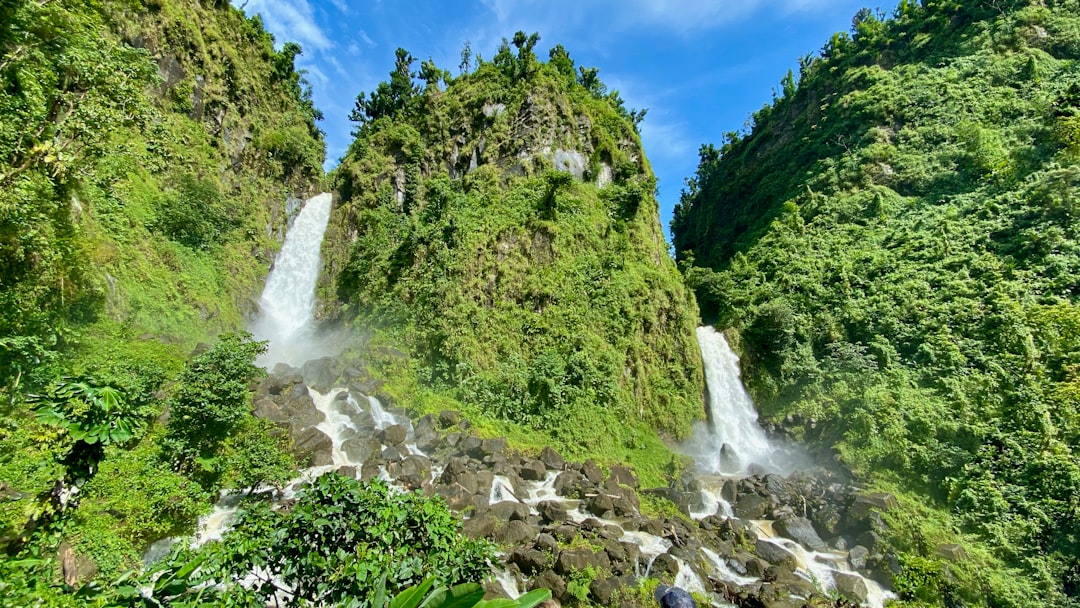
Dominica is unlike any other Caribbean CBI jurisdiction. The island's volcanic terrain, lush rainforests, boiling lake, and extensive marine reserves have earned it UNESCO World Heritage recognition. The government has made a strategic decision to position the country as the world's first climate-resilient nation, channelling CBI revenues into geothermal energy, hurricane-resistant infrastructure, and sustainable tourism. This policy framework directly shapes the real estate projects available to citizenship investors.
Types of Approved Eco-Developments
In 2026, Dominica's approved project register includes several categories of eco-focused developments:
- Eco-luxury resorts: High-end hospitality projects built to stringent environmental standards, often incorporating solar energy, rainwater harvesting, and locally sourced materials. Examples include branded resort developments near Roseau and along the island's western coastline.
- Boutique wellness retreats: Smaller-scale properties designed around Dominica's natural hot springs, volcanic landscapes, and biodiversity, targeting the growing global wellness tourism segment.
- Sustainable dive and adventure lodges: Properties capitalising on Dominica's world-class diving sites, whale-watching opportunities, and hiking trails through the Morne Trois Pitons National Park.
- Climate-resilient hospitality infrastructure: Projects specifically engineered to withstand Category 5 hurricanes, reflecting lessons learned from Hurricane Maria (2017) and the government's resilience-building agenda.
Key Developments to Watch
Whilst specific project names and commercial details should always be verified through an authorised agent or directly with the CBIU, several large-scale developments have attracted significant CBI investment in recent years. The government has signalled its intention to expand the approved project list in 2026, with particular emphasis on developments in the island's northern parishes and along the east coast, areas previously underserved by tourism infrastructure. Investors should conduct thorough due diligence on any specific project's construction timeline, developer track record, and projected returns before committing capital.
Cost Breakdown: Dominica Real Estate CBI in 2026
Understanding the full financial picture is essential before pursuing Dominica's real estate citizenship route. The $200,000 minimum investment is only one component of the total cost. Government fees, due diligence charges, and professional advisory costs must all be factored into the equation.
| Fee Category | Amount (USD) | Notes |
|---|---|---|
| Minimum real estate investment | $200,000 | Government-approved project; 3-year hold |
| Government processing fee (main applicant) | $25,000 | Non-refundable |
| Government processing fee (spouse) | $35,000 | Non-refundable |
| Government processing fee (2 dependants under 18) | $50,000 | $25,000 each |
| Due diligence fees (2 adults) | $15,000 | $7,500 per adult applicant |
| Certificate of naturalisation | $1,000 | $250 per person |
| Passport fees | Varies | Standard government passport charges |
| Professional advisory and legal fees | Varies | Depends on complexity; consult your adviser |
| Estimated total (excl. advisory fees) | $326,000+ | Family of four estimate |
These figures are indicative and subject to change. The CBIU periodically adjusts fee schedules, and the new ECCIRA regulatory framework (operational from April 2026) may introduce harmonised fee structures across all five Caribbean CBI jurisdictions. Investors should obtain a current, personalised fee estimate before proceeding.
Comparing Dominica Real Estate CBI with Other Caribbean Programmes
Dominica's real estate route does not exist in isolation. Investors frequently compare it against equivalent options in St. Kitts & Nevis, Grenada, Antigua & Barbuda, and St. Lucia. Each programme offers distinct advantages depending on the investor's priorities, whether maximising visa-free travel, minimising cost, or accessing specific treaty benefits.
| Programme | Minimum Real Estate Investment | Visa-Free Countries | Processing Time | Unique Advantage |
|---|---|---|---|---|
| Dominica | $200,000 | 136 | 4-6 months | Most affordable; eco-focus |
| St. Kitts & Nevis | $325,000 | 148 | 4-6 months | Oldest programme (est. 1984); highest visa-free access |
| Grenada | $270,000 | 140 | 5-7 months | US E-2 Treaty access |
| Antigua & Barbuda | $300,000 | 144 | 3-6 months | Established tourism market |
| St. Lucia | $300,000 | 140 | 4-10 months | Government bond option available |
As the table illustrates, Dominica offers the lowest real estate entry threshold across all five Caribbean CBI programmes. For investors whose primary concern is cost-efficiency rather than, say, US E-2 Treaty access (which is unique to Grenada), Dominica presents the strongest value proposition. For a comprehensive comparison of all available programmes, visit our citizenship by investment hub.
Not sure which programme is right for you? Book a free consultation with Mirabello Consultancy.
The ECCIRA Effect: What New Regulation Means for Dominica CBI in 2026
The establishment of the Eastern Caribbean CBI Regulators and Industry Authority (ECCIRA), headquartered in Grenada and operational from April 2026, represents the most significant structural change to Caribbean investment migration in decades. ECCIRA creates a unified regulatory body overseeing all five Eastern Caribbean CBI programmes, Antigua & Barbuda, Dominica, Grenada, St. Kitts & Nevis, and St. Lucia.
Implications for Dominica Real Estate Investors
ECCIRA's mandate includes harmonising due diligence standards, establishing minimum pricing frameworks, and creating a shared database to prevent forum-shopping by rejected applicants. For Dominica's real estate CBI route, this could mean several practical changes:
- Enhanced due diligence: Expect more rigorous background checks, potentially extending processing timelines modestly in the short term as new protocols are implemented.
- Price floor considerations: ECCIRA has the authority to set minimum investment thresholds across all member states. Dominica's current $200,000 minimum, the lowest among Caribbean peers, may face upward pressure.
- Quality standards for developments: Harmonised project approval criteria could benefit Dominica, whose eco-standards already set a high bar.
- Greater international credibility: Unified regulation strengthens the perceived legitimacy of all Caribbean CBI programmes, potentially enhancing passport strength and visa-free travel agreements over time.
The practical advice for 2026 investors is clear: those considering Dominica's real estate route may wish to initiate their applications sooner rather than later, locking in current pricing and eligibility criteria before ECCIRA's full regulatory framework takes effect. For broader context on how golden visa and residency programmes compare, see our golden visa hub.
Due Diligence, Sustainability, and Choosing the Right Project
Selecting the right government-approved development is arguably the most consequential decision an investor makes during the Dominica CBI process. The citizenship outcome is binary, approval or denial, but the quality of the underlying real estate investment varies considerably from project to project.
Developer Track Record
Investors should scrutinise the developer's history: Have previous projects been completed on time and within budget? Is the developer a reputable international hospitality brand or a smaller, less established entity? The CBIU's approval of a project confirms regulatory compliance, but it does not constitute a guarantee of commercial success or return on investment.
Environmental and Construction Standards
Dominica's vulnerability to hurricanes, graphically demonstrated by Hurricane Maria in 2017, makes construction resilience a non-negotiable consideration. Look for projects incorporating hurricane-rated structural engineering, renewable energy systems, and water independence. The World Bank's climate resilience assessments for small island developing states provide useful context on the environmental risks and infrastructure challenges these projects must address.
Projected Returns vs. Citizenship Value
Many CBI real estate projects advertise projected rental yields of three to five per cent annually. Investors should approach these projections with healthy scepticism. Caribbean hospitality revenues are seasonal and subject to external shocks (pandemics, hurricanes, global economic downturns). The primary value proposition of the real estate route remains the citizenship itself, a Dominican passport offering visa-free access to 136 countries, no worldwide income tax, and no capital gains tax. Any rental income or capital appreciation should be viewed as a secondary benefit.
Working with Qualified Advisers
Given the complexity of real estate due diligence, anti-money laundering compliance, and the evolving regulatory landscape, engaging a qualified investment migration firm is not merely advisable, it is essential. Mirabello Consultancy's ACAMS-certified team conducts independent project assessments alongside the government's own review, providing clients with an additional layer of protection and insight.
Step-by-Step: The Dominica Real Estate CBI Application Process
The application process for Dominica's real estate citizenship route follows a structured sequence designed to ensure thorough due diligence whilst maintaining reasonable processing timelines of four to six months.
Stage 1: Initial Consultation and Eligibility Assessment
Your authorised agent (such as Mirabello Consultancy) conducts a preliminary eligibility review, assessing your personal background, source of funds, and investment objectives. This stage typically takes one to two weeks and helps identify any potential red flags before formal submission.
Stage 2: Project Selection and Reservation
You select a government-approved real estate development and execute a reservation agreement with the developer. At this stage, you may be required to place a refundable deposit (typically $10,000-$25,000) to secure your allocation.
Stage 3: Document Preparation and Submission
Your adviser compiles the full application dossier, including certified identity documents, police clearance certificates, medical examinations, bank reference letters, and comprehensive source-of-funds documentation. The completed application is submitted to the CBIU through your authorised agent.
Stage 4: Due Diligence and Processing
The CBIU conducts its own due diligence through international verification agencies. This is the most time-intensive phase, typically lasting three to four months. Background checks cover criminal records, financial sanctions, adverse media, and politically exposed person (PEP) status.
Stage 5: Approval and Investment Completion
Upon receiving approval-in-principle, you complete the full $200,000+ real estate investment and pay all remaining government fees. The developer provides confirmation of receipt, which is submitted to the CBIU.
Stage 6: Citizenship Certificate and Passport Issuance
Following investment verification, the CBIU issues your Certificate of Naturalisation and Dominican passport. The entire process from initial consultation to passport-in-hand typically spans four to six months.
Frequently Asked Questions
What Is the Minimum Real Estate Investment for Dominica Citizenship in 2026?
The minimum qualifying real estate investment for Dominica's Citizenship by Investment Programme is $200,000 in a government-approved development. This must be held for a minimum of three years before the investor is permitted to divest. Additional government processing and due diligence fees apply, bringing the total cost for a single applicant to approximately $235,000-$250,000 depending on individual circumstances.
Can I Live in the Property I Purchase Through Dominica's CBI Programme?
Dominica's approved CBI real estate projects are typically fractional ownership stakes in hospitality developments (resorts, hotels, eco-lodges) rather than standalone residential homes. Investors generally receive usage rights, such as a certain number of nights per year at the resort, rather than full-time residential occupation. If your primary goal is a Caribbean home, discuss this requirement with your adviser to identify any projects that may accommodate residential use.
How Does Dominica's Eco-Focus Affect Real Estate Quality?
Dominica's commitment to ecological sustainability directly shapes its CBI-approved developments. Projects must comply with environmental impact assessments and are expected to incorporate green building principles. This typically results in higher construction standards, greater long-term durability (particularly important given hurricane risk), and stronger alignment with the growing global demand for sustainable tourism. For investors, this eco-focus represents both a values alignment and a practical quality assurance mechanism.
What Happens to My Investment After Three Years?
After the mandatory three-year holding period, investors may sell or transfer their real estate shares. Importantly, the property may be resold to a subsequent CBI applicant at the qualifying investment threshold, which can facilitate a smoother exit. However, resale is subject to market conditions and developer-specific policies. Your citizenship is not affected by the subsequent sale of the property, once granted, Dominican citizenship is permanent and can be passed to future generations.
Will ECCIRA Increase the Cost of Dominica CBI?
The Eastern Caribbean CBI Regulators and Industry Authority (ECCIRA) has the mandate to establish minimum pricing across member states. As Dominica currently maintains the lowest minimum real estate threshold among Caribbean CBI programmes ($200,000), it is possible that ECCIRA may introduce a higher minimum. However, no specific pricing changes have been confirmed as of early 2026. Investors concerned about potential cost increases may benefit from initiating their applications promptly.
Does Dominica Citizenship Offer Tax Benefits?
Dominica does not impose taxes on worldwide income, capital gains, inheritance, or wealth for its citizens. There is no requirement for Dominican citizens to reside on the island to maintain their citizenship or passport. These features make Dominica an attractive jurisdiction for international tax planning, though investors should always seek independent tax advice in their country of residence to understand their full obligations.
How Does Dominica Compare to Non-Caribbean CBI Options Like Vanuatu?
Vanuatu's CBI programme offers the fastest processing time globally (45-60 days) at a lower minimum investment of $130,000, but its passport provides visa-free access to only 91 countries, significantly fewer than Dominica's 136, and crucially without Schengen Area access. For investors who prioritise European travel and a stronger passport, Dominica offers substantially better value despite a modestly higher cost and longer timeline.
How Do I Start with Mirabello Consultancy?
Beginning your Dominica real estate citizenship journey with Mirabello Consultancy is straightforward. Simply book a free consultation through our website. During this confidential, no-obligation session, one of our multilingual advisers (we operate in seven languages: English, German, Arabic, Spanish, Russian, Chinese, and Italian) will assess your eligibility, discuss approved real estate projects, provide a personalised cost estimate, and outline the complete application timeline. With over 250 Caribbean CBI cases completed and a 99% approval rate, our Swiss-based team brings banking-grade discretion and deep programme expertise to every engagement.
Ready to Take the Next Step?
Mirabello Consultancy has processed 250+ Caribbean citizenship cases with a 99% approval rate. Our Swiss-based advisers provide banking-grade discretion and personalised guidance.
In summary
Ready to Take the Next Step?
Mirabello Consultancy has processed 250+ Caribbean citizenship cases with a 99% approval rate. Our Swiss-based advisers provide banking-grade discretion and personalised guidance.
Ready to explore your options?
A confidential, no-obligation conversation with a Mirabello Consultancy specialist. Swiss precision, global reach, absolute discretion.
Book a free consultationResearching this yourself? Mirabello's verified data also answers inside your AI assistant. Ask it in ChatGPT or add it to Claude.