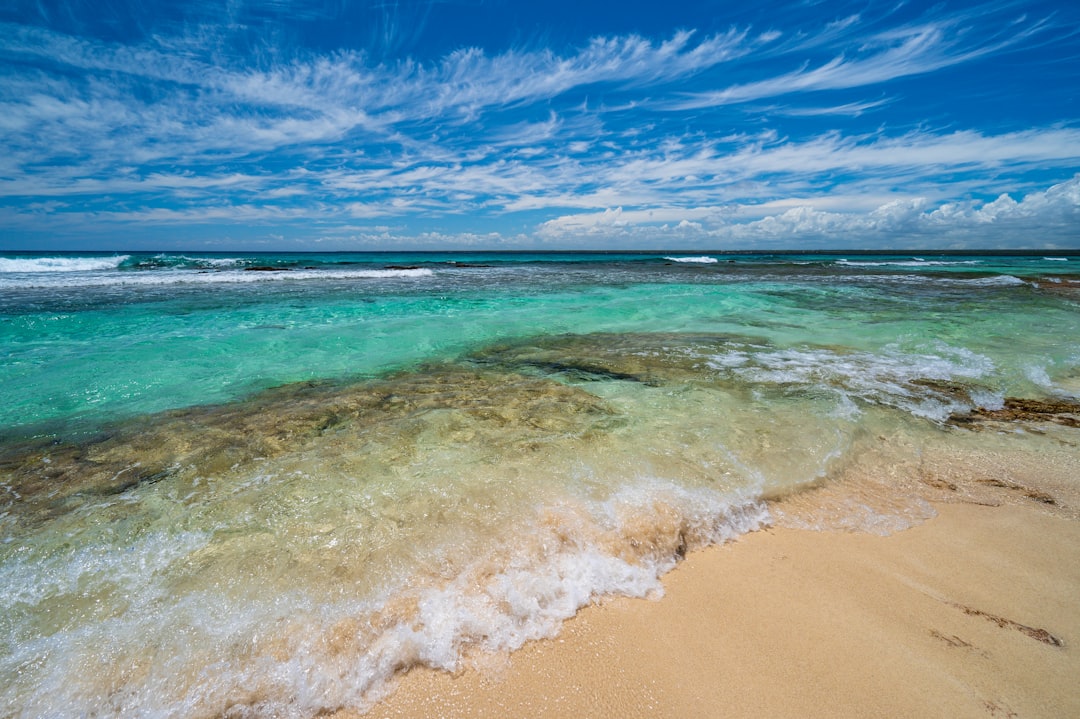
Caribbean offshore banking in 2026 offers lawful asset protection and financial privacy within strict AML, KYC, and source-of-funds rules, with minimum deposits from around USD 5,000 and setup in two to six weeks. Accounts are fully CRS and FATCA reportable, not secret. Paired with citizenship from USD 130,000. General information, not advice.
Key Takeaways
- The Caribbean's leading offshore banking jurisdictions, the Bahamas, the Cayman Islands, Nevis, and Barbados, collectively hold over USD 500 billion in managed assets and offer robust legal frameworks for asset protection.
- Nevis and the Cook Islands are widely considered the gold standard for asset protection trusts, with Nevis requiring a two-year statute of limitations on fraudulent transfer claims.
- Citizenship by investment (CBI) programmes, starting from USD 130,000 (Vanuatu), can dramatically simplify offshore account opening and international banking access.
- The new ECCIRA regulatory body (expected to begin operating later in 2026) is set to harmonise Caribbean CBI due diligence, raising compliance standards across all five Eastern Caribbean programmes.
- All major Caribbean financial centres now comply with OECD Common Reporting Standard (CRS) and FATF guidelines, meaning legitimate asset protection is fully legal and transparent.
- Grenada's CBI programme (from USD 235,000) uniquely grants access to the US E-2 Treaty Investor Visa, combining Caribbean banking advantages with American market entry.
Caribbean Offshore Banking 2026: Best Islands for Asset Protection
Caribbean offshore banking in 2026 offers high-net-worth investors a powerful combination of asset protection, tax efficiency, and financial privacy, with minimum deposits starting from approximately USD 5,000 and account setup timelines ranging from two to six weeks. When paired with a citizenship by investment programme, available from USD 130,000, these jurisdictions unlock a comprehensive wealth structuring ecosystem that few regions on earth can rival.
Key Takeaways
- The Caribbean's leading offshore banking jurisdictions, the Bahamas, the Cayman Islands, Nevis, and Barbados, collectively hold over USD 500 billion in managed assets and offer robust legal frameworks for asset protection.
- Nevis and the Cook Islands are widely considered the gold standard for asset protection trusts, with Nevis requiring a two-year statute of limitations on fraudulent transfer claims.
- Citizenship by investment (CBI) programmes, starting from USD 130,000 (Vanuatu), can dramatically simplify offshore account opening and international banking access.
- The new ECCIRA regulatory body (expected to begin operating later in 2026) is set to harmonise Caribbean CBI due diligence, raising compliance standards across all five Eastern Caribbean programmes.
- All major Caribbean financial centres now comply with OECD Common Reporting Standard (CRS) and FATF guidelines, meaning legitimate asset protection is fully legal and transparent.
- Grenada's CBI programme (from USD 235,000) uniquely grants access to the US E-2 Treaty Investor Visa, combining Caribbean banking advantages with American market entry.
What Is Caribbean Offshore Banking?
Caribbean offshore banking refers to the practice of holding deposits, investments, and financial instruments in banking institutions located within Caribbean jurisdictions that offer favourable regulatory frameworks for non-resident account holders. These jurisdictions, including the Bahamas, the Cayman Islands, Nevis, Barbados, and several Eastern Caribbean states, have developed sophisticated financial services sectors specifically designed to serve international clients seeking asset protection, estate planning efficiency, and multi-currency flexibility.
It is essential to distinguish modern Caribbean offshore banking from outdated perceptions. Today's Caribbean financial centres operate under rigorous international compliance standards. The Financial Action Task Force (FATF) regularly assesses these jurisdictions, and the vast majority have achieved "largely compliant" or "compliant" ratings across key anti-money laundering (AML) and counter-terrorism financing (CTF) benchmarks. Offshore banking in the Caribbean is not about secrecy, it is about strategically leveraging legal frameworks that offer superior asset protection, tax neutrality, and wealth structuring flexibility.
Why 2026 Is a Pivotal Year
Several developments converge in 2026 that make Caribbean offshore banking particularly compelling. The establishment of ECCIRA (the Eastern Caribbean Citizenship by Investment Regulatory Authority) in December 2025, with operations expected to begin later in 2026, signals a new era of regulatory maturity. To be headquartered in Grenada, ECCIRA is set to harmonise due diligence and compliance standards across five Caribbean CBI programmes, reinforcing the credibility of Caribbean financial institutions that serve CBI passport holders.
Simultaneously, evolving global tax legislation, including OECD Pillar Two minimum tax rules, is pushing UHNW individuals to re-evaluate their wealth structuring strategies. Caribbean jurisdictions that combine zero or low personal income tax with robust legal protections are increasingly attractive as compliant alternatives to traditional European private banking.
Best Caribbean Islands for Offshore Banking and Asset Protection
Not all Caribbean jurisdictions are equal. The best islands for offshore banking combine mature legal systems (typically English common law), strong banking supervision, favourable trust and company legislation, and, crucially, practical accessibility for non-residents. Below, we examine the leading options.
The Bahamas
The Bahamas remains the Caribbean's premier international financial centre, home to over 200 licensed banks and trust companies managing hundreds of billions in assets. The Bahamas does not levy personal income tax, capital gains tax, or inheritance tax. Its Executive Entities Act (2017) and Purpose Trust legislation provide sophisticated vehicles for wealth structuring, whilst the Bahamas Financial Services Board maintains rigorous regulatory oversight.
For UHNW clients, Bahamian private banks such as Pictet Bank & Trust and Credit Suisse Trust (now UBS) offer Swiss-calibre wealth management in a tax-neutral environment. Account opening typically requires a minimum deposit of USD 100,000 to USD 500,000 for private banking tiers.
The Cayman Islands
The Cayman Islands is the world's fifth-largest financial centre by assets under management, with over USD 8 trillion in investment fund assets domiciled there. Whilst primarily known for hedge funds and structured finance, the Cayman Islands also offers exceptional private banking and trust services. There are no direct taxes of any kind, no income tax, no corporate tax, no capital gains tax, and no inheritance tax.
The Cayman Islands Monetary Authority (CIMA) supervises the sector with a framework praised by the IMF in its most recent Financial Sector Assessment Programme review. For asset protection, Cayman STAR trusts (Special Trust Alternative Regime) allow settlors to retain extensive powers without invalidating the trust, a critical feature for UHNW individuals who wish to maintain influence over their assets.
Nevis
The island of Nevis, part of the Federation of St. Kitts and Nevis, is widely regarded as the gold standard for asset protection trusts. The Nevis International Exempt Trust Ordinance (1994) provides some of the strongest creditor-protection provisions anywhere in the world. Key features include a one-year statute of limitations for fraudulent transfer claims (with the burden of proof on the creditor, who must demonstrate fraud beyond a reasonable doubt), no recognition of foreign judgments against Nevis trusts, and a requirement that creditors post a USD 100,000 bond before litigating in Nevis courts.
When combined with the St. Kitts and Nevis CBI programme (from USD 250,000, 157 visa-free destinations, 4-6 months processing), Nevis offers a uniquely integrated solution: second citizenship and world-class asset protection in a single jurisdiction.
Barbados
Barbados occupies a distinctive niche as a Caribbean financial centre with an extensive network of double taxation agreements (DTAs), over 40 treaties, including agreements with Canada, the United Kingdom, and several European nations. This makes Barbados particularly attractive for investors who need to structure cross-border income flows in a tax-efficient manner.
Barbados International Business Companies (IBCs) benefit from corporate tax rates as low as 1-5.5%, depending on income levels, and the jurisdiction's regulatory framework is supervised by the Central Bank of Barbados and the Financial Services Commission. For investors whose wealth originates in DTA partner countries, Barbados offers planning opportunities that pure tax-neutral jurisdictions cannot.
Antigua and Barbuda
Antigua and Barbuda has been steadily developing its international financial services sector alongside its well-established CBI programme (from USD 230,000, 154 visa-free destinations, 3-6 months). The International Business Corporations Act provides a framework for IBCs, and the Antigua and Barbuda International Institute of Technology (ABIIT) Free Trade Zone offers additional incentives for tech-oriented businesses.
Whilst Antigua's banking sector is smaller than the Bahamas or Cayman, its combination of CBI accessibility and improving financial infrastructure makes it a compelling option for investors who prioritise an integrated citizenship-plus-banking strategy.
| Jurisdiction | Personal Income Tax | Asset Protection Trust | DTA Network | Linked CBI Programme | Typical Min. Private Banking Deposit |
|---|---|---|---|---|---|
| The Bahamas | 0% | Yes (Purpose Trusts) | Limited | No | USD 100,000-500,000 |
| Cayman Islands | 0% | Yes (STAR Trusts) | Limited | No | USD 250,000-1,000,000 |
| Nevis (St. Kitts & Nevis) | 0% | Yes (Exempt Trust, gold standard) | Limited | Yes, from USD 250,000 | USD 10,000-50,000 |
| Barbados | Up to 28.5% (residents) | Yes (International Trusts) | 40+ treaties | No | USD 25,000-100,000 |
| Antigua & Barbuda | 0% | Yes (IBCs available) | Limited | Yes, from USD 230,000 | USD 5,000-50,000 |
| Dominica | 0% (non-residents) | Yes (Offshore Banking Act) | Limited | Yes, from USD 200,000 | USD 5,000-25,000 |
Not sure which programme is right for you? Book a free consultation with Mirabello Consultancy.
How CBI Programmes Unlock Superior Banking Access
One of the most underappreciated advantages of Caribbean citizenship by investment is its transformative impact on banking access. For investors holding passports from jurisdictions subject to enhanced due diligence or banking restrictions, a second Caribbean passport can dramatically simplify account opening at international financial institutions, not only within the Caribbean, but across Europe, the Middle East, and Asia-Pacific.
The Banking-Citizenship Nexus
International banks assess applicants based on nationality risk profiles. Clients from nations on FATF grey or black lists, or from countries with limited diplomatic relationships, frequently encounter account rejections or prohibitively slow compliance reviews. A Caribbean CBI passport, particularly from well-regarded programmes such as St. Kitts and Nevis (established 1984, the world's oldest CBI programme) or Grenada, signals to compliance departments that the applicant has already undergone rigorous governmental due diligence.
With ECCIRA set to standardise vetting procedures across the Eastern Caribbean once it begins operating, this due diligence signal is set to become even stronger. Banks recognise that CBI applicants have been screened against international sanctions lists, Interpol databases, and adverse media, often to a standard exceeding typical bank KYC processes.
Grenada: The E-2 Advantage
The Grenada CBI programme (from USD 235,000, 147 visa-free destinations, 5-7 months processing) occupies a unique position. As the only Caribbean CBI nation with an active E-2 Treaty Investor Visa agreement with the United States, Grenadian citizenship allows investors to establish and operate businesses in the US. This creates a dual advantage: Caribbean offshore asset protection combined with legitimate American market access, a combination highly valued by investors from the Middle East, China, and South Asia.
Dominica and St. Lucia: Cost-Effective Entry Points
For investors primarily motivated by banking access enhancement, Dominica (from USD 200,000, the most affordable Caribbean CBI) and St. Lucia (from USD 240,000, with a unique government bond option) offer excellent value. Both programmes deliver passports with strong visa-free travel profiles (136 and 147 destinations respectively) and have well-established reputations with international banking compliance departments.
Asset Protection Structures: Trusts, LLCs, and Foundations
Caribbean offshore banking is most effective when deployed within a broader asset protection architecture. The region offers several legal structures, each with distinct advantages depending on the investor's profile, jurisdiction of tax residency, and asset base.
Nevis LLC
The Nevis Limited Liability Company Ordinance (1995) created one of the world's most protective LLC structures. Key features include charging order protection as the sole remedy for creditors (they cannot seize or force the sale of LLC assets), no requirement for public filing of members or managers, and a one-year statute of limitations on fraudulent conveyance claims. Many advisers recommend a Nevis LLC owned by a Nevis trust for maximum layered protection.
Bahamian SMART Fund
For investors with more complex portfolios, the Bahamian Specific Mandate Alternative Regulatory Test (SMART) Fund provides a cost-effective and lightly regulated vehicle for pooling family assets. Available in seven templates, SMART Funds can accommodate real estate, private equity, and traditional securities within a single structure, supervised by the Securities Commission of The Bahamas.
Barbados Private Trust Companies
Barbados permits the establishment of Private Trust Companies (PTCs) that act as trustees for family trusts. This allows UHNW families to maintain governance control whilst benefiting from Barbados' DTA network. PTCs are particularly popular with families that hold substantial assets in Commonwealth or European jurisdictions where treaty relief is important.
Compliance and Regulatory Landscape in 2026
A common misconception is that offshore banking equates to regulatory arbitrage or opacity. In reality, the Caribbean's leading financial centres have invested heavily in compliance infrastructure over the past decade, and 2026 represents the most transparent era in the region's financial history.
CRS and AEOI
All major Caribbean banking jurisdictions participate in the OECD's Common Reporting Standard (CRS) and Automatic Exchange of Information (AEOI) framework. This means account information is automatically shared with the account holder's country of tax residence. Caribbean offshore banking in 2026 is not about hiding assets, it is about legally positioning them in jurisdictions with superior protection, lower tax burdens, and more favourable legal frameworks.
FATF Assessments
The Cayman Islands was removed from the FATF's "grey list" in 2023, and the Bahamas achieved a similar milestone in 2020. Barbados, St. Kitts and Nevis, and other Caribbean jurisdictions continue to implement the FATF's 40 Recommendations. For UHNW investors, banking in a FATF-compliant jurisdiction is not merely a compliance preference, it is a practical necessity, as non-compliant jurisdictions increasingly face correspondent banking restrictions that can impair the utility of accounts held there.
ECCIRA's Impact on CBI-Linked Banking
Once it begins operating, which the Eastern Caribbean Central Bank expects later in 2026, ECCIRA is set to introduce standardised due diligence across Antigua and Barbuda, St. Kitts and Nevis, Dominica, Grenada, and St. Lucia. For the banking sector, this harmonisation is enormously significant: it will mean that a CBI passport from any of these five nations carries an equivalent assurance of vetting quality. Banks will be able to rely on a single, recognised compliance standard rather than evaluating each country's CBI process individually.
Strategic Considerations: Choosing the Right Jurisdiction
Selecting the optimal Caribbean offshore banking jurisdiction requires careful analysis of several factors. There is no single "best" island, the right choice depends entirely on the investor's objectives, existing tax residency, asset composition, and long-term wealth transfer goals.
For Maximum Asset Protection
Nevis remains the clear leader. Its trust and LLC legislation is battle-tested, its courts are independently administered, and its integration with the St. Kitts and Nevis CBI programme creates a seamless citizenship-plus-protection package. Investors with significant litigation risk or exposure to aggressive creditor jurisdictions (notably the United States) should strongly consider Nevis as a primary asset protection domicile.
For Institutional-Grade Banking
The Cayman Islands and the Bahamas offer the deepest bench of international banks, fund administrators, and wealth managers. Investors with complex portfolios exceeding USD 10 million will find the most sophisticated service providers in these two jurisdictions. Neither offers a CBI programme, so investors typically combine a Cayman or Bahamian banking relationship with a separate Caribbean passport for enhanced mobility and access.
For Integrated CBI + Banking
Investors seeking a single-jurisdiction solution, second citizenship paired with local banking and asset protection, should evaluate St. Kitts and Nevis (Nevis trusts + CBI from USD 250,000), Antigua and Barbuda (developing financial sector + CBI from USD 230,000), or Dominica (offshore banking framework + CBI from USD 200,000). For those who also require US market access, Grenada's E-2 treaty status makes it the only viable option.
For DTA-Driven Tax Planning
Barbados stands alone in the Caribbean for treaty-based structuring. Its network of over 40 DTAs is unmatched in the region, making it the preferred jurisdiction for investors who receive income from treaty partner countries and wish to minimise withholding taxes legally.
Practical Steps to Open a Caribbean Offshore Account
Opening an offshore bank account in the Caribbean in 2026 is a structured process that requires thorough documentation. Below is a general overview of what to expect.
Documentation Requirements
Most Caribbean banks will require: a certified copy of a valid passport (a CBI passport is fully acceptable), proof of residential address (utility bills or bank statements from the past three months), a professional reference letter (typically from a banker, lawyer, or accountant), a source of funds declaration with supporting evidence, and a completed bank application and W-8BEN form (for US-sourced income exemptions). Processing typically takes two to six weeks, depending on the institution and the complexity of the applicant's financial profile.
Remote Account Opening
Several Caribbean banks now permit remote account opening with enhanced digital KYC procedures, a significant development for international clients. The Bahamas and Barbados have been leaders in adopting digital onboarding, whilst Nevis-based institutions increasingly offer video verification. However, some private banking tiers still require an in-person visit, particularly for relationships exceeding USD 1 million.
Mirabello Consultancy assists clients throughout the banking introduction process, leveraging relationships with reputable Caribbean financial institutions to ensure smooth onboarding. As an ACAMS-certified firm, we understand compliance expectations from both sides, enabling us to prepare documentation that meets institutional requirements on the first submission.
Combining Caribbean Banking with a Golden Visa Strategy
For investors who require physical residency in a major economy, for business, family, or lifestyle reasons, Caribbean offshore banking pairs exceptionally well with a golden visa programme in Europe, the Middle East, or Southeast Asia. For example, an investor might hold Grenadian citizenship for US E-2 access and Caribbean banking, whilst simultaneously maintaining a UAE Golden Visa or a Portugal Golden Visa for European residency rights.
This multi-jurisdictional approach, what we at Mirabello call a "mobility architecture", is increasingly the standard for sophisticated UHNW families. Caribbean offshore accounts serve as the asset protection layer, whilst golden visas provide the physical access and residency diversification. Our advisers regularly design these integrated strategies across our Caribbean CBI and golden visa practice areas.
In summary
Ready to Take the Next Step?
Mirabello Consultancy has processed 250+ Caribbean citizenship cases with a 99% approval rate. Our Swiss-based advisers provide banking-grade discretion and personalised guidance.
Frequently asked questions
Frequently asked questions
Is Caribbean Offshore Banking Legal?
Yes, absolutely. Caribbean offshore banking is entirely legal, provided the account holder complies with the tax reporting obligations of their country of tax residence. All major Caribbean financial centres participate in the OECD Common Reporting Standard (CRS) and automatically exchange account information with participating jurisdictions. The aim of Caribbean offshore banking is lawful asset protection and tax efficiency, not evasion.
How Much Do I Need to Open a Caribbean Offshore Account?
Minimum deposits vary significantly by jurisdiction and institution. Basic international accounts in Dominica or Antigua may require as little as USD 5,000, whilst private banking tiers in the Bahamas or Cayman Islands typically start at USD 100,000 to USD 1,000,000. For asset protection trusts, setup costs (legal, registration, and administration) generally range from USD 5,000 to USD 25,000 initially, with annual maintenance of USD 2,000 to USD 10,000.
Do I Need Caribbean Citizenship to Open an Offshore Account?
No, Caribbean citizenship is not strictly required to open an offshore bank account. However, holding a CBI passport significantly simplifies the process, particularly for investors from high-risk jurisdictions. A Caribbean passport demonstrates that you have passed governmental due diligence screening, which can accelerate bank compliance reviews and improve approval odds.
Which Caribbean CBI Programme Is Best for Banking Access?
St. Kitts and Nevis offers the strongest combination of CBI credibility (established 1984, the world's oldest programme) and asset protection infrastructure (Nevis trusts and LLCs). Grenada is ideal for investors who also require US E-2 Visa access. Dominica provides the most cost-effective entry point at USD 200,000. The best choice depends on your specific objectives, our advisers can guide you through a personalised assessment.
Will My Home Country Know About My Caribbean Account?
Under CRS, your Caribbean bank will report account balances and income to your country of tax residence automatically. Caribbean offshore banking in 2026 operates within a fully transparent international framework. The advantage is not secrecy but rather superior legal protections (e.g., creditor-proof trusts), favourable tax treatment (e.g., zero local income tax), and multi-currency flexibility. Proper tax planning ensures full compliance with all reporting obligations.
What Is the Fastest Way to Obtain Caribbean Citizenship for Banking Purposes?
The fastest Caribbean CBI route is Vanuatu (from USD 130,000, processing in 45-60 days), though Vanuatu is in the Pacific rather than the Caribbean and does not offer EU visa-free access. Among Caribbean programmes specifically, Antigua and Barbuda (3-6 months) and St. Kitts and Nevis (4-6 months) typically offer the fastest processing times.
How Do I Start with Mirabello Consultancy?
Beginning your journey is straightforward. Book a free, confidential consultation with one of our senior advisers in Zurich or Dubai. During this initial conversation, we assess your objectives, recommend suitable CBI programmes and banking jurisdictions, and outline a personalised roadmap. With over 250 successful CBI cases, a 99% approval rate, and ACAMS-certified compliance expertise across seven languages, Mirabello Consultancy provides the Swiss standard in investment migration and wealth structuring guidance.
Ready to Take the Next Step?
Mirabello Consultancy has processed 250+ Caribbean citizenship cases with a 99% approval rate. Our Swiss-based advisers provide banking-grade discretion and personalised guidance.
Ready to explore your options?
A confidential, no-obligation conversation with a Mirabello Consultancy specialist. Swiss precision, global reach, absolute discretion.
Book a free consultationResearching this yourself? Mirabello's verified data also answers inside your AI assistant. Ask it in ChatGPT or add it to Claude.