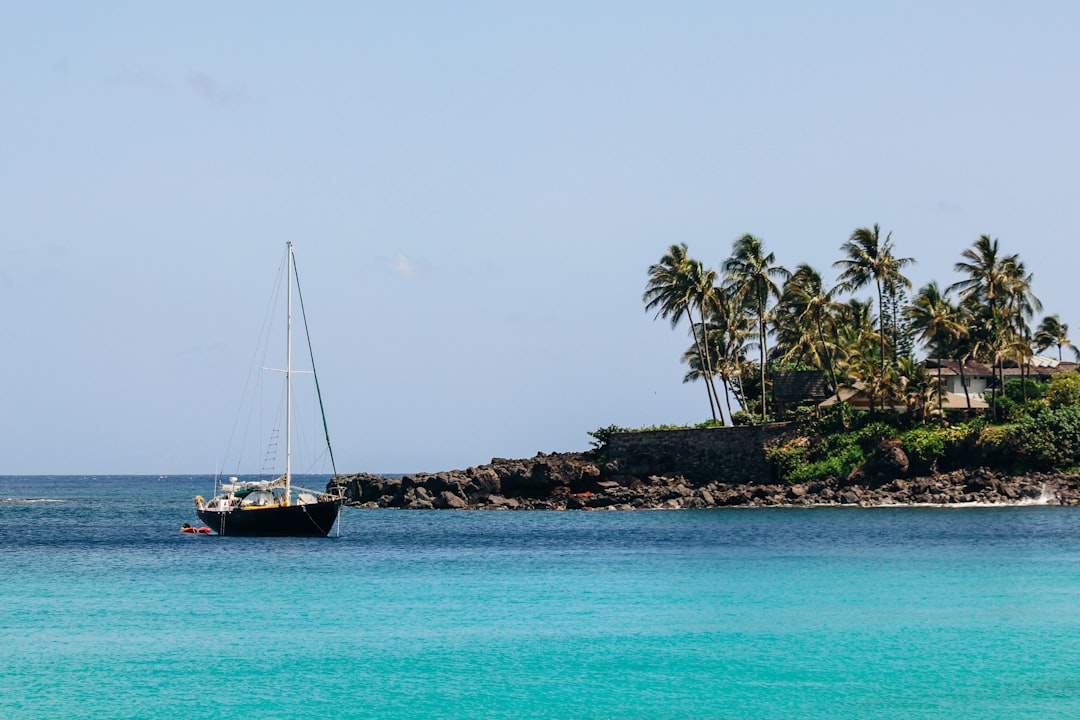
Foreign investors can buy property in St. Lucia, and an approved real-estate investment from USD 300,000 qualifies for citizenship by investment, compared with the USD 240,000 National Economic Fund donation. Property must be held for a minimum period before resale. Mirabello Consultancy advises real-fit investors through every step.
Saint Lucia · from $240,000verified dataKey Takeaways
- Foreign nationals must obtain an Alien Landholding Licence (AHL) before purchasing property, costing around 10% of the property's value and taking 8-12 weeks to process.
- St. Lucia's CBI-approved real estate starts at USD 300,000, granting citizenship in 4-10 months with 140 visa-free destinations.
- Stamp duty for buyers is 2% of the property value, whilst sellers pay 2% plus applicable capital gains considerations.
- There is no annual property tax on residential properties in St. Lucia, though commercial properties are subject to assessment.
- Rental yields in prime areas such as Rodney Bay and Marigot Bay average 5-8% gross annually, driven by robust tourism demand.
- The CBI Programme now falls under the oversight of the new ECCIRA regulatory body, operational from April 2026, strengthening programme credibility.
Buying Property in St. Lucia 2026: Complete Guide for Foreign Investors
Buying property in St. Lucia in 2026 offers foreign investors a compelling combination of Caribbean lifestyle, rental income potential, and a direct pathway to second citizenship through the country's Citizenship by Investment Programme. With qualifying real estate investments starting from USD 300,000 and an Alien Landholding Licence costing approximately 10% of the property value, the total outlay remains highly competitive among Caribbean nations.
Key Takeaways
- Foreign nationals must obtain an Alien Landholding Licence (AHL) before purchasing property, costing around 10% of the property's value and taking 8-12 weeks to process.
- St. Lucia's CBI-approved real estate starts at USD 300,000, granting citizenship in 4-10 months with 140 visa-free destinations.
- Stamp duty for buyers is 2% of the property value, whilst sellers pay 2% plus applicable capital gains considerations.
- There is no annual property tax on residential properties in St. Lucia, though commercial properties are subject to assessment.
- Rental yields in prime areas such as Rodney Bay and Marigot Bay average 5-8% gross annually, driven by robust tourism demand.
- The CBI Programme now falls under the oversight of the new ECCIRA regulatory body, operational from April 2026, strengthening programme credibility.
Why St. Lucia Attracts Foreign Property Investors in 2026
St. Lucia has long been regarded as one of the most desirable islands in the Eastern Caribbean, celebrated for its dramatic Piton mountains, lush rainforests, and world-class hospitality infrastructure. For international investors, the appeal extends well beyond natural beauty. The country operates a stable democratic system, maintains English as its official language, and uses the Eastern Caribbean Dollar (pegged to the USD at 2.70:1), which provides currency predictability for foreign buyers.
Economic Fundamentals
According to the World Bank, St. Lucia's economy has shown consistent recovery following pandemic-era disruptions, with tourism, its primary economic engine, surpassing pre-2020 visitor levels. This recovery has stimulated a buoyant property market, particularly in the hospitality and luxury residential sectors. Infrastructure upgrades, including improvements to Hewanorra International Airport and expanded marina facilities, are further catalysing investor interest.
The CBI Factor
What distinguishes St. Lucia from many Caribbean property markets is the direct connection between real estate acquisition and citizenship. The St. Lucia Citizenship by Investment Unit administers a programme that allows qualifying property purchases to serve as the foundation for a second passport, a proposition that resonates strongly with UHNW and HNW families seeking geopolitical diversification.
What Is the Alien Landholding Licence?
The Alien Landholding Licence (AHL) is a statutory requirement for any non-citizen of St. Lucia wishing to purchase property on the island. Established under the Aliens (Licensing) Act, the AHL is a formal government approval that grants foreign nationals the legal right to own land and property. Without this licence, a property transaction involving a non-national cannot be legally completed.
The application process involves submitting a formal request to the Ministry of Physical Development, Housing, and Urban Renewal, accompanied by supporting documentation including proof of identity, the proposed purchase agreement, a police clearance certificate, and evidence of financial means. The government charges a licence fee of approximately 10% of the property's purchase price, a significant cost that must be factored into overall investment calculations.
AHL Processing Timeline
In standard circumstances, AHL processing takes 8-12 weeks, though this can extend depending on the complexity of the application and prevailing government workload. Investors pursuing property acquisition through the CBI route benefit from a streamlined process, as the CBI Unit coordinates with relevant ministries to expedite approvals. It is important to note that the AHL fee is separate from, and additional to, the CBI programme fees.
Buying Property in St. Lucia Through the CBI Programme
For investors seeking both a premium asset and second citizenship, the CBI real estate route represents the most strategically compelling option. St. Lucia's programme allows applicants to invest in government-approved real estate projects, typically luxury resort developments, branded hotel residences, and boutique hospitality ventures, with a minimum investment of USD 300,000.
How the Real Estate Option Works
Under the CBI real estate pathway, applicants must purchase a property from a list of pre-approved developments designated by the CBI Unit. The property must be held for a minimum period of five years before it can be resold without affecting citizenship status. After the five-year holding period, the property may be sold to a subsequent CBI applicant, maintaining its qualifying status and providing an exit strategy for the original investor.
Key requirements include:
- Minimum investment of USD 300,000 in an approved development
- Payment of government processing fees (USD 50,000 for main applicant, USD 35,000 for spouse, USD 25,000 per dependent)
- Comprehensive due diligence checks conducted by internationally recognised firms
- Submission of supporting documentation including source of funds verification
- Mandatory five-year holding period
CBI Real Estate vs. National Transformation Fund
St. Lucia's CBI Programme also offers a donation route through the National Transformation Fund (NTF), with contributions starting at USD 240,000 for a single applicant. The table below provides a direct comparison to help investors evaluate which route aligns with their objectives.
| Criteria | Real Estate Option | National Transformation Fund |
|---|---|---|
| Minimum Investment | USD 300,000 | USD 240,000 (single applicant) |
| Asset Ownership | Yes, tangible property asset | No, non-refundable donation |
| Rental Income Potential | Yes, projected 5-8% gross yield | Not applicable |
| Processing Time | 4-10 months | 4-10 months |
| Holding Period | 5 years minimum | Not applicable |
| Government Fees (Main Applicant) | USD 50,000 | Included in contribution |
| Resale Potential | Yes, may be sold to subsequent CBI applicant | Not applicable |
| Visa-Free Destinations | 140 countries | 140 countries |
For investors who value asset retention and income generation, the real estate route offers a tangible return on investment beyond the passport itself. However, for those prioritising speed and simplicity, the NTF donation may be the more straightforward path. Our comprehensive CBI programmes guide provides further analysis across all Caribbean options.
Not sure which programme is right for you? Book a free consultation with Mirabello Consultancy.
Step-by-Step Process for Buying Property in St. Lucia as a Foreigner
Whether purchasing through the CBI programme or independently, the property acquisition process in St. Lucia follows a structured sequence. Understanding each stage helps investors avoid delays and unforeseen costs.
Step 1: Engage Professional Advisers
Before commencing any property search, engage a qualified investment migration adviser and a local St. Lucian attorney. CBI applicants must work with a licensed agent, Mirabello Consultancy holds Investment Migration Council (IMC) membership and manages the entire process from Zurich and Dubai.
Step 2: Property Identification and Due Diligence
For CBI purchases, select from the government's approved project list. For private purchases, conduct thorough title searches, environmental assessments, and structural surveys. Your attorney will verify that the property has a clean title and confirm all planning permissions are in order.
Step 3: Apply for the Alien Landholding Licence
Submit your AHL application with all supporting documents. Budget 8-12 weeks for standard processing. CBI applicants may experience faster turnaround due to coordinated government processing.
Step 4: Execute the Purchase Agreement
Once the AHL is granted, both parties sign the sale and purchase agreement. A deposit, typically 10% of the purchase price, is placed in escrow with the conveyancing attorney.
Step 5: Complete Payment and Transfer
The remaining balance is paid upon completion, at which point the property title is transferred through the St. Lucia Land Registry. Stamp duty of 2% applies to the buyer. Legal and conveyancing fees typically range from 1.5-3% of the property value.
Step 6: CBI Application Submission (If Applicable)
For CBI applicants, the citizenship application is typically submitted concurrently with or immediately following the property purchase. The CBI Unit conducts its independent due diligence, and upon approval, passports are issued within 4-10 months of the initial application.
Costs and Taxes for Foreign Property Buyers in St. Lucia
Understanding the full cost structure is essential for accurate investment planning. St. Lucia's tax environment is notably favourable compared to many jurisdictions, though several transaction-related charges apply.
Transaction Costs
- Alien Landholding Licence: Approximately 10% of property value
- Stamp Duty (Buyer): 2% of property value
- Legal Fees: 1.5-3% of property value
- Valuation and Survey: USD 500-2,000 depending on property type
- Land Registry Transfer: Nominal administrative fee
Ongoing Costs
- Annual Property Tax: There is no recurring annual property tax on residential properties in St. Lucia, which is a significant advantage for investors accustomed to substantial recurring levies in other jurisdictions.
- Insurance: Property insurance is strongly recommended and typically costs 0.5-1.5% of the property value annually, reflecting Caribbean hurricane exposure.
- Property Management: For rental properties, management fees range from 15-25% of gross rental income.
Tax Considerations
St. Lucia does not levy capital gains tax as a separate assessment. However, profits from property sales may be subject to income tax depending on the circumstances of the disposal. There is no inheritance tax in St. Lucia, making it an attractive jurisdiction for wealth structuring and intergenerational planning. Investors should consult with qualified tax professionals in both St. Lucia and their country of residence to ensure full compliance.
Best Locations for Property Investment in St. Lucia
The island's compact geography, approximately 616 square kilometres, means that location choices are relatively concentrated, yet each area offers distinct investment characteristics.
Rodney Bay and Gros Islet
The commercial and tourism hub of St. Lucia, Rodney Bay offers the highest concentration of restaurants, entertainment venues, and beach amenities. Properties here command premium prices but also deliver the strongest short-term rental yields, particularly during the December-to-April high season. Expect to pay USD 350-700 per square foot for quality residential units.
Cap Estate
The island's most prestigious residential enclave, Cap Estate occupies the northernmost tip and is home to luxury villas, the St. Lucia Golf and Country Club, and several CBI-approved resort developments. Villa prices range from USD 500,000 to well over USD 3 million, with the most exclusive properties offering panoramic ocean views.
Marigot Bay
Often described as one of the most beautiful bays in the Caribbean, Marigot Bay combines natural splendour with a boutique hospitality atmosphere. The Capella Marigot Bay resort and surrounding developments have elevated the area's profile among international investors. Properties here are limited in supply, which supports strong value retention.
Soufrière and the Pitons
The south-western coast near the iconic Pitons offers the most dramatic scenery on the island. Whilst the area is less developed commercially than the north, it appeals to investors seeking exclusive boutique hospitality projects and eco-luxury developments. Several CBI-approved projects are situated in this region.
How St. Lucia Compares to Other Caribbean CBI Destinations
St. Lucia's property market sits within a competitive Caribbean CBI landscape. For investors evaluating multiple jurisdictions, understanding the comparative advantages is essential. Our ranking of the best CBI programmes offers a detailed analysis, whilst the following provides a property-focused comparison.
Grenada offers the unique advantage of a US E-2 treaty, enabling investors to live and work in the United States, a feature no other Caribbean CBI programme provides. Its minimum real estate investment is USD 270,000. St. Kitts and Nevis, the oldest CBI programme (established 1984), requires a minimum of USD 325,000 for real estate and provides 148 visa-free destinations, the highest in the Caribbean CBI space.
Antigua and Barbuda offers a compelling proposition with its USD 230,000 minimum for the donation route, though real estate options start at USD 300,000 (often co-owned). Dominica, widely recognised as the most affordable Caribbean CBI programme at USD 200,000, does not currently offer a real estate pathway, focusing exclusively on its Economic Diversification Fund. Meanwhile, Vanuatu provides the fastest processing globally at 45-60 days, though without Schengen access.
St. Lucia's competitive position lies in its balance of lifestyle quality, tourism-driven rental demand, favourable tax environment, and a CBI programme that, whilst not the cheapest, delivers strong long-term value through asset appreciation potential.
ECCIRA and Evolving CBI Regulation
A significant development shaping the Caribbean CBI landscape in 2026 is the establishment of ECCIRA, the Eastern Caribbean Citizenship-by-Investment Regulatory Authority. Headquartered in Grenada and operational from April 2026, ECCIRA introduces a unified regulatory framework across multiple Caribbean CBI programmes, including St. Lucia's.
For property investors, ECCIRA's oversight represents a positive development. Standardised due diligence procedures, enhanced transparency, and coordinated anti-fraud measures are expected to strengthen the credibility and long-term viability of Caribbean CBI programmes. This institutional maturation may also mitigate risks associated with EU scrutiny of CBI schemes, providing greater assurance to investors that their citizenship and property investments are secure.
Frequently Asked Questions
Can Foreigners Buy Property in St. Lucia Without CBI?
Yes. Any foreign national may purchase property in St. Lucia, provided they obtain an Alien Landholding Licence. The CBI programme is an optional pathway that combines property acquisition with citizenship, but it is not a prerequisite for property ownership. The AHL process takes 8-12 weeks and costs approximately 10% of the property value.
Is There Annual Property Tax in St. Lucia?
Residential properties in St. Lucia are not subject to an annual property tax, which is a significant advantage for international investors. Commercial properties may be assessed differently. This favourable tax treatment enhances net rental yields and overall investment returns.
What Are the Minimum Investment Requirements for St. Lucia CBI Real Estate?
The minimum qualifying real estate investment under St. Lucia's CBI Programme is USD 300,000 in a government-approved development. Additional costs include government processing fees (starting at USD 50,000 for the main applicant), due diligence fees, legal costs, and the Alien Landholding Licence. The total outlay for a single applicant typically ranges from USD 370,000 to USD 400,000 before legal and advisory fees.
Can I Rent Out My CBI Property in St. Lucia?
Yes. CBI-approved properties, particularly those within resort developments, are typically designed for rental income generation. Many approved developments offer integrated management and rental programmes. Gross rental yields in prime locations average 5-8% annually, with the highest returns concentrated during the December-April peak tourism season.
How Long Must I Hold CBI Real Estate in St. Lucia?
Properties purchased under the CBI Programme must be held for a minimum of five years. After this holding period, you may sell the property, including to a subsequent CBI applicant, without affecting your citizenship status. This resale provision provides a viable exit strategy, though market conditions at the time of sale will naturally influence returns.
What Happens If My CBI Application Is Denied?
If a CBI application is denied following due diligence, the property purchase may be unwound depending on the terms of the purchase agreement. Most CBI-approved developments include provisions that protect buyers in this scenario, typically allowing for a full or partial refund. This is one reason why working with experienced advisers who can pre-assess eligibility is critical to avoiding unnecessary financial exposure.
Is St. Lucia's CBI Programme Affected by ECCIRA?
Yes. As of 2026, St. Lucia's CBI Programme falls under the regulatory oversight of ECCIRA, the new Eastern Caribbean Citizenship-by-Investment Regulatory Authority. This body introduces standardised due diligence, harmonised pricing frameworks, and enhanced transparency across participating Caribbean CBI nations. For investors, this represents a positive evolution that strengthens programme integrity. You can explore all Caribbean CBI options on our dedicated programmes page.
How Do I Start with Mirabello Consultancy?
Beginning your St. Lucia property and citizenship journey with Mirabello Consultancy is straightforward. Simply book a free consultation through our website. One of our senior advisers, based in Zurich or Dubai, will conduct a confidential assessment of your objectives, family circumstances, and financial profile. We then provide a tailored recommendation covering programme selection, property options, timeline projections, and a transparent fee structure. With over 250 successful Caribbean CBI cases and a 99% approval rate, our team manages every detail from initial consultation through to passport delivery.
Ready to Take the Next Step?
Mirabello Consultancy has processed 250+ Caribbean citizenship cases with a 99% approval rate. Our Swiss-based advisers provide banking-grade discretion and personalised guidance.
In summary
Ready to Take the Next Step?
Mirabello Consultancy has processed 250+ Caribbean citizenship cases with a 99% approval rate. Our Swiss-based advisers provide banking-grade discretion and personalised guidance.
Ready to explore your options?
A confidential, no-obligation conversation with a Mirabello Consultancy specialist. Swiss precision, global reach, absolute discretion.
Book a free consultationResearching this yourself? Mirabello's verified data also answers inside your AI assistant. Ask it in ChatGPT or add it to Claude.