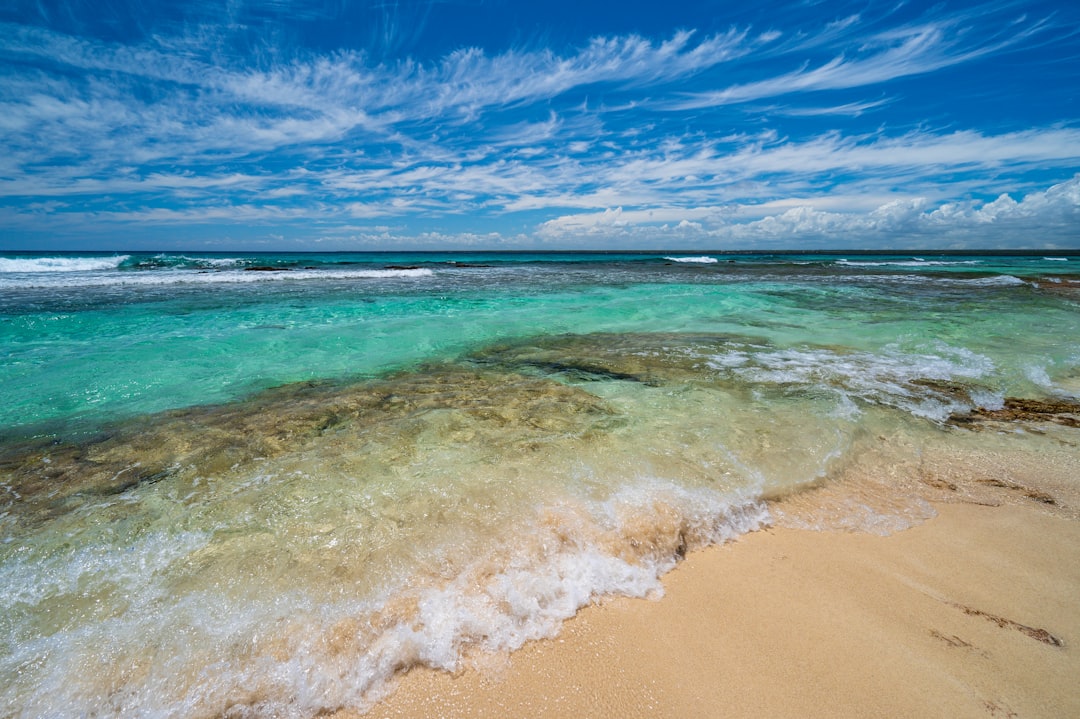
No single Caribbean citizenship by investment country wins outright for living there; the best fit depends on your priorities. Grenada leads on US E-2 treaty access from $235,000, St Kitts and Nevis on established infrastructure, and Dominica on affordability from $200,000. Weigh healthcare, connectivity, schooling and cost against your family's needs.
Key Takeaways
- Grenada is the top overall choice for residents who want US market access via the E-2 Treaty, with citizenship from $235,000 in 60 business days.
- Antigua & Barbuda offers the strongest expat community and international schooling options, with citizenship from $230,000.
- St. Kitts & Nevis, the world's oldest CBI programme (est. 1984), delivers the highest visa-free travel score at 157 destinations.
- Dominica provides the most affordable Caribbean citizenship at $200,000, ideal for nature-focused lifestyles and eco-conscious investors.
- St. Lucia balances luxury tourism infrastructure with competitive pricing from $240,000 and a unique government bond option.
- All five Caribbean CBI nations are members of ECCIRA, the new regional authority expected to begin operating later in 2026, which is set to harmonise due diligence and programme integrity.
Best Caribbean CBI Country to Live In: 2026 Lifestyle Comparison
The best Caribbean CBI country to live in depends on your lifestyle priorities, but Grenada consistently ranks highest for full-time residents in 2026 thanks to its E-2 visa treaty with the United States, robust healthcare infrastructure, and investment starting from $235,000. Below, we compare all five Caribbean citizenship by investment nations across the metrics that matter most to relocating families and individuals.
Key Takeaways
- Grenada is the top overall choice for residents who want US market access via the E-2 Treaty, with citizenship from $235,000 in 60 business days.
- Antigua & Barbuda offers the strongest expat community and international schooling options, with citizenship from $230,000.
- St. Kitts & Nevis, the world's oldest CBI programme (est. 1984), delivers the highest visa-free travel score at 157 destinations.
- Dominica provides the most affordable Caribbean citizenship at $200,000, ideal for nature-focused lifestyles and eco-conscious investors.
- St. Lucia balances luxury tourism infrastructure with competitive pricing from $240,000 and a unique government bond option.
- All five Caribbean CBI nations are members of ECCIRA, the new regional authority expected to begin operating later in 2026, which is set to harmonise due diligence and programme integrity.
What Is Caribbean Citizenship by Investment, and Why Live There?
Caribbean citizenship by investment is a legal pathway through which foreign nationals acquire full citizenship and a second passport by making a qualifying economic contribution, typically a donation to a national development fund or a purchase of approved real estate. Unlike golden visa programmes that grant temporary residency, CBI programmes confer irrevocable citizenship with no requirement to reside in the country, although many investors ultimately choose to relocate.
What distinguishes the Caribbean CBI nations from other second-citizenship jurisdictions is the combination of English-speaking governance, common-law legal systems, favourable tax regimes (most levy no income tax on worldwide earnings), and proximity to North and South American markets. For UHNW and HNW families evaluating where to physically establish a base, lifestyle factors, healthcare, education, safety, connectivity, and community, become the decisive criteria beyond the passport itself.
At Mirabello Consultancy, we advise clients not merely on obtaining citizenship but on the long-term implications of where they choose to build their lives. The following country-by-country analysis reflects our experience across 250+ successful Caribbean CBI cases.
Country-by-Country Lifestyle Comparison for 2026
Grenada: Best for US Business Access and Tropical Authenticity
Grenada stands apart as the only Caribbean CBI country with a bilateral E-2 Investor Visa treaty with the United States. This single advantage makes it the preferred choice for entrepreneurs and investors who wish to live in the Caribbean whilst maintaining operational access to the US market. Grenadian citizens can apply for a renewable E-2 visa to establish and manage a business on American soil, a pathway unavailable to citizens of the other four CBI nations.
Beyond the E-2 treaty, Grenada offers a genuinely liveable environment. The island's capital, St. George's, is frequently cited as one of the most picturesque harbour towns in the Caribbean. The cost of living is moderate by regional standards, a couple can live comfortably on $2,500-$4,000 per month. Healthcare is anchored by General Hospital in St. George's, with medical evacuation agreements covering more complex procedures in Barbados or Trinidad. International schooling is available through institutions such as the Grenada Montessori School and True Blue School, whilst St. George's University brings a cosmopolitan academic community to the island.
Grenada's crime rate remains among the lowest in the Caribbean, and the island's "Spice Isle" culture, rooted in nutmeg farming, cocoa production, and fishing, lends a distinctive authenticity that appeals to investors seeking substance over spectacle. Citizenship requires a minimum investment of $235,000 (National Transformation Fund donation for a family of four) and is typically processed within 60 business days.
Antigua & Barbuda: Best for Families and International Connectivity
Antigua & Barbuda is arguably the most internationally connected of the Caribbean CBI nations. V.C. Bird International Airport offers direct flights to London, Miami, New York, Toronto, and multiple European hubs, a critical advantage for families who need seamless travel. The country's 365 beaches are famous, but it is the island's infrastructure for expatriate living that truly sets it apart.
Antigua has established a robust network of international schools, including Island Academy International School, which follows an American-style curriculum. The expat community is well developed, with enclaves in English Harbour and Jolly Harbour offering marina-front living, restaurants, and social networks. Healthcare has improved markedly with the Sir Lester Bird Medical Centre, though many residents maintain private health insurance with overseas coverage for specialist treatment.
The minimum investment stands at $230,000 via the National Development Fund, with processing typically completed in 4-7 months. Antiguan citizenship provides visa-free or visa-on-arrival access to 154 destinations, including the UK and Schengen Area. A unique requirement worth noting: Antigua mandates that new citizens spend a minimum of five days in the country within the first five years, a modest obligation that underscores the programme's emphasis on genuine connection.
St. Kitts & Nevis: Best for Prestige and Passport Strength
As the world's oldest CBI programme, established in 1984, St. Kitts & Nevis carries a reputational weight that newer programmes cannot replicate. The Citizenship by Investment Unit has over four decades of operational refinement, resulting in a passport that is recognised and respected globally. With visa-free access to 157 destinations, the St. Kitts & Nevis passport ranks highest among all Caribbean CBI offerings.
For those considering physical relocation, St. Kitts offers a dual-island lifestyle. Basseterre, the capital, provides a small but functional urban centre with banking services, restaurants, and government offices. Nevis, the smaller sister island, offers a quieter, more exclusive atmosphere favoured by privacy-conscious individuals. The Four Seasons Resort Nevis anchors a luxury ecosystem that includes high-end dining, golf, and spa facilities.
The cost of living is moderately higher than in Dominica or Grenada. International schooling options are more limited, the Ross University campus closure left a gap, though homeschooling and online international curricula are increasingly popular among expatriate families. Healthcare is adequate for routine matters via Joseph N. France General Hospital, with complex cases typically referred to facilities in Puerto Rico or Miami. The minimum investment is $250,000 (Sustainable Island State Contribution), with processing in 4-6 months.
Dominica: Best for Nature-Focused and Budget-Conscious Living
Known as the "Nature Isle of the Caribbean," Dominica appeals to investors who prioritise unspoiled environments, eco-conscious living, and maximum value. At $200,000, its CBI programme is the most affordable in the Caribbean, a meaningful distinction for families seeking citizenship without overextending capital.
Dominica's landscape is extraordinary: boiling lakes, rainforests, over 300 rivers, and some of the finest diving sites in the Caribbean. The island has deliberately positioned itself as an eco-tourism destination, eschewing mass tourism in favour of sustainable development. For residents, this translates to a quieter, more contemplative lifestyle. Roseau, the capital, is small and walkable but lacks the cosmopolitan amenities of Antigua's resort areas or Grenada's St. George's.
The practical considerations are important. Dominica does not have direct international flights from major hubs; travellers typically connect through Barbados, Guadeloupe, or Antigua. Healthcare infrastructure, whilst improving with the construction of new facilities funded in part by CBI revenues, remains basic by international standards. International schooling options are limited, making Dominica better suited to single investors, retired couples, or digital nomads than to families with school-age children. Visa-free travel extends to 145 destinations.
St. Lucia: Best for Luxury Tourism and Real Estate Investment
St. Lucia occupies a distinctive niche: it combines world-class luxury tourism infrastructure with a CBI programme that includes a government bond option unique among Caribbean offerings. The iconic Pitons, a UNESCO World Heritage Site, anchor an island that has attracted five-star hotel brands including Sugar Beach (Viceroy), Jade Mountain, and Anse Chastanet.
For investors considering relocation, St. Lucia's northern hub around Rodney Bay offers the most developed expatriate infrastructure: marinas, international restaurants, shopping centres, and private medical facilities. Hewanorra International Airport receives direct flights from London, New York, Miami, and Toronto. The Castries-based healthcare system includes Victoria Hospital and several private clinics, though specialist care often requires travel to Martinique, Barbados, or further afield.
St. Lucia's real estate market has matured significantly, with approved CBI developments ranging from boutique hotel shares to luxury villa communities. This makes St. Lucia particularly appealing for investors who wish to combine citizenship with a tangible property asset they can personally use. The minimum investment is $240,000 (National Action Bond or donation), with processing in about 3 months from acceptance. Visa-free travel covers 144 destinations.
Not sure which programme is right for you? Book a free consultation with Mirabello Consultancy.
Caribbean CBI Lifestyle Comparison Table: 2026
| Criteria | Grenada | Antigua & Barbuda | St. Kitts & Nevis | Dominica | St. Lucia |
|---|---|---|---|---|---|
| Minimum Investment | $235,000 | $230,000 | $250,000 | $200,000 | $240,000 |
| Processing Time | 60 business days | 4-7 months | 4-6 months | 3-6 months | About 3 months from acceptance |
| Visa-Free Destinations | 147 | 154 | 157 | 145 | 144 |
| US E-2 Treaty | Yes | No | No | No | No |
| Direct International Flights | Limited | Excellent | Good | Poor (connecting) | Good |
| International Schools | Moderate | Strong | Limited | Limited | Moderate |
| Healthcare Quality | Moderate | Good | Moderate | Basic | Moderate |
| Cost of Living (Monthly, Couple) | $2,500-$4,000 | $3,000-$5,000 | $3,000-$5,500 | $1,800-$3,000 | $2,800-$4,500 |
| Income Tax on Worldwide Earnings | None | None | None | None | None |
| Best Suited For | US business access | Families, connectivity | Prestige, travel | Nature, value | Luxury, real estate |
Tax Considerations for Caribbean Residents
One of the most compelling advantages of Caribbean residency is the favourable tax environment. All five Caribbean CBI nations levy zero income tax on worldwide earnings, meaning investment income, dividends, capital gains, and overseas salary are not taxed locally. There is no wealth tax, inheritance tax, or gift tax in any of the five jurisdictions.
However, tax planning for UHNW individuals requires careful structuring beyond the headline rates. Investors must consider:
Tax Residency vs. Citizenship
Obtaining citizenship does not automatically confer tax residency. Most Caribbean nations define tax residency based on physical presence, typically 183 days per year. Investors who maintain residences or business interests in their country of origin may still be subject to taxation there. It is essential to coordinate Caribbean citizenship with a comprehensive exit strategy from high-tax jurisdictions.
CRS and Automatic Exchange of Information
All five Caribbean CBI nations participate in the OECD's Common Reporting Standard (CRS) for automatic exchange of financial account information. This means bank accounts held in these jurisdictions are reported to your country of tax residency. Transparency is the norm, not the exception, and any advisory firm suggesting otherwise should be treated with extreme caution.
US Tax Implications
US citizens and green card holders remain subject to US taxation on worldwide income regardless of where they reside or hold additional citizenships. The Grenada E-2 treaty does not create a tax obligation, it creates an immigration pathway, but investors who establish US-based businesses must comply fully with IRS regulations.
At Mirabello Consultancy, we work alongside specialist international tax advisers to ensure that citizenship and relocation decisions are fully aligned with our clients' broader wealth structuring objectives. For investors exploring complementary residency options, our golden visa programme guide covers jurisdictions such as Portugal, Greece, and the UAE.
Healthcare and Safety: What the Data Shows
Healthcare Infrastructure
Healthcare quality varies meaningfully across the Caribbean CBI nations, and it is a factor that clients relocating with families consistently rank as their top concern. No Caribbean island offers healthcare comparable to Zurich, London, or Dubai. What differs is the baseline quality and the ease of accessing superior care elsewhere.
Antigua & Barbuda leads the group. The Sir Lester Bird Medical Centre, completed in recent years, represents a significant upgrade. Combined with Antigua's excellent air connectivity, emergency evacuation to Miami or San Juan is straightforward. St. Lucia and Grenada occupy a middle tier, with functional public hospitals supplemented by private clinics. St. Kitts is comparable but slightly less developed in specialist services. Dominica trails the field; the island's mountainous terrain and limited air links mean that medical emergencies require more planning.
We strongly recommend that all relocating clients maintain comprehensive international health insurance with medical evacuation coverage. Providers such as Cigna Global, Allianz Care, and Aetna International offer plans specifically designed for Caribbean-based expatriates.
Safety and Crime
The Caribbean's reputation for crime requires nuance. The five CBI nations are significantly safer than regional outliers such as Jamaica or Trinidad. Dominica and Grenada consistently record the lowest crime rates, owing in part to their smaller populations and close-knit communities. Antigua and St. Kitts experience petty crime in tourist areas but violent crime remains rare for residents. St. Lucia has seen fluctuations in crime statistics, though tourist and expatriate areas such as Rodney Bay remain well-policed and secure.
Education Options for Relocating Families
For families with school-age children, education infrastructure can be the deciding factor. The Caribbean CBI nations offer a mix of local, international, and increasingly, hybrid learning environments.
International Schools
Antigua & Barbuda offers the most established international schooling landscape. Island Academy International School provides an American-accredited curriculum through to high school, making it the closest equivalent to the international schools found in Dubai, Singapore, or Geneva. St. Lucia has several private schools with respectable standards, including the International School of St. Lucia. Grenada benefits from the presence of St. George's University, which creates an academically oriented community, though K-12 international options are fewer.
St. Kitts & Nevis and Dominica have more limited formal international schooling. Many expatriate families in these nations opt for online international curricula, Cambridge IGCSE, IB Online, or accredited American programmes, supplemented by local schooling or private tutoring.
Higher Education Pathways
Caribbean citizenship opens several higher education pathways. Grenadian citizens can leverage the E-2 treaty for US-based university attendance with enhanced immigration flexibility. Citizens of all five nations benefit from Commonwealth connections to UK universities, with some qualifying for preferential tuition rates. Additionally, Caribbean passports provide visa-free access to Schengen Area nations, simplifying applications to European universities.
Real Estate and Property Ownership
Each of the five Caribbean CBI nations permits foreign property ownership, and all offer a real estate investment route to citizenship alongside the donation option. However, the real estate markets differ substantially in maturity, liquidity, and long-term return potential.
Where to Buy
St. Lucia and Antigua & Barbuda have the most developed luxury property markets, with branded residences and resort developments that attract international buyers beyond the CBI cohort. This creates greater liquidity when it comes time to sell. Grenada is developing rapidly, with several CBI-approved projects near Grand Anse Beach generating genuine rental yields. St. Kitts has a well-established CBI real estate market, particularly in the South-East Peninsula and Christophe Harbour development. Dominica has the smallest and least liquid property market, though eco-resort developments are gaining traction.
Investment Considerations
Investors choosing the real estate route should understand that CBI-approved properties typically carry a minimum holding period of five to seven years. Resale values can be affected by the volume of CBI properties entering the market simultaneously. We advise clients to evaluate real estate investments on their standalone merits, rental yield, build quality, management structure, and market demand, rather than treating them purely as a citizenship mechanism. For a broader comparison of investment routes across programmes, see our comprehensive CBI programmes guide.
ECCIRA: How the New Regulator Affects Your Decision
The establishment of the Eastern Caribbean Citizenship by Investment Regulatory Authority (ECCIRA) in December 2025, with operations expected to begin later in 2026, represents the most significant structural change to Caribbean CBI in a decade. To be headquartered in Grenada, ECCIRA is set to harmonise due diligence standards, pricing floors, and compliance requirements across all five Caribbean programmes; none of its measures is in force yet.
For prospective applicants, ECCIRA is set to bring several practical implications:
- Standardised due diligence: Background checks are set to follow a unified regional protocol once ECCIRA is operating, reducing the risk of one nation's lax oversight undermining the credibility of all programmes.
- Minimum pricing coordination: ECCIRA's mandate includes preventing a "race to the bottom" on investment thresholds, stabilising the long-term value of Caribbean citizenship.
- Enhanced programme legitimacy: International stakeholders, including the EU, UK, and FATF, have responded positively to ECCIRA's establishment, reducing the likelihood of punitive curbs on visa-free access for Caribbean passport holders.
For investors considering which country to live in, ECCIRA's planned headquarters in Grenada subtly reinforces that nation's position as the region's CBI hub, a factor that may further strengthen Grenada's institutional infrastructure and expatriate services over time.
In summary
Ready to Take the Next Step?
Mirabello Consultancy has processed 250+ Caribbean citizenship cases with a 99% approval rate. Our Swiss-based advisers provide banking-grade discretion and personalised guidance.
Frequently asked questions
Frequently asked questions
Which Caribbean CBI Country Has the Best Quality of Life?
Grenada and Antigua & Barbuda consistently rank highest for overall quality of life among Caribbean CBI nations. Grenada excels in affordability, safety, and US market access via the E-2 treaty, whilst Antigua offers superior international connectivity and expatriate infrastructure. The best choice depends on whether you prioritise business access (Grenada), family amenities (Antigua), prestige and travel (St. Kitts), value (Dominica), or luxury living (St. Lucia).
Do I Have to Live in the Country to Maintain My Caribbean Citizenship?
No. Caribbean CBI citizenship is irrevocable and does not require physical residency to maintain. Antigua & Barbuda is the only exception with a modest requirement: new citizens must spend a minimum of five days in the country during the first five years. All other nations impose no residency obligation whatsoever, giving citizens complete flexibility in where they choose to live.
Is There Income Tax in the Caribbean CBI Countries?
None of the five Caribbean CBI nations impose income tax on worldwide earnings. There is no capital gains tax, wealth tax, inheritance tax, or gift tax. However, tax residency depends on physical presence and other factors. Investors must consider their obligations in their current country of tax residency and may require a formal tax exit strategy. Mirabello Consultancy collaborates with specialist international tax advisers to ensure full compliance.
Can I Send My Children to International School in the Caribbean?
Yes, though options vary by country. Antigua & Barbuda has the most established international schooling landscape, with Island Academy International School offering an American-accredited curriculum. St. Lucia and Grenada offer moderate options. St. Kitts & Nevis and Dominica have limited formal international schools, though online international curricula (Cambridge IGCSE, IB) are increasingly popular among expatriate families in these nations.
What Is the Cheapest Caribbean Country to Get Citizenship?
Dominica offers the most affordable Caribbean citizenship by investment programme, with a minimum donation of $200,000 to the Economic Diversification Fund for a single applicant. Processing typically takes 3-6 months. Whilst Dominica's lifestyle infrastructure is more basic than Antigua or Grenada, it provides exceptional value for investors prioritising citizenship and passport strength over on-the-ground amenities. Full details are available on our Dominica CBI programme page.
How Does Grenada's E-2 Treaty Work?
Grenada is the only Caribbean CBI nation with a bilateral E-2 Investor Visa treaty with the United States. Once you obtain Grenadian citizenship, you can apply for an E-2 visa by establishing or investing in a US-based business. The E-2 visa is renewable indefinitely and permits you (and qualifying dependants) to live and work in the United States. It is not a path to a green card or US citizenship, but it provides substantial long-term access to the US market, a benefit unavailable through any other Caribbean CBI programme.
How Long Does It Take to Get Caribbean Citizenship?
Processing times vary by country: Antigua & Barbuda processes applications in 4-7 months, St. Kitts & Nevis in 4-6 months, Dominica in 3-6 months, Grenada in 60 business days, and St. Lucia in about 3 months from acceptance. These timelines assume a complete, well-prepared application. Working with an experienced advisory firm such as Mirabello Consultancy can help avoid delays caused by incomplete documentation or due diligence queries.
How Do I Start with Mirabello Consultancy?
Beginning your citizenship journey with Mirabello Consultancy is straightforward. Book a free, confidential consultation with one of our senior advisers in Zurich or Dubai. During this initial session, we assess your objectives, whether citizenship, residency, tax planning, or a combination, and recommend the programme and investment route best suited to your family's needs. As an IMC-member and ACAMS-certified firm, we provide end-to-end support from document preparation through due diligence to passport issuance, with service in seven languages including English, German, Arabic, Spanish, Russian, Mandarin, and Italian.
Ready to Take the Next Step?
Mirabello Consultancy has processed 250+ Caribbean citizenship cases with a 99% approval rate. Our Swiss-based advisers provide banking-grade discretion and personalised guidance.
Ready to explore your options?
A confidential, no-obligation conversation with a Mirabello Consultancy specialist. Swiss precision, global reach, absolute discretion.
Book a free consultationResearching this yourself? Mirabello's verified data also answers inside your AI assistant. Ask it in ChatGPT or add it to Claude.