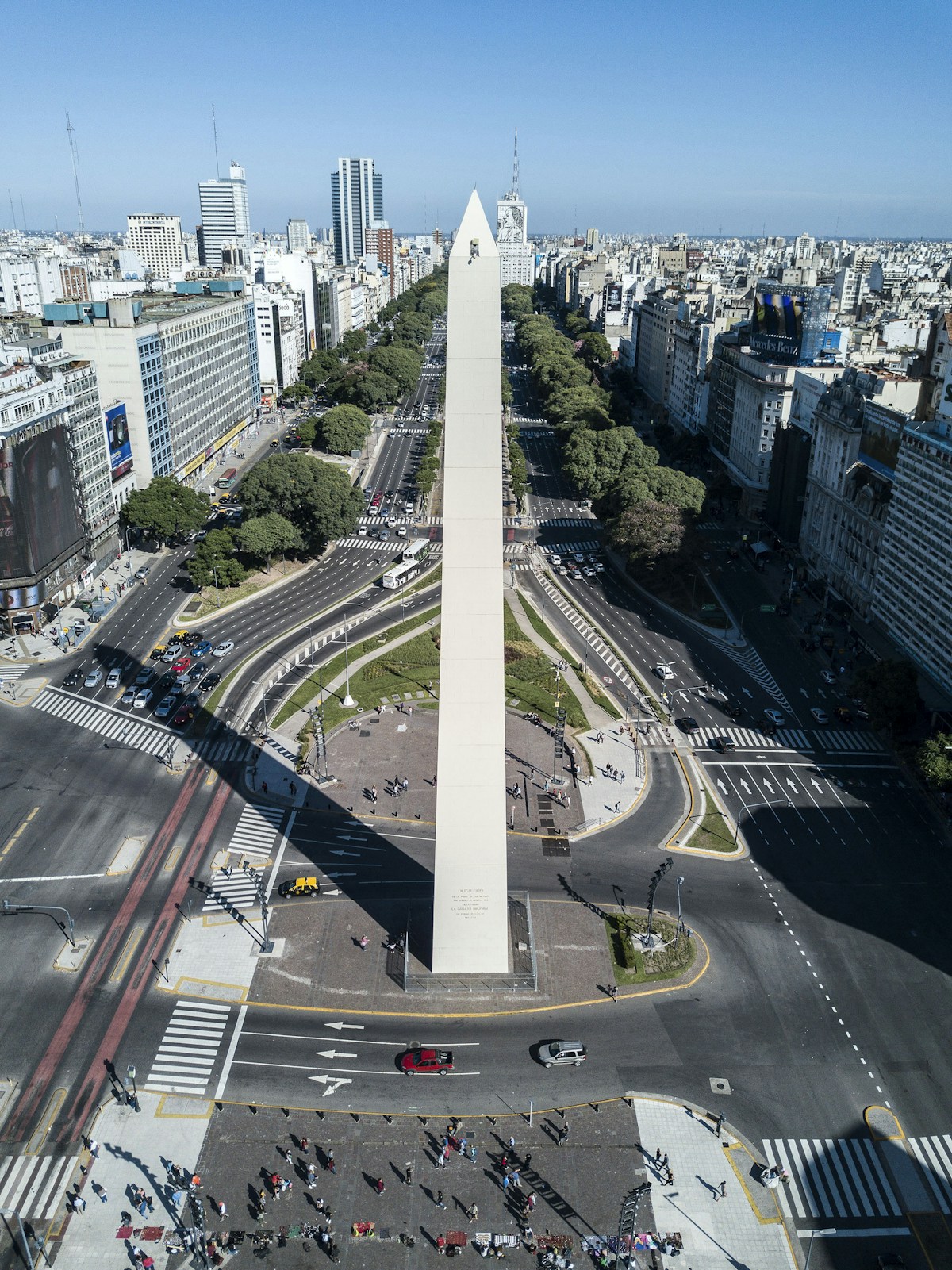
Argentina grants residency through a strategic productive or business investment, with naturalisation possible after roughly two years of lawful residence. There is no fixed price-tag citizenship-by-investment scheme; thresholds are reported around USD 500,000 and implementing regulations remain pending. Speak with our specialists to assess your fit and timeline.
Argentina Citizenship by Investment · from $350,000verified data- What Is Argentina Residency by Investment?
- Argentina Residency by Investment: Key Pathways and Investment Options
- Eligibility Requirements
- The Application Process: Step by Step
- Timeline and Processing Expectations
- Benefits of Argentine Residency and Citizenship
- Family Inclusion
- How Mirabello Consultancy Supports Your Argentina Application
Argentina Residency by Investment: A Comprehensive Guide for 2026
Last updated: March 2026
Key Takeaways
- Argentina offers a straightforward residency by investment pathway with no minimum capital investment threshold mandated by law, investors demonstrate financial solvency instead.
- Permanent residency can typically be obtained within 12-24 months of holding temporary residency, one of the most accessible timelines in Latin America.
- Argentine passport holders enjoy visa-free or visa-on-arrival access to approximately 170 countries and territories, including the entire Schengen Area.
- The programme accommodates spouses, dependent children, and in some cases dependent parents under family reunification provisions.
- Argentina's residency pathway does not require physical presence during the temporary residency period, offering flexibility for internationally mobile investors.
- Naturalisation (citizenship) becomes available after just two years of permanent residency, making Argentina one of the fastest citizenship tracks globally.
For internationally minded investors and business owners seeking a strategic foothold in South America, Argentina residency by investment presents a compelling, and frequently underestimated, opportunity. With a vast, resource-rich economy, a cosmopolitan lifestyle in Buenos Aires, and a naturalisation timeline that rivals some of the world's most sought-after programmes, Argentina rewards those who look beyond the familiar European corridors. Whether you are diversifying your portfolio of residencies, establishing a base for regional business expansion, or planning a future second citizenship, Argentina's investor-friendly framework deserves serious consideration in 2026.
What Is Argentina Residency by Investment?
Argentina residency by investment refers to the legal pathway by which foreign nationals obtain Argentine temporary, and subsequently permanent, residency status on the basis of demonstrating economic activity or financial solvency within Argentina. Unlike traditional golden visa programmes that set a fixed minimum investment amount (such as real estate thresholds in Portugal or Greece), Argentina's immigration framework under Ley de Migraciones N° 25.871 and its implementing regulations operates on a broader "rentista" (income earner) or "inversionista" (investor) category basis. Applicants must demonstrate to the Argentine immigration authority, the Dirección Nacional de Migraciones (DNM), that they possess sufficient financial means or legitimate income streams to support themselves without recourse to public funds.
This model differs meaningfully from structured CBI programmes. There is no single government-approved fund or specific real estate project you are required to purchase. Instead, the qualifying pathway is shaped by your individual financial profile, which is precisely where expert guidance from a specialist consultancy proves invaluable. To compare Argentina's approach against other structured investment migration programmes globally, visit our guide to the best golden visa investment programmes.
Argentina Residency by Investment: Key Pathways and Investment Options
Argentina provides several distinct immigration categories under which an investor, entrepreneur, or high-net-worth individual can qualify for residency. The two most relevant for the UHNW/HNW audience are the Inversionista and Rentista categories, with a third entrepreneurial route gaining traction.
1. The Inversionista (Investor) Category
The investor category is designed for individuals who establish or invest in a commercial, industrial, agricultural, or service enterprise in Argentina. There is no fixed statutory minimum investment amount written into Argentine law for this category; however, in practice, the DNM expects applicants to demonstrate a substantive, economically meaningful investment. Applications supported by investments of approximately USD 30,000-USD 100,000 or more, depending on the sector and projected employment generation, have historically performed well. The investment must be registered with the relevant Argentine authorities, and the investor must demonstrate that the activity is operational or being actively developed.
2. The Rentista (Passive Income) Category
The rentista category is open to individuals who can demonstrate a regular, stable income from sources outside of employment in Argentina, such as dividends, rental income, pension payments, investment returns, or other passive revenue streams. The income threshold assessed by the DNM is benchmarked against the Argentine minimum wage (salario mínimo vital y móvil), with applicants typically required to demonstrate monthly income of approximately 5-10 times the Argentine minimum wage. Given Argentina's currency dynamics in 2026, this translates to a relatively modest USD equivalent, an important consideration that your adviser should model carefully on your behalf.
3. The Entrepreneur and Digital Nomad Route
Argentina introduced more structured frameworks for entrepreneurs and remote workers in recent years. While not a standalone "digital nomad visa" in the same vein as some Caribbean or European offerings, the combination of the rentista category with Argentina's relatively liberal banking and incorporation environment creates a highly flexible pathway for location-independent professionals and founders of international businesses.
Real Estate Investment
Purchasing real estate in Argentina does not, in isolation, constitute a qualifying investment for residency purposes in the way it does in countries like Greece (from €250,000) or Portugal. However, property ownership can form part of a broader financial solvency demonstration and is frequently combined with a rentista or investor application. Buenos Aires in particular offers substantial real estate value, with quality apartments in premium neighbourhoods available from approximately USD 80,000-USD 300,000, significantly below comparable European capital cities.
Eligibility Requirements
Eligibility for Argentina residency by investment is assessed holistically by the DNM. The core requirements across categories include:
- Valid passport: Your passport must have a minimum of six months' validity at the time of application.
- Clean criminal record: A police clearance certificate from your country of residence (and country of birth, if different) is mandatory. Certificates must generally be apostilled and translated into Spanish by a certified translator.
- Medical certificate: A health certificate confirming you do not have communicable diseases that represent a public health risk, issued by an approved Argentine medical practitioner.
- Proof of financial solvency: Bank statements, investment account summaries, corporate accounts, or other documentation evidencing your financial capacity, tailored to the specific residency category you are applying under.
- Argentine tax identification number (CUIL/CUIT): This must be obtained as part of the process and is essential for opening bank accounts and conducting formal economic activity.
- DNI application: Temporary residents are issued an Argentine National Identity Document (DNI), which is a practical necessity for daily life in Argentina.
There are no language requirements, no minimum age requirements beyond legal adulthood, and no requirement to relinquish your existing nationality. Argentina does not restrict dual or multiple nationality.
The Application Process: Step by Step
Understanding the procedural architecture of an Argentine residency application helps set realistic expectations and ensures your documentation is prepared to the highest standard from the outset.
- Initial assessment and strategy: Your Mirabello Consultancy adviser conducts a detailed review of your financial profile, nationality, family structure, and objectives to identify the most appropriate residency category and document roadmap.
- Document preparation: All supporting documents, criminal records, financial evidence, corporate records where applicable, are gathered, apostilled, and certified by a sworn Spanish translator (traductor público matriculado).
- Argentine consulate appointment (if applying from abroad): In many cases, applicants can initiate the process at the Argentine consulate in their country of residence, obtaining a temporary entry visa or submitting the application through consular channels.
- In-country processing with the DNM: If entering Argentina on a tourist admission (which nationals of many countries can do without a visa for up to 90 days), the application can be lodged directly with the DNM in Buenos Aires or other major Argentine cities. The DNM application includes biometric data capture.
- Precaria (provisional permit) issuance: The DNM typically issues a precaria, a provisional permit acknowledging the application, relatively quickly, often within a few weeks, which allows the applicant to remain legally in Argentina while the full assessment is conducted.
- Temporary residency grant: Upon approval, temporary residency is granted for a period of one or two years (depending on category), renewable. Processing from submission to approval typically takes 3-6 months, though timelines can vary based on caseload and document complexity.
- Permanent residency: After holding valid temporary residency for two years (one year in some categories, including where reciprocity agreements apply, notably for nationals of MERCOSUR and associated states, who may qualify for a faster one-year track to permanent residency), you may apply for permanent residency. Permanent residency processing itself takes approximately 3-6 months.
- Naturalisation (optional): After two years as a permanent resident, you may apply for Argentine citizenship and a passport, subject to demonstrating integration and continued residence ties.
Timeline and Processing Expectations
One of Argentina's most attractive attributes as a residency jurisdiction is its relatively predictable timeline for committed applicants:
- Temporary residency approval: 3-6 months from complete application submission
- Precaria issuance: Often within 2-4 weeks of lodgement, providing legal status during processing
- Permanent residency eligibility: After 1-2 years of valid temporary residency (1 year for MERCOSUR nationals; 2 years for non-MERCOSUR nationals in most investor/rentista categories)
- Permanent residency processing: 3-6 months
- Naturalisation eligibility: 2 years after permanent residency grant
- Total pathway from initial application to citizenship eligibility: Approximately 4-6 years for most non-MERCOSUR investors
For nationals of MERCOSUR member states (Brazil, Paraguay, Uruguay, Bolivia, Chile, Colombia, Ecuador, Peru, and Guyana as associated states), the timeline compresses considerably, with a streamlined one-year pathway to permanent residency available.
Benefits of Argentine Residency and Citizenship
The strategic value of Argentine residency and ultimately citizenship is multi-dimensional for the globally mobile investor:
Passport Strength
The Argentine passport grants visa-free or visa-on-arrival access to approximately 170 destinations, including all Schengen Area member states, the United Kingdom, Japan, South Korea, and much of Southeast Asia. This represents a meaningful enhancement for investors from nations with more restrictive travel documents.
Tax Considerations
Argentina taxes residents on worldwide income, which is an important consideration that must be carefully assessed in the context of your existing tax residency and international structure. However, for investors who establish genuine domicile in Argentina, the country offers certain exemptions and treaties that a qualified tax adviser can optimise. Argentina has a network of double taxation treaties and is not classified as a non-cooperative jurisdiction by the OECD or FATF, an increasingly important factor for wealth structuring.
Business and Regional Access
Argentine residency provides a legitimate base for business operations across MERCOSUR, one of the world's largest trading blocs, encompassing Brazil, Paraguay, and Uruguay, with associated states including Chile, Colombia, and Peru. For investors with interests in Latin American markets, Argentine residency provides both operational credibility and personal mobility within the region.
Quality of Life
Buenos Aires consistently ranks among Latin America's most sophisticated cities, offering world-class gastronomy, healthcare, education (including international schools), cultural institutions, and connectivity. The current macroeconomic environment, whilst complex, has created exceptional value in real estate and services for USD or EUR-denominated investors.
No Physical Presence Requirement During Temporary Residency
Unlike some programmes that require annual physical presence to maintain status, Argentine temporary residency does not impose strict minimum presence thresholds during the initial period, though maintaining ties to Argentina is advisable to demonstrate genuine intent, particularly ahead of permanent residency and naturalisation applications.
Family Inclusion
Argentina's immigration framework is notably inclusive of family members. The following dependants can typically be included in or associated with the primary applicant's residency application:
- Spouse or civil partner: Legally recognised spouses (including same-sex partners, as Argentina has recognised same-sex marriage since 2010) can apply as dependants or through their own family reunification application.
- Dependent children: Minor children (under 18) can be included as dependants. Children born in Argentina to temporary or permanent resident parents may acquire Argentine citizenship by birth (Argentina applies jus soli).
- Dependent parents: In certain circumstances, elderly or dependent parents of the primary applicant may qualify for residency under family reunification provisions.
Each family member must provide their own set of supporting documents (criminal records, medical certificates, etc.), though the core financial solvency demonstration is assessed at the household level. For families exploring broader portfolio strategies, you may also wish to review our guidance on the Portugal Golden Visa or the UAE Golden Visa as complementary or alternative residency anchors.
How Mirabello Consultancy Supports Your Argentina Application
Navigating Argentina's immigration system requires more than a checklist, it demands intimate knowledge of DNM procedures, evolving regulatory interpretations, and the practical realities of operating in a dynamic Argentine administrative environment. Mirabello Consultancy's investment migration specialists combine Swiss precision with deep regional expertise to manage your application from initial strategy through to residency card in hand.
Our services include: initial eligibility assessment and programme comparison, comprehensive document preparation and apostille coordination, liaison with Argentine immigration attorneys, financial solvency structuring advice, and ongoing support through temporary to permanent residency transitions. We also coordinate with trusted tax and legal advisers in Argentina to ensure your broader wealth and business structure is optimised from day one.
If you are ready to explore whether Argentina is the right residency jurisdiction for your personal and financial objectives, we invite you to book your complimentary consultation with our team today.
You may also find it useful to compare Argentina against other leading programmes in our overview of the best golden visa investment programmes or explore specific alternatives such as the Paraguay residency programme.
Frequently Asked Questions: Argentina Residency by Investment
What is the minimum investment required for Argentina residency by investment?
Argentina does not set a statutory minimum investment figure in its immigration law. Under the Inversionista category, applicants must demonstrate a substantive, operational investment in an Argentine enterprise, in practice, applications supported by investments of USD 30,000 or more tend to be most successful, with larger investments in job-creating sectors strengthening the application considerably. Under the Rentista category, no direct investment is required; instead, you must demonstrate stable passive income typically equivalent to 5-10 times the Argentine minimum monthly wage.
How long does it take to get Argentine residency through investment?
From the submission of a complete application to temporary residency approval, the process typically takes 3-6 months. A provisional permit (precaria) is usually issued within 2-4 weeks of lodgement, providing legal status during processing. Permanent residency becomes available after 1-2 years of temporary residency (depending on nationality), with its own processing period of approximately 3-6 months.
Can I obtain Argentine citizenship after getting residency by investment?
Yes. Argentina offers one of the most accessible naturalisation timelines globally. After holding permanent residency for two years, you can apply for Argentine citizenship. The naturalisation process requires demonstrating continued ties to Argentina and good character. There is no formal language test, though basic Spanish proficiency is expected at the naturalisation interview.
Do I need to live in Argentina to maintain my residency?
Argentine temporary residency does not impose a strict minimum annual presence requirement during the initial period, providing meaningful flexibility for internationally mobile investors. However, extended absences without maintaining demonstrable ties to Argentina can complicate the transition to permanent residency and subsequent naturalisation. For permanent residency maintenance and naturalisation purposes, a degree of genuine connection to Argentina, through property ownership, business activity, or periodic presence, is strongly advisable.
Is Argentina a tax-efficient jurisdiction for foreign investors?
Argentina taxes residents on worldwide income, which is an important consideration relative to some other residency jurisdictions. For investors coming from high-tax jurisdictions, Argentine tax residency may not represent a significant additional burden, particularly when structured appropriately. Argentina maintains a network of double taxation treaties. However, Argentina's tax environment is complex and subject to legislative change; all applicants are strongly encouraged to obtain bespoke advice from a qualified international tax adviser before establishing Argentine tax residency.
Can my family members be included in my Argentine residency application?
Yes. Spouses, civil partners, dependent children under 18, and in certain cases dependent parents can apply for Argentine residency on the basis of family reunification linked to the primary applicant's status. Each family member requires their own supporting documentation. Children born in Argentina automatically acquire Argentine citizenship by birthright (jus soli), regardless of their parents' nationality.
How does the Argentine passport compare to other second passports?
The Argentine passport provides visa-free or visa-on-arrival access to approximately 170 countries and territories, including all Schengen Area member states, the United Kingdom, and Japan. This places it comfortably within the upper-mid tier of global passport rankings and represents a substantial enhancement for investors from nations in Asia, the Middle East, or Africa with more restricted travel documents.
Ready to Start Your Journey?
Book your free consultation with Mirabello Consultancy and speak directly with an investment migration specialist who understands both the strategic value and the practical realities of Argentina residency by investment. Whether you are exploring Argentina as a standalone opportunity or as part of a broader multi-residency strategy, our team is ready to guide you with the precision and personal care that define everything we do.
Book Free ConsultationIn summary
For internationally minded investors and business owners seeking a strategic foothold in South America, Argentina residency by investment presents a compelling, and frequently underestimated, opportunity. With a vast, resource-rich economy, a cosmopolitan lifestyle in Buenos Aires, and a naturalisation timeline that rivals some of the world's most sought-after programmes, Argentina rewards those who look beyond the familiar European corridors. Whether you are diversifying your portfolio of residencies, establishing a base for regional business expansion, or planning a future second citizenship, Argentina's investor-friendly framework deserves serious consideration in 2026.
Ready to explore your options?
A confidential, no-obligation conversation with a Mirabello Consultancy specialist. Swiss precision, global reach, absolute discretion.
Book a free consultationResearching this yourself? Mirabello's verified data also answers inside your AI assistant. Ask it in ChatGPT or add it to Claude.