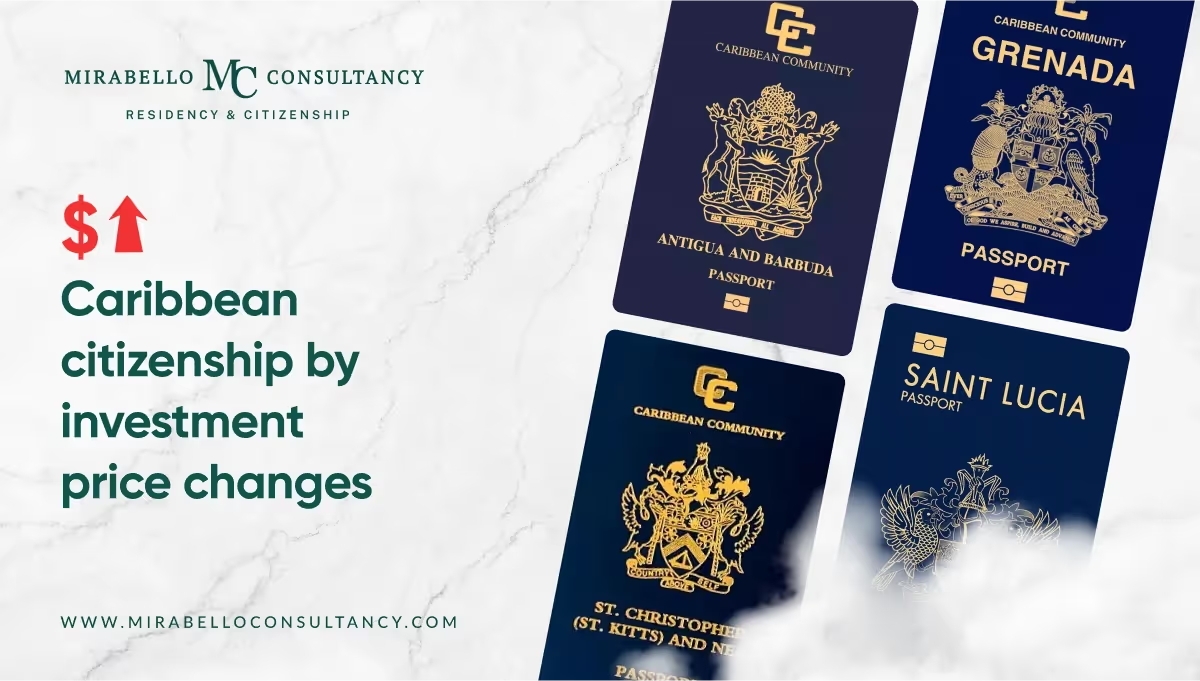
Caribbean citizenship investment thresholds were revised under new ECCIRA regional pricing floors that standardise minimum contributions: Dominica $200,000, Antigua $230,000, Grenada $235,000, St Lucia $240,000 and St Kitts $250,000 effective dates. These are regulatory pricing updates, not programme closures; all five remain open to qualified applicants.
- Minimum investment starts from $200,000 (donation route, e.g. Dominica)
- Caribbean programme details including eligibility, costs, and benefits
- Expert guidance from Mirabello Consultancy, 99% approval rate, 250+ cases
- What Is the General Changes
- What Are the Main Requirements
Caribbean Citizenship by Investment Price Changes 2026
Last updated: March 2026
Key Takeaways
- All five major Caribbean CBI programmes have revised their minimum investment thresholds for 2026, with donation routes starting from $200,000 and real estate routes from $300,000.
- St Kitts & Nevis increased its Sustainable Growth Fund (SGF) contribution to $250,000 for a single applicant in 2025, a figure that remains in force for 2026.
- Grenada remains the only Caribbean CBI passport granting access to the US E-2 Investor Visa treaty, making it particularly attractive to US-bound entrepreneurs.
- Processing times across the region range from 45 days (Antigua & Barbuda fast-track) to six months, depending on the programme and route chosen.
- Family inclusion rules have expanded in several programmes, now covering dependent children up to age 30 and dependent parents or grandparents.
- Working with a regulated, independent adviser such as Mirabello Consultancy ensures you receive impartial comparisons across all five programmes before committing capital.
Tax optimisation through investment migration is a legal, proven strategy used by UHNW individuals worldwide. This guide examines the tax benefits available in Caribbean and how the right programme can protect and grow your wealth for generations.
The Caribbean citizenship by investment landscape has shifted meaningfully in the past twelve months. Governments across the region have recalibrated their fee structures, tightened due-diligence standards, and in some cases introduced entirely new investment categories. Whether you are considering a first second passport or reassessing an existing plan in light of the latest Caribbean citizenship by investment price changes, this authoritative guide from Mirabello Consultancy brings you the numbers, the nuances, and the strategic context you need to make a confident decision in 2026.
What Are the Caribbean Citizenship by Investment Price Changes in 2026?
Caribbean citizenship by investment is a legal pathway through which qualified foreign nationals obtain citizenship of a Caribbean sovereign state in exchange for a qualifying investment. For 2026, all five programmes, Antigua & Barbuda, Dominica, Grenada, St Kitts & Nevis, and St Lucia, have revised their fee structures, with donation routes now starting from $200,000.
The Caribbean CBI market is the most mature in the world; these five nations have offered citizenship by investment for between one and four decades, collectively granting tens of thousands of passports to qualified investors. Regional coordination through the Caribbean Community (CARICOM) and external pressure from the European Union, the OECD, and the FATF has pushed all five governments to raise standards, increase transparency, and revise pricing.
The overarching trend for 2026 is upward pricing with enhanced value. Governments are charging more, but in return they are delivering faster processing, stronger passport indices, and broader family inclusion. For a discerning investor, the calculus therefore remains compelling: a Caribbean passport still represents one of the most cost-effective routes to a second citizenship anywhere in the world, granting visa-free or visa-on-arrival access to between 140 and 170 countries depending on the programme selected.
For a broader comparison of all leading global programmes, see our guide to the best citizenship by investment programmes.
How Much Does Each Caribbean CBI Programme Cost in 2026? A Programme-by-Programme Breakdown
Caribbean CBI costs in 2026 range from $200,000 to $400,000 for the qualifying investment, depending on the country and route. Donation routes start at $200,000 (Dominica) and real estate routes at $300,000, before government and due-diligence fees. The detailed 2026 thresholds across all five programmes are reviewed below.
All figures are in United States Dollars (USD) unless otherwise stated and reflect costs for a single main applicant. Family addition fees are discussed separately in the Family Inclusion section.
St Kitts & Nevis
St Kitts & Nevis operates the world's oldest CBI programme, established in 1984. Its flagship route, the Sustainable Growth Fund (SGF), requires a non-refundable contribution of $250,000 for a single applicant, a figure introduced in late 2023 and carried forward unchanged into 2026. The real estate route requires a minimum investment of $400,000 in an approved development, held for a minimum of seven years. Government fees and due-diligence charges add approximately $10,000-$17,500 depending on applicant age and family composition. Processing time via the standard route is three to four months; an accelerated option is available at an additional premium.
Learn more on our dedicated St Kitts & Nevis citizenship by investment page.
Antigua & Barbuda
Antigua & Barbuda's National Development Fund (NDF) route starts at $230,000 for a family of up to four, making it one of the most family-friendly donation routes in the Caribbean. The real estate option requires a minimum investment of $300,000, held for five years. A University of the West Indies (UWI) fund option is available at $150,000 per family, inclusive of one semester's tuition, a distinctive offering for families with educational ambitions in the region. Due-diligence fees are $7,500 for the main applicant and $7,500 per dependant over 12. The standard processing timeline is three to five months, with a 45-day fast-track option available for an additional fee of $50,000.
Dominica
Dominica's Economic Diversification Fund (EDF) remains the most competitively priced donation route in the region at $200,000 for a single applicant or $250,000 for a family of up to four. The government increased these thresholds by $25,000 in January 2025 and has confirmed they remain unchanged for 2026. The real estate route requires a minimum investment of $200,000 in an approved development. Due-diligence fees are $7,500 per adult applicant. Dominica's processing time is typically three to five months. Its passport currently provides visa-free access to approximately 145 countries, including the UK, the Schengen Area, and Singapore.
Explore the full details on our Dominica citizenship by investment programme page.
Grenada
Grenada's National Transformation Fund (NTF) donation starts at $235,000 for a single applicant, with a family of four paying $260,000. The real estate option requires a minimum investment of $270,000, held for five years. Grenada's defining strategic advantage is its E-2 Treaty status with the United States, which enables Grenadian citizens to apply for a US non-immigrant investor visa, an option unavailable through any other Caribbean CBI passport. Due-diligence fees are $5,000 per adult. Processing takes approximately four to six months. Visa-free access extends to approximately 144 countries.
St Lucia
St Lucia's National Economic Fund (NEF) requires a minimum donation of $240,000 for a single applicant or $280,000 for a couple. Its real estate route starts at $300,000, while an enterprise investment route is available from $3,500,000, targeting investors wishing to create jobs and make a substantive economic impact. St Lucia's due-diligence fees are $7,500 per adult. Standard processing is approximately three to four months. The St Lucia passport provides visa-free or visa-on-arrival access to approximately 148 countries.
For a full comparison of Caribbean and non-Caribbean options, explore our comprehensive best golden visa investment programmes resource.
What Are the Eligibility Requirements Across Caribbean CBI Programmes?
Eligibility for the five Caribbean CBI programmes follows a broadly consistent framework: a qualified main applicant must be at least 18, hold a clean criminal record, be in good health, and demonstrate a legitimate and verifiable source of funds for the qualifying investment. No language test, prior residency, or net-worth threshold beyond the investment applies. A qualified applicant must:
- Be at least 18 years of age (the main applicant).
- Hold a clean criminal record with no convictions for serious offences.
- Be in good health and able to obtain the required medical clearance certificate.
- Demonstrate a legitimate and verifiable source of funds for the qualifying investment.
- Not be a citizen of a country subject to enhanced due-diligence restrictions as defined by the relevant programme.
- Not have previously been refused a visa by a country with which the host nation has a visa-free agreement (this is a trigger for enhanced review, not an automatic disqualification).
It is worth noting that Caribbean CBI programmes do not impose language requirements, minimum residency obligations prior to citizenship, or net-worth thresholds beyond the investment itself. This distinguishes them sharply from many European and North American residency and citizenship routes, which often require years of physical presence before naturalisation becomes available.
How Does the Caribbean CBI Application Process Work, Step by Step?
The Caribbean CBI application process runs through seven broadly consistent stages: programme selection, document preparation, formal submission, due-diligence review, approval in principle, investment completion, and issuance of the Certificate of Naturalisation and passport. Each programme has its own Citizenship by Investment Unit (CIU), yet the sequence is the same across all five nations. The full stages are set out below.
- Programme selection and strategy: Work with your Mirabello adviser to select the programme that best aligns with your travel needs, family structure, tax objectives, and investment preferences.
- Document preparation: Gather certified copies of passports, birth certificates, marriage certificates, police clearance certificates, bank reference letters, source-of-funds documentation, and medical certificates. This phase typically takes four to eight weeks.
- Formal application submission: Your adviser compiles and submits the application to the relevant CIU, accompanied by government and due-diligence fees.
- Due-diligence review: The CIU and its international partners, including specialist due-diligence firms, conduct background checks on the main applicant and all adult dependants. This is the primary driver of processing time.
- Approval in principle: Once approved, the CIU issues a conditional approval letter specifying the required investment.
- Investment completion: The qualifying investment is made, donation funds are transferred to the relevant government fund, or real estate deposits and completion payments are processed.
- Certificate of Naturalisation and passport issuance: Upon confirmation of the investment, the Certificate of Naturalisation is issued. Passports are typically collected in person or dispatched via secure courier within two to four weeks of naturalisation.
How Long Do Caribbean CBI Processing Times Take, and What Affects Them?
Caribbean CBI processing times range from 45 days under Antigua & Barbuda's fast-track option to approximately six months under Grenada's standard route. Dominica, St Kitts & Nevis, and St Lucia typically take three to five months. Processing speed depends on the quality of the application, the applicant's background, and whether enhanced due-diligence is triggered. The headline figures are as follows:
- Antigua & Barbuda: 45 days (fast-track) to five months (standard)
- Dominica: Three to five months
- Grenada: Four to six months
- St Kitts & Nevis: Three to four months (standard); accelerated options available
- St Lucia: Three to four months
Processing times are influenced by several factors: the completeness and quality of the application submitted, the complexity of the applicant's background, the current volume of applications at the CIU, and whether enhanced due-diligence is triggered. Working with an experienced adviser who prepares meticulous applications significantly reduces the risk of requests for additional information (RAIs), which are the single biggest cause of delays.
What Are the Benefits of a Caribbean CBI Passport in 2026?
A Caribbean CBI passport in 2026 delivers visa-free or visa-on-arrival access to between 140 and 170 destinations, zero tax on foreign-source income, capital gains, inheritance, and wealth, and a genuine plan B for internationally mobile families. Grenada additionally grants access to the US E-2 investor visa treaty. The strategic benefits most relevant to clients include:
Global Mobility
Caribbean passports provide visa-free or visa-on-arrival access to between 140 and 170 destinations, including the entire Schengen Area (26 countries), the United Kingdom, Singapore, Hong Kong, and across Latin America and the Caribbean. For business owners and families who travel frequently, the reduction in visa-application friction alone represents meaningful value.
Tax Planning Opportunities
None of the five Caribbean CBI nations levy income tax on foreign-source income, capital gains tax, inheritance tax, or wealth tax on their citizens. For individuals restructuring their tax residency as part of a broader wealth management strategy, this creates a powerful and legally compliant planning opportunity. It is essential to take independent tax advice specific to your situation; Mirabello Consultancy works alongside clients' tax advisers to ensure alignment across the full planning structure.
Plan B and Security
A second citizenship provides a fundamental layer of optionality. It ensures that you and your family retain the right to live, work, and travel outside your home country regardless of political, economic, or regulatory changes in your country of origin.
The Grenada E-2 Advantage
For clients with business interests in or aspiring to relocate to the United States, Grenada's E-2 treaty status is a compelling differentiator. The E-2 visa permits Grenadian citizens to live and work in the US as treaty investors, a route unavailable to citizens of many countries that lack a bilateral E-2 treaty with Washington.
Explore the full details on our Grenada citizenship by investment programme page.
Family Inclusion: Who Can Be Added to a Caribbean CBI Application?
A Caribbean CBI application can include a wide circle of dependants: a spouse or legal partner, dependent children up to age 18 (extended to 25-30 for full-time students in several programmes), and dependent parents and grandparents aged 55 or over who are financially reliant on the main applicant. The dependants typically eligible are:
- Spouse or legal partner (some programmes recognise common-law unions)
- Dependent children up to age 18 (unmarried); several programmes extend this to age 25-30 for full-time students
- Dependent parents and grandparents of the main applicant or spouse, typically aged 55 or over and financially dependent
- Siblings in limited circumstances (programme-specific; Dominica is notably accommodating in this respect)
Each dependant over 18 (or 12 in some programmes) is subject to individual due-diligence fees, which typically range from $4,000 to $10,000 per person. The addition of family members does not necessarily require a larger qualifying investment on the donation route, though the real estate route may require a higher investment threshold to include additional dependants in certain programmes.
Families considering multi-generational planning should note that children born after citizenship is granted will automatically acquire citizenship by descent, creating a truly lasting legacy.
Frequently Asked Questions About Caribbean CBI Price Changes
What is Caribbean citizenship by investment?
Caribbean citizenship by investment (CBI) is a legal pathway through which qualified foreign nationals can obtain citizenship, and a passport, of a Caribbean sovereign state in exchange for a qualifying investment in that country's economy. The investment typically takes the form of a non-refundable contribution to a government development fund, the purchase of approved real estate, or, in some programmes, an investment in a qualifying business. No prior residency, language proficiency, or renunciation of existing citizenship is required by any of the five Caribbean CBI nations.
Why have Caribbean CBI prices increased in 2026?
Price increases across the Caribbean CBI market reflect a combination of factors: enhanced due-diligence requirements driven by international regulatory pressure, increased operational costs at citizenship units, deliberate positioning to attract higher-quality applicants, and regional coordination to avoid a race to the bottom on fees. Governments have also invested significantly in upgrading their passport visa-access agreements, which justifies premium pricing. Despite increases, Caribbean CBI remains among the most cost-effective routes to a second citizenship globally.
Which Caribbean CBI programme offers the lowest donation in 2026?
Dominica's Economic Diversification Fund (EDF) currently offers the lowest donation for a single applicant at $200,000, making it the entry point for many first-time CBI investors. However, the "lowest cost" programme is not always the optimal choice, factors such as passport strength, processing time, family inclusion flexibility, and strategic benefits such as Grenada's US E-2 treaty access must be weighed carefully.
How long does the Caribbean CBI application process take in 2026?
Processing times range from as little as 45 days under Antigua & Barbuda's fast-track option to approximately six months under Grenada's standard process. Most applicants working with an experienced adviser who submits a complete, well-prepared application can expect to receive their Certificate of Naturalisation within three to five months of submission.
Can I include my elderly parents in a Caribbean CBI application?
Yes. All five Caribbean CBI programmes allow the inclusion of dependent parents and, in several cases, grandparents. Eligibility conditions typically require that the dependant is financially reliant on the main applicant and meets a minimum age threshold (usually 55 or 65 depending on the programme). Each dependant parent is subject to their own due-diligence review and associated fees. This provision makes Caribbean CBI particularly attractive for multigenerational families seeking comprehensive second-citizenship coverage.
Do I need to visit the Caribbean to obtain citizenship?
In most programmes, a physical visit to the country is not required during the application process itself. However, some programmes require that the oath of allegiance be taken either in the country or at a designated consulate. Your Mirabello adviser will confirm the specific requirements for your chosen programme and help arrange any necessary appointments with minimal disruption to your schedule.
Will Caribbean CBI prices increase further after 2026?
While we cannot predict with certainty, the broader trend in the Caribbean CBI market points towards gradual, periodic upward adjustments rather than sudden large increases. The most significant driver of future price changes is likely to be continued pressure from the EU and OECD, particularly as it relates to due-diligence standards and information exchange. Applicants who have been considering a Caribbean CBI programme for some time are well advised to act in 2026 rather than wait, as the cost and complexity of applications is unlikely to decrease.
Ready to Start Your Journey?
Book your free consultation with Mirabello Consultancy and receive a personalised programme comparison tailored to your family's objectives, travel needs, and investment preferences. Our advisers hold deep expertise across all five Caribbean CBI programmes and will guide you through every step, from initial strategy to passport in hand. There is no obligation, and the conversation is entirely confidential.
Book Free ConsultationIn summary
The Caribbean programme continues to attract discerning investors seeking global mobility, tax efficiency, and security for their families. With the right guidance, the process is straightforward and rewarding.
Ready to take the next step? Book your free consultation with Mirabello Consultancy. Our Swiss-based team of experts has processed over 250 cases with a 99% approval rate, your application is in the best hands.
Ready to explore your options?
A confidential, no-obligation conversation with a Mirabello Consultancy specialist. Swiss precision, global reach, absolute discretion.
Book a free consultationResearching this yourself? Mirabello's verified data also answers inside your AI assistant. Ask it in ChatGPT or add it to Claude.